




- The assessment of workplace risk is a legal obligation of every employer, pursuant to Law No. 10237 of February 18, 2010, as amended by Laws No. 161/2014 and No. 99/2024.
- The obligation does not depend on the size of the business and does not diminish with a small number of employees.
- The process has four phases: preparation, assessment, implementation of measures, and documentation.
- Employees and their representatives participate in the assessment and planning of preventive measures.
- The assessment is not a standalone document; it is reviewed whenever the work process, the equipment, or after an accident changes.
Workplace risk assessment is a legal requirement, not a voluntary best practice. Many small businesses don't even know they have this obligation, and those that do often treat it as a one-and-done file that gets filled out and then forgotten.
This article explains who is obligated, what a risk assessment actually contains, and when it should be reviewed. The manual enclosed at the end is the practical material of the State Labor Inspectorate and predates the 2024 changes, so its methodology remains valid while institutional titles are to be read in accordance with the law in force.
Read also: Employer's obligations for workplace safety
Who has the obligation?
Every employer, regardless of the number of employees or the sector. The law does not set a minimum threshold. An office with three people has the same obligation as a factory, even though the content of the assessment is naturally simpler.
The obligation cannot be passed on to the employee and is not eliminated by purchasing protective equipment. Equipment is a measure; assessment is the process that indicates which measures are needed.
Care with a difference. The obligation for assessment has no employee threshold, but representation does. Up to 50 employees, one representative is elected; over 50, the occupational health and safety council is established, in accordance with Article 16. When more than 20 people work in the same environment, at least two employees must be trained in first aid and firefighting, according to Article 8.
What does the law really require?
Four things, and all four must be done, not just the first. The obligation for assessment is in Article 9, paragraph 1, letter a. The document on assessment and risk prevention is in Article 10, letter b. Employee participation is in Articles 13 and 18.
- Identifying hazards in every workplace and assessing them.
- Preparation of a preventive measures plan, with deadlines and responsibilities.
- Inform employees about the risks and the measures taken.
- Participation of employees and their representatives in the assessment and planning of measures.
The fourth point is most often overlooked. An assessment conducted in the office by a consultant, without speaking to the people who do the work, does not meet the requirement and usually fails to identify the real risks.
The four phases of the process
| Phase | What's going on? |
|---|---|
| Preparation | It specifies who is responsible, by what method, which positions are covered, and within what timeframe. |
| Assessment | Risks are identified, likelihood and consequences are assessed, and they are prioritized. |
| Implementation | Preventive measures are implemented according to the plan, with responsibilities and deadlines for each. |
| Registration and documentation | The evaluation document, the action plan, and the evidence of employee notification are kept. |
The assessment document is the proof. In an inspection, the question isn't whether you're careful, but whether you have the document, whether the measures have been implemented, and whether the employees have been informed.
When is the assessment reviewed?
The risk assessment has no fixed expiration date, but it doesn't remain the same forever. It is reviewed whenever anything changes that alters the risk.
- When the workflow or technology changes.
- When a new device or a new subject is introduced.
- When the location or organization of work changes.
- After an accident or an incident that revealed an unevaluated risk.
- When categories with special protection needs are employed.
The procedure after an accident and reporting obligations are on our website. work accident.
What is required for an inspection?
Work inspections are carried out in accordance with Law No. 9634 of October 30, 2006, as amended. It does not only require the assessment document. Also required are the action plan, evidence of employee information and training, and the appointment of the person responsible for occupational safety and health. The list of required documents is on our website. inspection documents, while the fines and the appeal are on the page of fines and appeal.
Every time there is a tax or financial change that affects your business, we notify you directly by email with a practical explanation.
Send me free notificationsFrequently Asked Questions about Risk Assessment
Do I also have an obligation toward two employees?
Yes. The law does not set a minimum number of employees. It changes the scope of the assessment, not the obligation.
Can I do the assessment myself?
The employer is responsible for carrying it out. When the necessary skills are not available within the enterprise, a qualified person is engaged. The required skills are specified in Government Decree No. 108 of February 9, 2011, as amended by Government Decree No. 632 of July 15, 2015.
How often should it be updated?
Whenever the process, equipment, workplace, or following an accident changes. A scheduled periodic review is good practice even without changes.
Is it enough to buy protective equipment?
No. Devices are protective measures, whereas the law requires the process that identifies the risk and the plan of measures, from which the devices also stem.
Should employees participate?
Yes. Employee representatives participate in preparing the assessment and in planning preventive measures.
Risk assessment doesn't prevent the accident itself. It makes visible what already exists in the workplace and compels the organization to address it in a timely and responsible manner. That's why a document copied from the internet is worthless.
The Complete Practical Manual for Risk Assessment
Foreword
Risk assessment has become a key tool for managing occupational health and safety. For many years, the prevailing understanding of organizing workplace safety and health measures was based solely on the principle of complying with legal regulations. Although the diversity of work activities, the specifics of each workplace, and all aspects of work cannot be fully covered and regulated by legal provisions, they will nonetheless be understood more broadly. On the other hand, an approach based on uncovering what has already gone wrong—what is not in compliance with legal rules—cannot foresee what might happen or prevent deficiencies from arising.
Read also: Safety and health at work.
Risk assessment methods allow us to identify all specific objects that could harm individuals and cause undesirable consequences; They allow us to assess the severity of such a potential event and to identify the most appropriate solutions for protection against these kinds of consequences. Prevention is the guiding principle of the Risk Assessment process.
But Risk Assessment means more than just a procedure. Risk Assessment is a philosophy of managing occupational health and safety; it is a way of employees' behavior; it is a way of protecting them.
Risk assessment as a legal obligation
Risk assessment is at the same time a legal obligation under the Law on Occupational Safety and Health and the Council of Ministers' decisions issued on the basis of and for its implementation. The obligation to assess workplace risks has been in force for more than three years; however, risk assessments in many enterprises are carried out merely as a formality, and some employers (mainly in small businesses) are not even aware that risk assessment is part of their legal obligations.
This manual aims to present a simple, clear, and easy-to-use step-by-step procedure for ensuring the completion of the Risk Assessment, motivating entities with this legal obligation, and implementing the prevention approach within the framework of work organization.
For the successful implementation of this Manual, it is essential that its users:
- to have the good will to do something for the improvement of safety and health,
- to accept occupational safety and health (OSH) as an integral part of all work processes,
- to understand and accept the philosophy of Risk Assessment theory
- to take an active role in managing workplace health and safety and to implement the results of the Risk Assessment in daily practice.
1. Purpose and legal framework
This non-legally binding manual has been prepared to help labor inspectors understand the Risk Assessment procedure, its implementation and management, as well as to assist employers in fulfilling their obligations, and to help SSHP specialists conduct workplace Risk Assessments and approve appropriate preventive and corrective measures in accordance with The Law on Occupational Safety and Health.
It presents a simplified approach as well as the methods and procedures; it describes in detail the specific principles and steps of Risk Assessment and provides guidance on how to apply the results of the Risk Assessment in practice. It is suitable for small enterprises as well as larger companies.
What does the legislation actually require?
- To valued risks and protective measures are taken
Employer Conducts a Risk Assessment of the risks to SSHP, including those faced by groups of employees exposed to specific hazards; it also determines the protective measures that need to be taken.. (Article 9(1) of the Law on Occupational Safety and Health).
Prepare a plan of preventive and protective measures.
Employer is required to draw up a prevention and protection plan, consisting of technical, medical, organizational, and hygienic-sanitary measures, for the purposes of the Risk Assessment, which they must implement based on the working conditions specific to their enterprise (Article 10(b) of the Law on Occupational Safety and Health).
Employees shall be informed of the results of the Risk Assessment.
Employer informs employees and their representatives about every risk in the workplace, and about the protective measures that must be taken to control these risks and eliminate their harmful consequences. Information on the results of the Risk Assessment and the measures taken is made available to employees… (Article 12(1) of the Law on Occupational Safety and Health).
Employees and their representatives shall be involved in the Risk Assessment.
Employee representatives for SSHP participate in the preparation of the Risk Assessment and the planning of preventive measures, as well as other documents related to SSHP. (Article 18 of the Law on Occupational Safety and Health).
The Safety and Health Council is empowered to participate in assessments, to develop and implement programs for risk prevention in enterprises; (Article 20 of the Law on Occupational Safety and Health).
§ The following prevention principles shall be followed.
- risk avoidance;
- assessment of unavoidable risks;
- combating risks at the source;
- replacing the dangerous with the harmless or less dangerous;
- Prioritizing collective protective measures over individual protective measures;
- Providing appropriate instructions to employees. (Article 6(3) of the Law on Occupational Safety and Health).
What is the principle for fulfilling the legally specified requirements?
Let's not be just formal!
This manual offers more than just simple methods for the Risk Assessment procedure. It also presents principles and recommendations on how to organize and manage Risk Assessment in an enterprise, with a special emphasis on the preparatory phase and, in particular, on the implementation phase—how to apply the assessment results in practice.
2. Definitions
Risk Assessment, as a professional discipline, uses its own specialized language combined with legal terminology. Expressions such as “hazard” and “risk” are used interchangeably in everyday language, but their meaning in the theory and practical application of Risk Assessment is specific. They describe particular steps of the Risk Assessment procedure.
Risk Assessment
Risk Assessment is a procedure that determines the level of risk associated with a workplace injury, occupational disease, work-related illness, and work-related disorders that may cause harmful effects on the health and safety of employees.
Risk Assessment is the activity that is carried out:
- to identify risks that are present in the workplace or that are related to work,
- to assess the risk of damage that these hazards may cause to people, the environment, or property, and
- to determine measures to prevent such damage.
The Albanian Law on Occupational Safety and Health and the relevant secondary legislation use the term “risk assessment,” which has a similar meaning, and it is acceptable to use both terms interchangeably. However, this manual will use the term “risk assessment,“ which is more commonly used internationally.
Risk
Risk is a combination of the probability that someone may be harmed or that other damage may result from the hazard, and the consequence of that harm.
Risk represents a level of the significance of possible dangerous situations when a person (or environment or property) is exposed to danger.
Danger
Hazard is a characteristic, potential capability of any object (work equipment, activity, work environment, substance, etc.) to cause injuries or other damage.
Hazard is the source of potential risk to the health and life of employees and others.
Dangerous situations and risk factor
Situation dangerous , It is a description of the situation in which a hazard can cause damage or harm. It characterizes the hazard in action.
The factor of risk
The risk factor refers to a characteristic of a substance or environment that is capable of causing negative health effects in exposed workers.
Preventive measures
Preventive measures are planned and pre-approved activities, focused on eliminating or reducing workplace risks, reducing the influence of risk factors, and limiting workplace accidents, occupational diseases, poisonings, and other injuries resulting from work, taking into account the prevention principles in accordance with the Law on Occupational Safety and Health.
Corrective measures
Corrective measures are activities focused on eliminating or reducing workplace risks and reducing the impact of risk factors, usually taken in response to unacceptable Risk Assessment findings. Corrective measures usually involve placing barriers between a hazard and a person who could be injured.
Description of work, work activities
The job description is a set of activities performed by an employee based on his employment contract.
3. Principles of Risk Assessment theory
Risk assessment, or risk management, has become an independent professional discipline. It brings its own theory and principles, which are very important to understand and take into account when implementing risk assessment.
The key principle is:
Zero risk does not exist.
ZERO RISK DOES NOT EXIST
The workplace is never absolutely safe. Absolute safety does not exist.
Security implies a state in which the level of risk is acceptable.
Example: Even though the probability that a given risk will cause an accident may be once in 1,000 years, it is impossible to determine whether it will occur in 1,000 years, in 100 years, or tomorrow. This is why immediate preventive measures are essential.
Taking the above principle into account, employees should not consider any job to be absolutely safe (as they have been led to believe in the past); they must always be aware of workplace hazards and adapt their behavior accordingly.
For this reason, employees need the right information about existing risks, how to avoid them, and how to protect themselves. Therefore, a Risk Assessment would be meaningless if the information about the risks were not communicated to employees.
Principle: Since SSHP must be informed about all existing work-related circumstances, consequently…
Assessment Risk management should focus on all aspects related to the work.;
The aspects that should be included in the assessment
to take into account not only accident prevention, hazardous substances and factors, the safety of technical equipment and processes, but also situations that bring excessive physical, mental, sensory, or stress load. It is also necessary to assess the human factor, working conditions, hygiene, sanitary facilities in the workplace, psychosocial aspects, stress and violence at work, employees' mental health, etc. Anything unfavorable at work should be considered a risk.
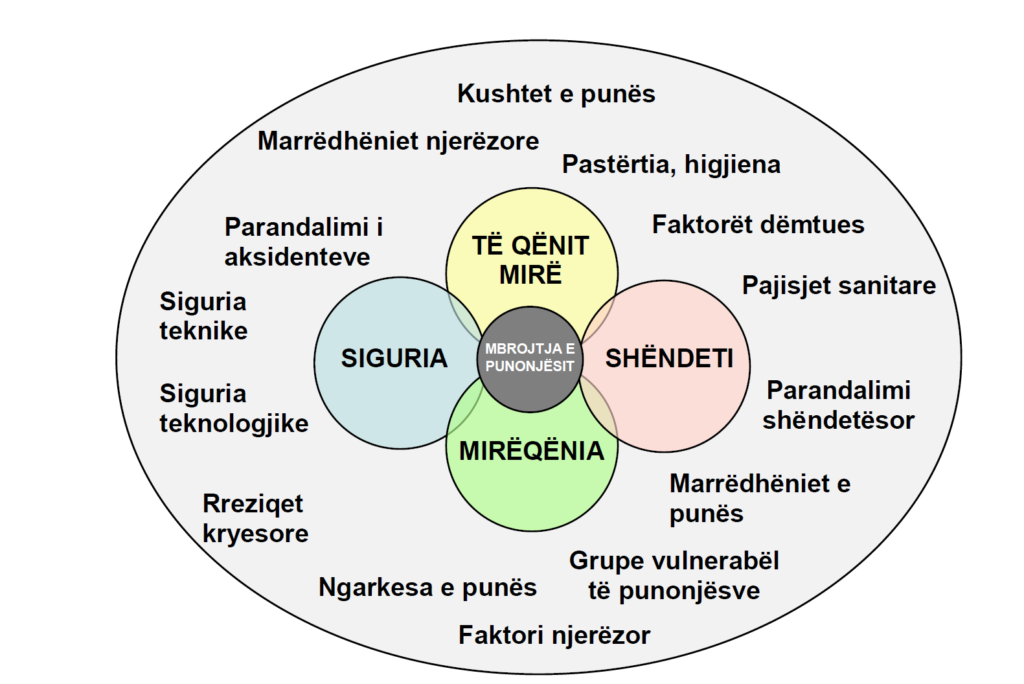
Figure: Employee protection should focus not only on safety and health but also on well-being; it is represented by specific aspects, some of which are shown in the gray area.
Principle:
The level of acceptable risk is not fixed.
The acceptability of risks depends on technological development, societal culture, corporate culture, geographic location, historical dimension, or other aspects.
Examples of how risk changes
Example: Risks that were acceptable fifty years ago are not so today; risks that may be acceptable in one state are not necessarily so in another; many risks become unacceptable when technological progress provides a solution for them.
The level of acceptable risk can be determined for each case based on occupational health and safety legislation, international and national standards, technical specifications and norms, comparable safety rules, guidelines, and principles of good practice.
Principle:
Accidents shouldn't happen; they can be prevented.
Although things don't always go as well as we've planned, it's possible to prevent accidents or minimize their effects. Workplace risks are an integral part of work activities. Risks must be assessed and kept under control.
4. General Approach to Risk Assessment:
For a proper understanding of the Risk Assessment procedure, successful completion of this assessment, and for managing prevention, the following principles must be taken into account:
Principle:
There is no single “correct” way to conduct a Risk Assessment.
Risk assessment is simply a careful examination of what could cause harm to people, so that we can judge whether we have taken sufficient measures or need to do more to prevent injuries.
Different approaches may work in different circumstances. However, there are some steps that should be taken in every case:
- to be revealed what harm individuals at work might cause or what could lead to unwanted events;
- to assess how serious the risk is;
- to determine whether the risk is acceptable;
- to assess whether the current measures are sufficient to protect persons and property;
- to determine preventive and corrective measures, if necessary;
- to be provided with information about the risks and how to protect against them so that employees and/or their representatives can conduct themselves safely and so that company managers can manage the work safely.
Principle:
Managers as well as employees in the workplace should be able to distinguish what could harm them.
Responsibilities of managers and employees
Managers are primarily responsible for protecting employees and providing workplace safety instructions, on the basis of which they will be able to identify hazards, assess the risks they pose, and take appropriate safety measures. This means that it is useful for them to have risk assessment skills.
Employees should also be reasonable, perceptive, and sensitive to workplace hazards in order to avoid risks. Training can be provided for this type of skill, and it can be developed. Of course, first and foremost, employees must receive the proper information about hazards and risks.
However, managers and employees are often unable to distinguish and uncover risks. They can't know everything. Sometimes there are hidden characteristics of certain substances, products, or activities that can only be identified by professionals. That is why engaging experts for Risk Assessment is often essential.
Principle:
The Risk Assessment should focus on all individuals who may be present in the workplace.
In addition to the employees working there, maintenance personnel, service staff, external service providers, and visitors must also be taken into consideration.
Risk-sensitive groups
The conditions and abilities of sensitive risk groups specified in the Occupational Safety and Health Act must be given special consideration when conducting the Risk Assessment. Also, preventive and corrective measures must be adapted and implemented taking into account the requirements for the conditions and abilities of vulnerable risk groups.
Principle:
The potential consequences of new risks are also assessed outside the workplace or the enterprise.
During the Risk Assessment, environmental aspects, the surrounding area and the neighborhood of other enterprises, public facilities and the community at large, their potential effects on existing risks, as well as the possible multiplier effects of external risks, must also be taken into account.
Principle:
Employees must be included in the Risk Assessment.
The employer must establish, implement, and maintain procedures for employee participation by properly involving them in hazard identification, risk assessment, and the determination of control measures. Consequently, employees must be informed about the results of the Risk Assessment and the implementation of corrective and/or preventive measures, and must participate in the ongoing monitoring of potential risks.
Principle:
Risk assessment is not simply a one-time procedure; it is an ongoing process and must be revised from time to time.
When should the assessment be repeated?
The Risk Assessment must be implemented as a continuous process, a system for monitoring hazards and risks; the employer must ensure that it is repeated regularly, after any fatal, collective, or serious injury, specified cases of occupational diseases and work-related disorders that may have harmful effects on employees' health and safety, and based on the final decision of the labor inspector, i.e., at least once every two years.
Principle:
The Risk Assessment is carried out taking into account the general prevention principles provided for in the Law on Occupational Safety and Health.
Risk Assessment is a method that can identify what is going wrong and is dangerous and helps in taking appropriate corrective measures. But at the same time, Risk Assessment can be used to speculate about what might happen and to predict what could potentially go wrong and what could cause damage. This allows preventive measures to be taken so that failures or damage do not occur.
Principle:
Risk assessment is a procedure that cannot be successfully carried out without proper preparation and cannot be meaningful without proper implementation.
Risk Assessment should be an enterprise-wide “campaign.” The Risk Assessment organization should consist of the following phases:
- the preparation phase,
- risk assessment procedure,
- implementation phase,
- registration and documentation.
Expanded risk management steps
Generally, risk management can be presented in a more comprehensive way than the simple procedural steps, including the preparation and implementation of activities as follows:
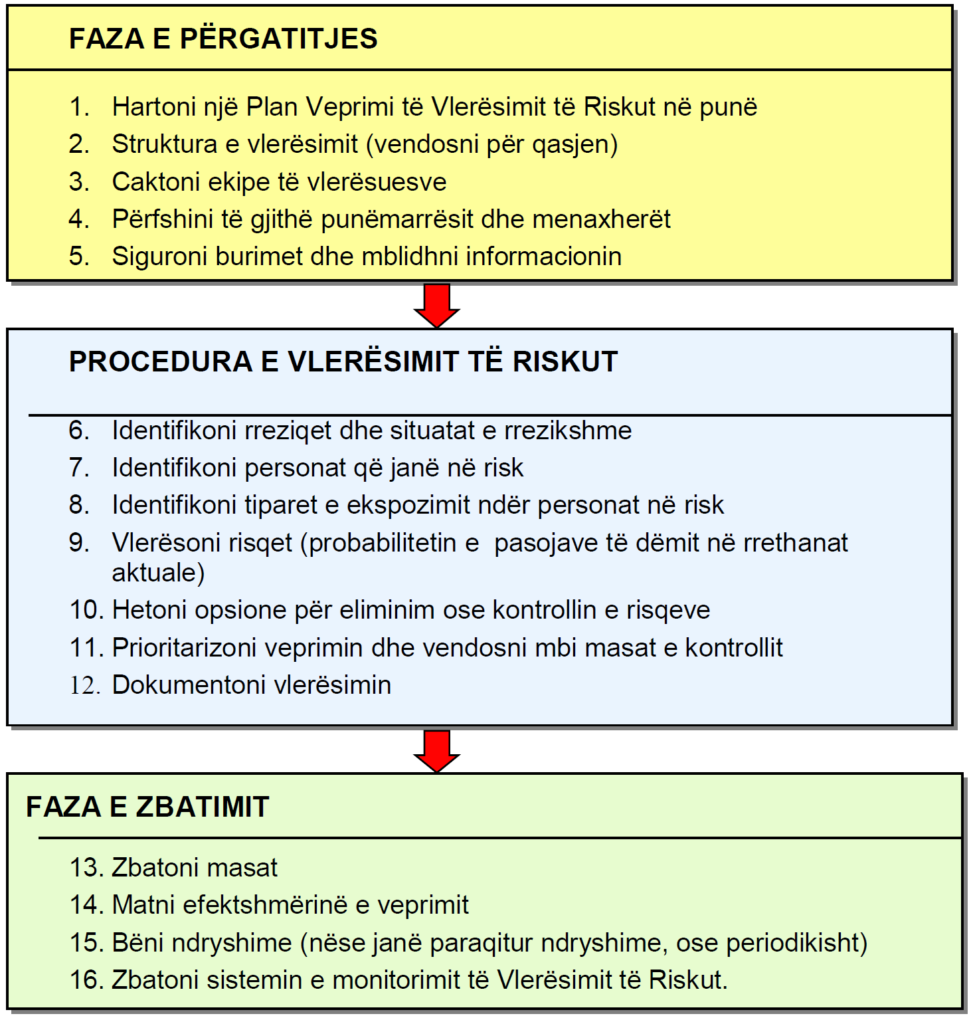
Employers must carefully prepare a plan outlining what they will do to fulfill their obligation to conduct a Risk Assessment, as well as anticipate the necessary measures to protect employees' safety and health. Safety experts and/or persons appointed for SSHP matters play an active role in initiating and managing the risk assessment process within the enterprise and in motivating senior managers to support the process. The preparation phase is essential for the successful organization and execution. of the Risk Assessment. It is recommended that the following steps be taken:
- Engagement of senior managers
- Drafting the Risk Assessment Action Plan
- Selection and assignment of individuals to conduct the assessment.
- Employee Engagement – Initial Training
- Provision of the necessary and appropriate documentation, information sources, and written materials.
Engagement of senior managers
Senior managers must take an active role in preparing the Risk Assessment Action Plan; they must visibly demonstrate their active involvement and commitment to successful action; they must initiate the conduct of the Risk Assessment; to regularly review and assess the entire process.
Senior managers must provide moral support and material resources for the implementation of risk assessment and the adoption of preventive, protective, and corrective measures. They must ensure and encourage the implementation of an ongoing risk monitoring system.
Risk Assessment Action Plan
The organization of risk assessment in an enterprise must be described in detail so as to provide clear guidance – what needs to be done, what the timeline is, what the organizational measures are, and who is responsible for specific steps throughout the process. (see the example in Annex 4). The risk assessment action plan should be consulted with employee representatives; it may include provisions regarding:
- organization, coordination, scheduling, and initiation of the process,
- the designation of persons responsible for specific steps,
- the appointment of competent persons to carry out the assessments,
- involving employees and their representatives – initial training and participation in risk identification, as well as modification and monitoring,
- the provision of information, training, necessary resources, and support to members of the assessment teams,
- ensuring adequate coordination among assessors and specific workplaces, first-line managers, employee representatives, and other participants,
- ensuring that preventive and corrective measures take into account the results of the Risk Assessment,
- ensuring that the Risk Assessment is documented by drafting the plan of measures for reducing the level of risks and the Risk Assessment Document in accordance with the Risk Assessment Order,
- informing and discussing with employees or their representatives, or with the Occupational Safety and Health Council, as appropriate, the results of the assessment and the planned measures (by making all data available to them),
- the determination of the organizational measures that need to be taken to review and amend the Risk Assessment
- monitoring of protective and corrective measures to ensure that their effectiveness has been maintained.
Employee onboarding, initial training
It is important that employees participate in the Risk Assessment. They know the problems. and the details of what actually happens during the performance of their tasks or activities, so they can contribute most effectively through the most important findings of anything that may becould harm them, and they perceive it as dangerous or causing concern. Their practical knowledge and skills are often also necessary for identifying effective preventive measures.
Additionally, employees have a legal obligation to cooperate with the employer and their designated safety specialist, as well as with employee safety representatives, to identify solutions for all problems related to the SSHP, as provided for in the Law on Occupational Safety and Health. The employee must immediately inform the employer or the designated safety specialist or the employee safety representative of any matter that he reasonably believes poses an immediate risk to safety and health, and any violation of safety and health regulations.
Employee training before the assessment
In addition, it is important that employees and their representatives be trained so that they understand Risk Assessment and their role in it. It is essential that they be organized. Training primary, initial Before the Risk Assessment begins, explain to them how to participate in the Risk Assessment process and motivate them to actively participate.
Employees and their representatives have the right/duty:
- to consult on the arrangements for organizing the Risk Assessment and the assignment of the individuals who will undertake the task,
- to inform their superiors or employers about the risks they perceive,
- to report any anomaly/deviation and almost any accident in the workplace.
In the subsequent phase, employees and their representatives have the right/obligation:
- to cooperate to help employers ensure a safe work environment,
- to be included in the decision-making process on the preventive and protective measures that should be implemented,
- to require employers to anticipate appropriate measures and to make proposals to minimize risks or to eliminate the risk at its source,
- to be trained/receive instructions on the measures that will be provided,
- to be informed about the risks to their safety and health and the necessary measures to eliminate or reduce these risks.
Creation of the working group
The risk assessment can be carried out by the employer themselves, especially in very small and small enterprises and when performing non-specific, simple activities. However, there is a greater need for a broader, more comprehensive, and more systematic assessment involving SSHP experts, employee representatives, and qualified assessors. For this reason, a working group rather than a single individual should be appointed to assess the risks (thus eliminating the subjectivity of the human factor).
The Risk Assessment Order provides that one or more groups shall be established to carry out the Risk Assessment. The working group must consist of at least three experts. Practitioners with a technical background, preferably aligned with the employer's economic activity, as well as occupational medicine specialists, are required.
The success of Risk Assessment and the prediction of an effective defense against the negative aspects of work depend heavily on the experience and decision-making skills of the assessors and their ability to involve all employees and managers in this process. Some principles should be considered as follows:
- Members of the working group must be experts in Risk Assessment and also practitioners who have very good knowledge of the work processes, technology, equipment, and substances used.;
- The qualification of specific assessors must be selected in such a way that it covers all specific risks and other circumstances in the workplace.;
- If the members of the working group are company employees, it is practical to invite external experts who are independent and do not suffer from what is called “operational blindness – which occurs when the eye becomes accustomed to the work environment where one works every day.”;
- On the other hand, if an external service is hired to conduct the Risk Assessment, the company's employees must always participate in the working group;
- Managers of specific workplaces and employee representatives must participate in every assessor visit to the workplace, as well as in the analysis, risk assessment, and approval of preventive and corrective measures related to their workplace.;
- The employer must provide training (or a coordinating meeting) for these evaluators not only on technical fields but also on methods of logical analysis, modeling, and evaluation.;
Qualification of evaluators and external experts
Although the Risk Assessment was conducted by the working group, The employer cannot absolve himself of responsibility. for its execution, results, performance, and implementation of the Risk Assessment.
Sources of information
The individuals conducting the Risk Assessment gather information in parallel, in particular from several different sources:
- their observation in the workplaces,
- Interviewing employees, managers, and specialized professionals,
- technical, technological, and other related documentation,
(technical documentation of work equipment, technology and materials, data tables, the company's organizational and technical requirements, written instructions, manuals, work methods, data on accidents, injuries, occupational diseases, sick leave for health reasons, near misses, accidents, information on hazardous events, reports from external or internal inspections and audits, etc.).
Individuals who conduct Risk Assessment must have knowledge and/or information about:
- the specific professions and the subject of their work, work procedures, processes and work organization, the interaction of employees with the materials and equipment used,
- the materials, substances, equipment, and technology used in the work,
- statistics, analysis, and the trend of the number of workplace accidents,
- information on sensitive groups of employees, as well as on the activities of employees of partner employers working in the enterprise,
- the dangers and risks that are already known to exist, and the way they are created,
- the type, probability, frequency, and duration of exposure to hazards. In some cases, this may involve the application of modern reliable measurement techniques.,
- the relationship between exposure to a risk and its effect,
- legal standards and the corresponding requirements for the risks present in the workplace,
- What is considered good practice in areas where there are no specific legal standards.
Good practice and procedural steps
6. Risk Assessment Procedure:
Risk Assessment is a series of logical steps to systematically enable the analysis and evaluation of risks. There are many ways and methods used to identify and qualify risk, each with its own advantages and disadvantages. That is why selecting the appropriate method is very important.
This manual presents a simplified method based on the five steps also proposed by the European Guidelines for Occupational Risk Assessment, and is presented as a general approach in the European Agency for Safety and Health at Work's database.
The Five-Step Direct Approach






In some cases, a single exercise that covers all workplace risks or related activities may be appropriate. In other cases, different approaches may be suitable for different parts of the job or different types of work activity.
Step 1. Identifying risks and those at risk
Keep in mindRisk is a hidden characteristic, in most cases invisible, a potential capability that anything (work equipment, activity, work environment, substance, etc.) has to cause harm to health or other damage. Identifying hazards means uncovering these characteristics and potential capabilities. We can ask ourselves and others: What can to cause harm to healthWhat could cause adverse effects?
The identification of risks in all aspects of work should be approached through:
- walking around of the country to employee and looking for what could cause damage,
- Interviewing and consulting with employees and/or their representatives about any problem they have encountered. Often the fastest and most reliable way to identify the details of what is actually happening is to ask the employees involved in the activity being evaluated. They know which process steps were followed, what near misses have occurred in the past, whether there are any deficiencies, or ways to overcome a difficult task, and what preventive actions they take (see the example in Appendix 6).
- examination systematic of all aspects of the work, which means:
- to see what actually happens in the workplace or during work activities (actual practice may differ from the job manual),
- to consider non-routine and temporary activities (e.g., maintenance operations, changes in production cycles),
- to take into account unplanned but foreseeable events such as interruptions to work activity,
- to review the psychological, social, and physical factors that can contribute to work stress, which interact with each other and with other factors in the organization of work and the environment.,
Non-routine activities and unplanned events
- taking into consideration of long-term risks for health, such as high noise levels or exposure to harmful substances, as well as more complex or less obvious risks such as psychosocial or work organization risk factors,
- the viewing of the Company accident reports and data on occupational diseases and medical leave, and comparison with data within the same economic sector,
- by requesting information from Other sources such as:
- supplier and manufacturer instruction manuals or data tables),
- internal rules and work instructions,
- Occupational health and safety brochures and websites related to this field,
- data from inspection bodies, employee representatives and/or trade unions,
- legal regulations and technical standards,
The informative list of risks and their sources is in Appendix 1. The identified risks are recorded. The proposed form is in Appendix “Risk Assessment Table for a Profession.”.
Evaluation of the activities of each profession
According to the procedure proposed in this manual, risk identification and risk assessment must be carried out for all work activities performed by the employee under his employment contract. This approach is justified because it provides a complete overview of all risks and measures related to a particular employee.
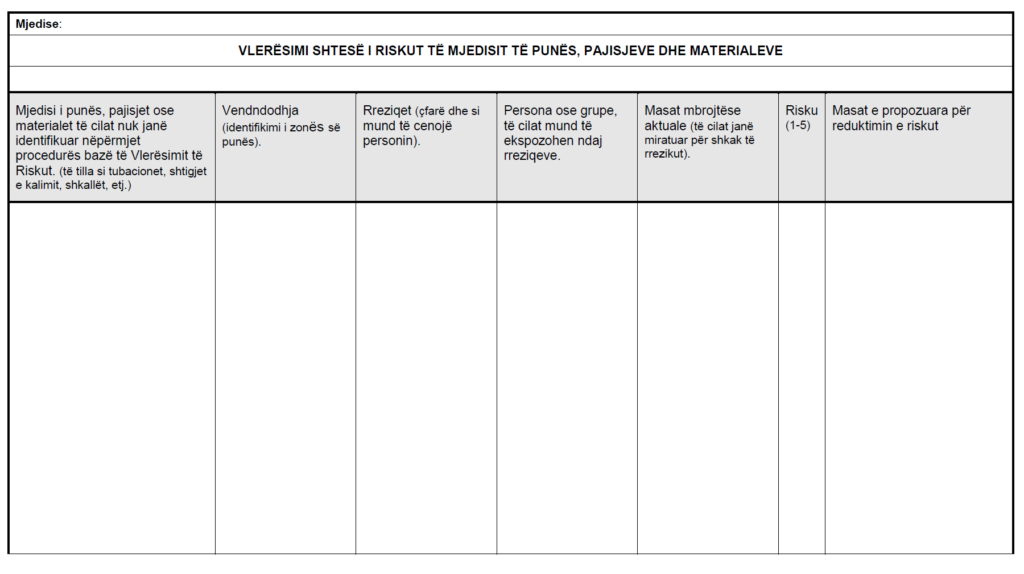
For the identification of risks that cannot be covered by the Risk Assessment of specific tasks, and which are related to all environments or the entire workshop (such as piping, walkways, and stairs), the form in Appendix 3 is used. (Conducting a supplementary risk assessment of the work environment, equipment, and materials is proposed).
Identification of individuals who may be exposed to risks
For every risk, it is important to be clear who could be harmed, as this will help identify the best way to manage the risk.
Employees who interact with hazards, either directly or indirectly, must be taken into account, e.g. An employee who coats a surface is directly exposed to solvents, whereas other employees nearby, engaged in different activities, are unintentionally and indirectly exposed.
This doesn't mean listing everyone by name, but identifying groups of such individuals like ‘people who work in warehouses’ or ‘passersby.’ Cleaners, contractors, and others from the public may also be at risk.
If the workplace is shared by multiple employees, it is necessary to consider work interactions and the mutual effects among the individual staff members.
Special attention should be paid to:
- Gender issues and
- Groups of employees who may be at increased risk or have special requirements:
- employees with disabilities,
- new and old employees,
- pregnant women and nursing mothers,
- foreign employees (who speak another language),
- untrained or inexperienced staff,
- temporary and part-time employees.
It is important to identify what might increase the risks for these individuals.
Identifying dangerous situations
Sometimes information regarding risks (What (can cause damage), it is not enough to imagine or understand what might happen. It is practical to know how The risk can cause harm. This is why describing (identifying) such a dangerous situation may be necessary. We can ask ourselves and others: How can the damage occur? How can an incident or injury occur? Information about the hazardous situation helps in finding effective protective measures.
For example: gas is a hazard. It can cause damage through explosion, poisoning, or combustion. Electrical energy is a hazard. It can cause damage from poor insulation, structural failure, improper cable placement, short circuits, etc.
Use of forms for collecting data on risks
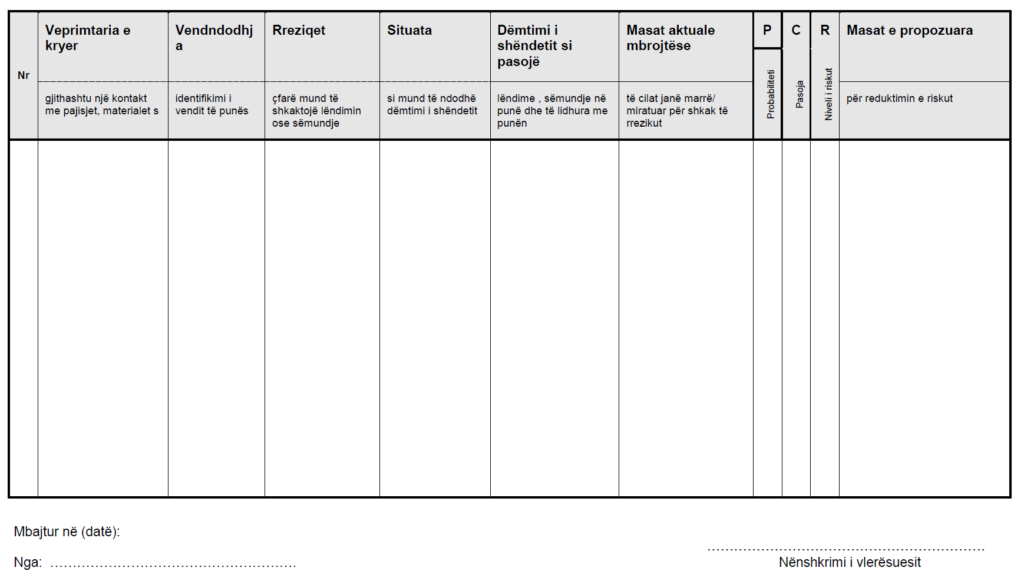
The data collected during risk identification must be recorded. This manual presents forms in Appendix 2 and Appendix 3 for the proper recording and description of risks, so that we have sufficient information for identifying protective and corrective measures.
The proposed Risk Assessment approach is based on evaluating all individual occupations (groups of employees) within the enterprise. The first page contains the basic characteristics of the profession, such as the composition of employees in the assessed professions, working conditions, workplace, a list of activities performed by an employee or a group of employees, and the machinery, equipment, substances, and materials used.
The following pages are intended for information on risks as well as their assessment. The explanations of the items used in the table are as follows:
Explanation of the table columns
| Column | Explanation |
| Activity number | It is important for better identification of specific activities when the list is very long. |
| Activity | According to the steps, they will be completed. Activities carried out by profession. It is important to list all activities related to the use of machinery, equipment, substances, and special materials, as well as those concerning work environment factors. For example: cutting with a circular saw; manual surface grinding. |
| Location | Identification of the location where the work was carried out, where the machines or technological stands mentioned are. (An activity may sometimes be carried out in more than one location) E.g.: wood workshop, disc saw 2.2 and 2.3; wood workshop, band saw. |
| Risks | Identification of the risks , …which can cause injuries or illnesses. For a work activity, several hazards can be identified. For example: moving machine parts, wood dust, electricity. |
| Dangerous situation | Dangerous situations, Description of how a health hazard can occur. Some hazardous situations can be identified as risks. For example: cutting fingers while sawing; disc breakage; being struck by material from behind; inhaling wood dust. |
| Current protective measures | Measures that have already been taken due to the risk. |
| P | The possibility of potential damage occurring |
| C | The seriousness of the consequences |
| R | Risk |
| Proposed measures | Proposed preventive and corrective measures for risk reduction. |
Step 2. Preliminary identification and risk assessment
The next step is the preliminary determination. of risks from any risk. Preliminary risk determination is a process in which the combination of the probability of damage occurring and the severity (consequence) of that damage is assessed. The preliminary determination is provided by a specific level of the selected scale. This assessment is called Qualitative assessment.
Note: In some cases of the possibility of major accidents in the chemical industry, or nuclear power plants, or other specific production processes, the risk can be calculated with quantitative methods. It should be possible to measure quantitative risk attributes, such as statistical frequency, magnitude, exposure, damage, etc. This manual does not address these methods and solutions.
In most cases qualitative assessment It is sufficient. As the name suggests, a preliminary qualitative risk assessment using qualitative methods is subjective and often subject to multiple interpretations and discussions. However, the professional skills and experience of the assessors are necessary, since it must be a qualified preliminary determination. There are various risk assessment methods used in workplaces. Here, a “matrix method” tool is proposed that can be used. It is based on the definition of risk.
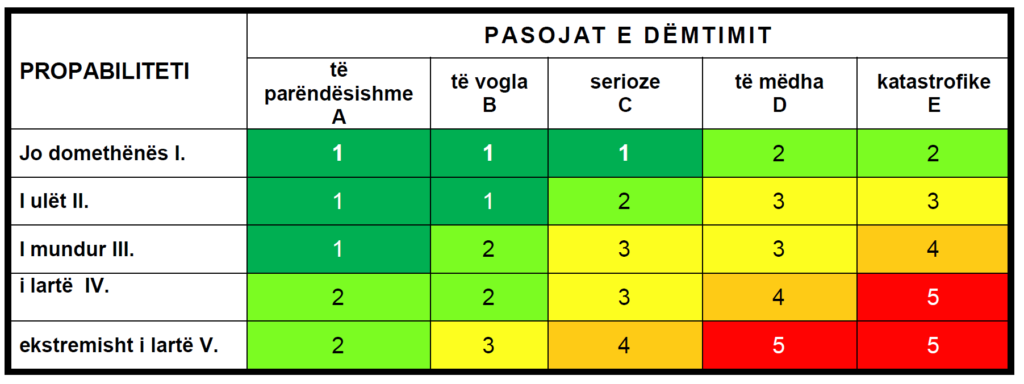
RISK = Probability x Consequences

Qualitative risk attributes – the probability and the potential impact of harm are predefined on a five-point scale and compared in a matrix.
Comparison of results with the five risk levels:
Matrix for the preliminary qualitative determination of risk
Scale of probability
| I. | not significant | Not likely |
| Second. | low | It's not very likely. |
| three. | possible | It's possible, rare, occasionally |
| Fourth. | high | very likely, often, often |
| Five. | extremely high | almost certain |
Scale and the consequences
| A | unimportant | Negligible health injuries (very minor); no temporary work disability (medical leave). |
| B | small | Mild and temporary health injuries (reversible) that may require medical care but only limited ongoing treatment; temporary work disability; no permanent work disability. |
| C | serious | serious health impairment requiring medical care and ongoing, prolonged treatment; serious health impairment that may cause a permanent reduced capacity for work |
| D | great | serious permanent and/or progressive impairment of health; permanent disability for work. |
| E | catastrophic | death; a very serious impairment of health with disability* |
* WHO, World Health Organization, International Classification of Impairments, Disabilities and Handicaps (ICIDH): ‘Disability’ is the disadvantaged condition resulting from an impairment or inability that limits a person from performing a role considered normal for his age, sex, and social and cultural factors.
Risk classification
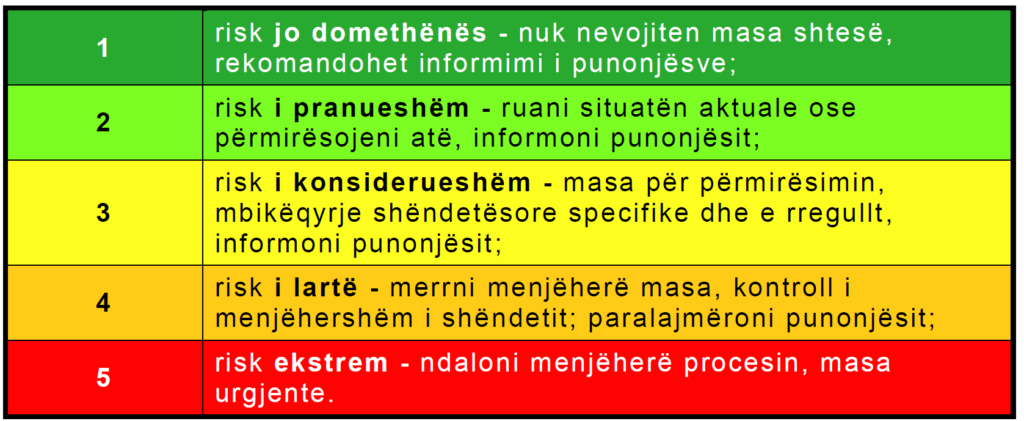
The preliminary determination of probability and consequences simply means answering the following questions:
- How likely is it that a risk will cause damage (e.g., if it's unlikely, possible but not very likely, occasional, or frequent over time)?.
- how serious is that injury likely to be that (e.g. resulting in negligible damage, an injury-free incident, a minor injury (bruise, scratch), serious health damage (fracture, laceration, chronic illness), a fatality, or multiple fatalities).
The preliminary determination of probability and consequence can be made by taking into account factors that affect the probability and consequences of a potential injury.
They can They are measurable., such as: duration of exposure, number of people at risk, system parameters – weight, height, speed of movement, value of losses, etc.
Factors immeasurable, such as: risk difference, accident onset difference, employee qualifications, level of control and maintenance, surrounding influences, preventive measures, system complexity, etc.
Examples:
when the duration of exposure is higher – the probability of damage is very high.;
- The more people who are exposed, the worse the consequences of the accident will be.;
- when the worker's qualification is lower – the probability of damage is higher;
The assessment of probability and consequence is proposed to be carried out through discussion, negotiation, and agreement among several assessors.
- The longer the duration of exposure, the higher the probability of damage.;
- The more people who are exposed, the worse the consequences of the accident would be.;
- When an employee's qualification is lower, the probability of damage is higher.;
Risk assessment
After the preliminary risk determination, a risk assessment is conducted to determine whether risk reduction is necessary or whether an acceptable safety standard has already been achieved. The acceptability of risks should be based on safety principles and other aspects mentioned in Chapter 3 on Principles of Risk Assessment.
Proposed method – The matrix for the preliminary qualitative risk assessment gives us an initial idea of how serious the risks are, divided into five categories. However, when it is reasonable, assessors may consider any of them to be acceptable or unacceptable risk, provided this does not conflict with rules or standards. In particular, risks in the lower categories (1 and 2) should be taken into consideration.
The lists of assessed risks can sometimes be very long, making it difficult to present an easy analysis. That's why it's practical to… We prioritize risks , to rank them by importance in order to give them priority when adopting preventive measures.
Support from professionals
In some cases, it may not be possible to simply identify hazards and assess risks without the support and advice of professionals. This need may arise in connection with more complex workplace processes and technologies, or hazards—such as those related to health—that may not be immediately or easily identifiable and may require the conduct of analyses and measurements.
Step 3: Decision-making on preventive and corrective actions
After assessing the risks, the next step is to make recommendations and take effective preventive and corrective measures. Their goal is to eliminate or minimize existing risks without creating new ones at the same time.
Is it possible to eliminate the risks?
Among the things that should be taken into consideration at this stage is whether the risks are preventable or avoidable. This can be done, for example, by:
- evaluated whether the task or job is necessary,
- remove the danger,
- uses various substances or working processes
Principles of prevention
If risks are not avoidable or preventable, they can be reduced to an acceptable level. When developing a strategy to reduce and control risks, employers should familiarize themselves with the following general prevention principles (Law on Occupational Safety and Health):
- combating risk at the source,
- the adaptation of work to the individual, especially with regard to the design of jobs, the selection of work equipment and work and production methods, with the aim, in particular, to facilitate monotonous work and work performed at a predetermined pace and to reduce their effects on health,
- adaptation to technical progress,
- replacing the dangerous with the non-dangerous or less dangerous (by substituting the machinery, material, or other function that poses the risk with an alternative).
- the development of coherent general policies for protection covering technology, work organization, working conditions, social relations, and the impact of factors related to the work environment,
- prioritizing collective protective measures over individual protective measures (e.g., controlling exposure to fumes through local exhaust ventilation of released gases instead of personal respiratory equipment),
- Providing proper instructions to employees.
Strategy for selecting security measures
The following hierarchy of measures is necessary:
- Avoid (eliminate) the risk; change the properties of the source.
- Replace the risk
- Collective protective measure (spatial risk distribution)
- Use personal protective equipment (spatial separation of employees)
- Measures related to behavior (training, instructions)
Sometimes it is necessary to adopt an approach of linking a series of successive measures with the aim of at least reaching the limits of acceptable risk.
7. Implementation of Risk Assessment
The next two steps belong to the implementation phase of the risk assessment:
Step 4. Taking action
Once the most appropriate preventive and corrective measures have been identified, the next step is to implement them effectively.
The implementation of the Risk Assessment covers:
- the implementation of acute and urgent measures,
- the approval of Action Plan for Implementing the Risk Assessment of preventive and corrective measures through the assignment of tasks, responsibilities, specific timeframes, and monitoring,
- informing and training all employees and managers on the findings of the Risk Assessment and providing guidance for risk prevention,
- Feedback on the effectiveness of the measures taken must be collected and presented.
Implementation of the action plan
The Action Plan for implementing preventive and corrective measures includes, in particular:
- the list of tasks for implementing preventive and corrective measures, taking into account their priority;
- the identification of the persons responsible for taking measures and those responsible for control when actions must be completed;
- the timeline for the execution of each measure, allowable expenses, resources, etc.;
- the program for other enforcement activities such as training, information dissemination, installation of safety signs, drafting emergency plans, etc.
Information and training
Employees and their representatives must be informed about the measures or procedures that will be implemented (or have already been implemented), how they will be applied, and who will be responsible for their implementation. It is important that employees be informed, instructed, or trained about the identified risks and how they should behave to protect themselves and take precautions to avoid the negative consequences of those risks.
Special training must be provided for managers. Managers are the ones who organize work activities, assign tasks to employees, and are required to do so with safety regulations and all known and identified risks in mind. Managers are responsible for ensuring the proper protection of employees while they perform their work.
Step 5. Monitoring and change
Monitoring
Although the Risk Assessment procedure can be carried out perfectly and in detail, at best it cannot uncover all risks and hazardous situations. The system's Continuous monitoring The system for reporting work-related hazards must be implemented. The system (organizational measures) must be documented in writing and must involve all employees and managers in ongoing monitoring to detect hazards or other potential dangerous situations. The system must describe, whenever a new hazard or new dangerous situation is identified, how to record the new hazards, how to present them, and how to include the information in enterprise risk database, the manner of approving the appropriate protective or corrective measures, as well as the method of distributing them to all workplaces or to groups of persons exposed to the new risk.
Registration of almost accidents Accident analysis should also be part of ongoing monitoring and the information provided on new and emerging risks, should be included in the enterprise risk database, and should be followed by appropriate measures, including informing employees.
Change
Although risks are continuously monitored, risk assessment should not be a one-time activity.
The employer must update the Risk Assessment in the sections relevant to work activities, the workplace, and other work equipment, in particular in the case of:
- an accident or hazardous event or occupational disease;
- the discovery of a new hazard or risk;
- installation of a machine, work equipment, material, or new technology in the workplace;
- the creation of a new profession or job position;
- change in working conditions, work organization, or work processes;
- the inspector's order, if he finds that the Risk Assessment has not been carried out appropriately and in accordance with specific laws and/or regulations, or it does not reflect the actual situation in the workplace;
- loss of the validity of the data or information on which the Risk Assessment is based;
- the emergence of new defense opportunities; in any case: once every two years.
8. Risk Assessment Documentation
All risk assessment processes at all stages must be documented. The following records and documents may be required:
Preparation phase:
- Risk Assessment Action Plan
- Recording of the initial training of all employees
- Assignment of evaluation teams
- Lists of information and document sources
Risk Assessment Procedure:
- The file of Risk Assessment forms for identifying risks, assessing risks, and proposed measures, from all professions and/or job positions and/or by work environments (see Annexes 2 and 3).
- the timeline for completing the Risk Assessment procedure;
- minutes of the evaluation meetings and other data, if appropriate;
- List of proposed preventive and corrective measures.
Implementation phase:
- Implementation action plan;
- Records of training for employees and specific managers;
- Records for confirmation of the measures taken;
- List of personal protective equipment provided based on the risk assessment;
- The enterprise risk monitoring and risk assessment change system;
- Risk Assessment Document (summary based on the Risk Assessment Regulation).
Evaluation records must be prepared in consultation with and participation of employees or their representatives or the Occupational Safety and Health Council (as applicable), and must also be made available to them for information purposes. Interested employees must in any case be informed of the outcome of any assessment related to their individual workplace, as well as the measures to be taken as a result of the assessment.
- Request Specific to Risk Assessment
There are several specific areas of work that are covered by specific legal requirements for occupational safety and health, as well as by particular steps of the Risk Assessment. In general, the simplified five-step approach presented is applicable to the entire procedure. The main differences may be entirely or partially in the way risks are identified, as well as in the assessment of the risks they pose. Conducting a specific risk assessment usually requires the involvement of specialists familiar with this field.
Specific requirements must be evaluated in accordance with the special rules as follows:
- Use of personal protective equipment
VKM for specific security requirements
(Decision No. 563 of July 3, 2013, on the approval of the Regulation “On Minimum Safety and Health Requirements for the Use of Personal Protective Equipment at the Workplace”)
- Loading manual
(Government Decree No. 523, dated August 6, 2014, for the approval of the regulation “Minimum Safety and Health Requirements for the Protection of Employees Concerning Manual Handling of Loads”)
- Working with devices that have screens
(Decision No. 521, dated August 6, 2014, on the approval of the regulation “Minimum Safety and Health Requirements for Work with Display Equipment”)
- Risks related to chemical agents
(Government Decree No. 522, dated August 6, 2014, for the Approval of the Regulation “On the Protection of the Safety and Health of Employees from Risks Related to Chemical Agents at Work”)
- Risks related to exposure to biological agents
(Government Decree No. 550, dated August 27, 2014, for the Approval of the Regulation “On the Protection of the Safety and Health of Employees from Risks Related to Exposure to Biological Agents at Work”)
- Risks related to exposure to carcinogens and mutagens
(Decision No. 520, dated August 6, 2014, on the approval of the Regulation “On the Protection of Employees” Safety and Health from Risks Related to Carcinogens and Mutagens at Work")
- Risks from a potentially explosive atmosphere
(Government Decree No. 384, dated May 6, 2015, on the Approval of the Regulation “On the Minimum Requirements for Safety and Health at Work of Employees at Risk from Explosive Atmospheres”)
- Risks posed by vibrations
(Decision No. 841, dated December 3, 2014, “On the protection of employees from risks related to mechanical vibration in the workplace.”
- Risks posed by noise
- (Decision No. 842, dated December 3, 2014, “On the protection of employees from risks related to noise in the workplace”
Risks from noise and electromagnetic fields
- Risks created by electromagnetic fields
(Decision No. 844, dated December 3, 2014, “On the protection of employees from risks related to non-ionizing radiation in the workplace”)
- Use of the work device
(Decision No. 562, dated July 3, 2013, on the approval of the Regulation “On Minimum Safety and Health Requirements for the Use of Work Equipment at the Workplace”)
- Transport of dangerous substances
- Risk control for major accidents involving hazardous substances and others.
Specific Risk Assessment procedures must be provided for the design, construction, and manufacture of machinery. For example, in accordance with Directive 2006/42/EC; EN ISO 14121-1:2007, Safety of machinery – Risk assessment.
Specific approaches should be used during the health risk assessment covered by specific health legislation, medical diagnostic methods, and medical requirements, such as mental load, stress, sensory overload, hygiene, microclimate, etc.
10. Common mistakes
Although risk assessment has been considered a fundamental tool for organizing occupational health and safety in the EU for more than twenty years, problems still exist in carrying it out in all types of enterprises and organizations. The European Agency for Safety and Health at Work compiled a summary of the most common mistakes made in 2008 in its Error Facts publication., E-Facts, No. 32 [7] presents practical recommendations. These examples can help avoid similar mistakes in practice.
Risk Assessment Planning
Not involving a team of people in the assessment or not including employees with practical knowledge of the process being assessed. Risk assessment should include employees or their representatives, not just the employer or the employer's representative working in isolation. All of these people can contribute at the various stages of the process.
Do not assign the Risk Assessment task to a person who is not competent to carry out the full range of duties. Therefore, it is essential that those conducting the assessment and the employer recognize the limits of their assessment abilities. Additional or higher-level expertise from specialists can be brought into the process if necessary. For example, a qualified electrical engineer may not have the knowledge to assess the risks posed by a complex chemical process.
Conducting the risk assessment, Step 1: Identifying risks
Referring only to the work manual without involving employees. Actual practices may differ from what is laid out in the work manual. Therefore, it is necessary for us to see what actually happens on the job. In general, experienced employees know their workplace and its activities better than anyone else. Therefore, it is important to observe and ask the employees.
Strictly following the checklist. The checklist is not intended to cover all risks for every workplace, but simply to help you put the method into practice. The checklist is only a first step in carrying out the Risk Assessment. More information may be needed to assess more complex risks, and in some circumstances you may need the assistance of an expert.
Failure to consider risks with long-term health effects. In the course of conducting superficial risk assessments, the focus is placed on the most obvious risks. Long-term effects such as psychological factors, as well as risks that are not easily observed or are overlooked—such as those caused by chemical substances or high levels of noise exposure—can be ignored.
Step 2: Assessment of the risk created by the hazards
Not fully assessing the risk. Describe every consequence that arises from hazardous events. Consider both immediate consequences and those that may occur after some time has passed. Be realistic about the worst-case scenario and address even seemingly insignificant risks. Everything else in the process stems from this assessment, so it's important not to overlook anything.
Assessment of every real working condition during risk assessment. For example, if employees frequently lift heavy boxes, this will increase their risk of developing musculoskeletal disorders (MSDs).
Scenario 1 involved an employee who only lifted heavy boxes during his work in the production area. Scenario 2 involved a production employee who also lifted heavy boxes during his work in other areas.
The frequency of exposure is higher for scenario 2 than for scenario 1. The probability that he or she will develop musculoskeletal disorders is even higher. Therefore, depending on the actual situation, the assessor must choose a plausible scenario to calculate both the exposure and the probability figures.
Step 3 and 4: Decision-making regarding the adoption of preventive measures
Step 3: Failure to consider the preventive hierarchy.
During the implementation of preventive and protective measures, the general principles of prevention must be followed in this hierarchy: risk avoidance; risk substitution; protective measures; individual protection; organizational measures; training and information.
Failure to consult or involve employees in decisions about preventive actions.
Decisions about preventive actions must be made with the involvement of employees or their representatives. Employees should be encouraged to contribute to this decision-making process and share their experience. They, for example, may be able to point out where a preventive measure is difficult to implement in practice, or suggest how the design of a tool or machine could be improved.
Step 5: Monitoring and change
Considering the Risk Assessment as a one-time obligation
The workplace risk assessment must be reviewed whenever there is a change in the workplace that could alter the perception of risk. Examples of such changes include the introduction of a new work process, new equipment or materials; a change in work organization; and the creation of new workshops.
Insufficient oversight of the effectiveness of measures
After preventive measures have been put in place, it is important to measure their effectiveness. The effective implementation of protective measures should also be monitored through a Risk Assessment review.
Risk Assessment Documentation
Failure to record the assessment
The risk assessment must be recorded. This record can be used as a basis for:
- The information that must be provided to interested parties,
- monitoring to assess whether the necessary measures have been planned,
- the evidence required by the supervisory authorities,
- any change if the circumstances change.
Practical summary:
To carry out the Risk Assessment effectively, the following steps can be used.
Preparation phase
- Begin the Risk Assessment procedure (SSHP expert),
- Organize meetings with senior managers: explain the importance of Risk Assessment, present the steps of the Risk Assessment (organized by the SSHP expert or a licensed external firm),
- Create a Risk Assessment Action Plan (SSHP expert with specialist and external management) (see the example in Appendix 4),
- Appoint the evaluation team (external and internal members, one or more teams depending on the size of the enterprise and the complexity of the technological process, coordinated by the SSHP expert),
- Organize the initial training to inform employees and introduce the Risk Assessment procedure (the SSHP expert with external experts and internal team members).,
- Gather the necessary information for the Risk Assessment:
- Make a list of the documents needed for the Risk Assessment and gather them.,
- Gather information from your observation in the workplace,
- Gather information by interviewing employees and managers (see the example in Appendix 5).
Risk Assessment Procedure
- Use the forms in Appendix 2 and Appendix 3.;
- Identify the risks (use the risk list, Appendix 1) and hazardous situations based on:
- the information gathered by visiting the workplaces,
- the information gathered through employee interviews,
- information about work-related accidents and illnesses,
- information from other sources,
- knowledge and personal experience.
- Record the measures already implemented;
- Assess the probability and severity of the consequences (use the matrix);
- Determine the risk in advance (use the matrix) (see example);
- Propose corrective and preventive measures and develop the Implementation Action Plan.;
- Prepare the Risk Assessment document.;
- Prepare a separate document for the employer's obligations (proposed);
- Prepare the chart with the Risk Assessment results for each employee (see example);
- Inform the Occupational Safety and Health Council and the employee representative about the Risk Assessment Document, including all obligations regarding the implementation of the necessary measures.
Implementation of Risk Assessment
- Organize training sessions or meetings for employees to inform them about the findings of the Risk Assessment.;
- Implement the measures in accordance with the Implementation Action Plan.;
- They monitored workplace risks every day.;
- Modify the Risk Assessment procedure in the case specified in the Order.
Note:
Attached to this Manual you will also find the appendices mentioned herein, which will assist both entities with various activities and labor inspectors in the inspection of the Risk Assessment Document.
Appendix 1:
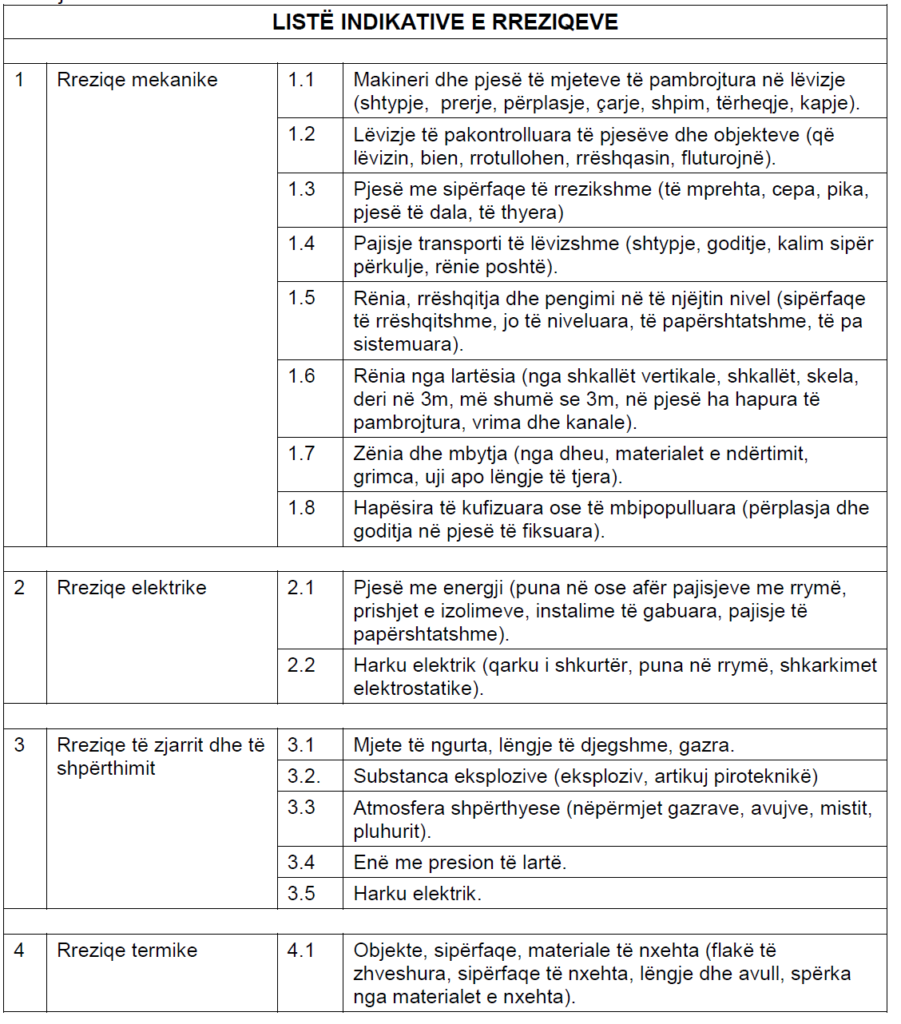
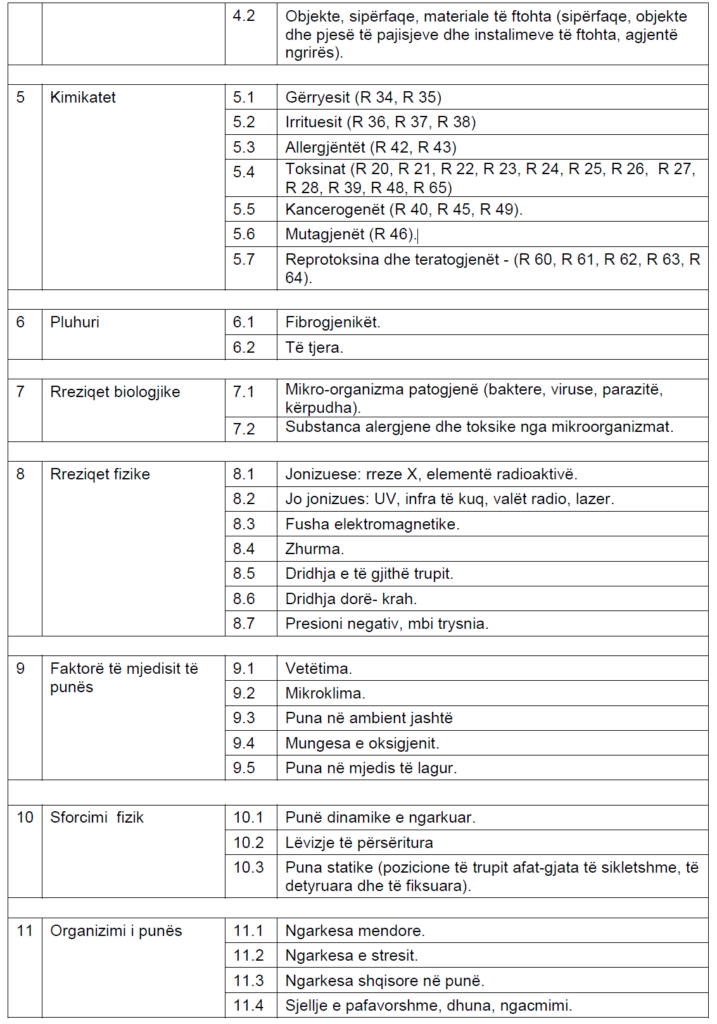
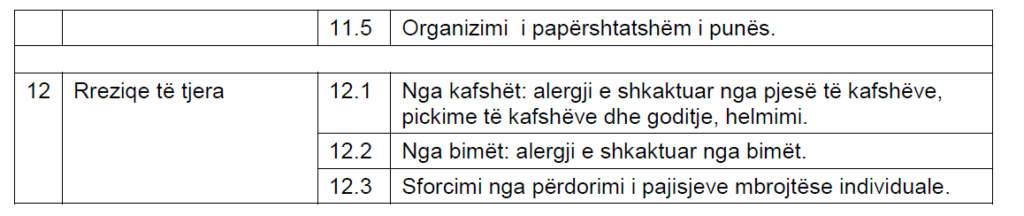
Appendix 2:
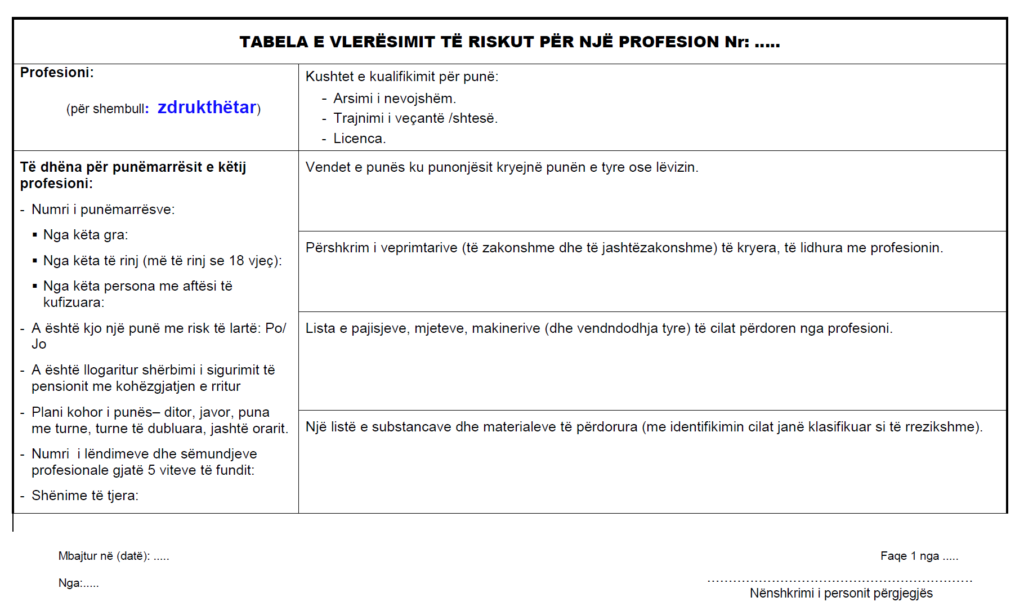
Appendix 3:
Appendix 4: Example Fictitious Risk Assessment Action Plan
1. Risk Assessment Statement
Based on the decision of the Director General dated May 2, 2013, with the aim of improving SSHP and fulfilling legal obligations, it has been decided to conduct a Risk Assessment that covers all professions, machinery, equipment, materials, installations, workplaces, and spaces in our enterprise. The risk assessment process, the procedure used, and the method of assessment will be based on the regulations of the Law on Occupational Safety and Health, and on the Practical Guide for Occupational Risk Assessment (2013 EU IPA Project).
2. Timeline
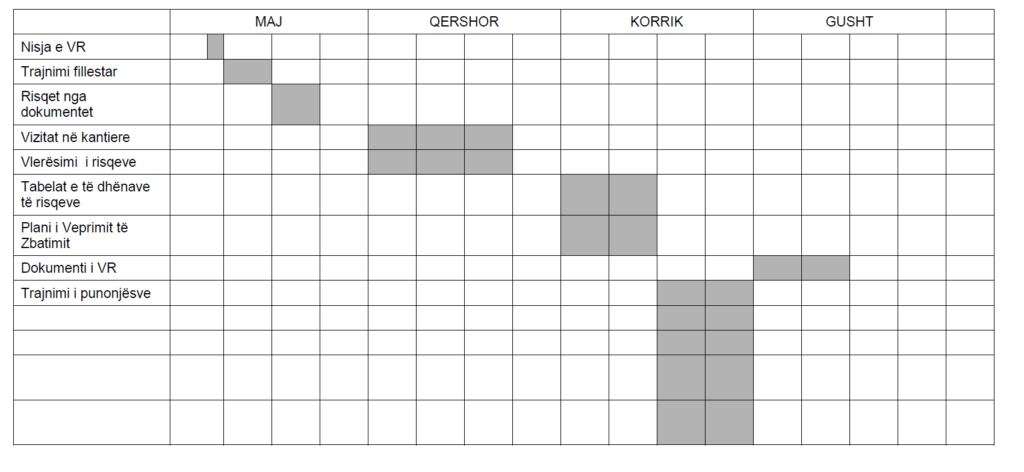
Start of the process: May 6, 2013.
The expected end of the process: the end of August.
The timeline table for specific steps is located in Appendix .:
3. Persons responsible for the process:
Managers: Mr., Deputy Director.
Executive Director: Ms., Manager of Occupational Health and Safety.
Risk Assessment Working Group: Ms., manager of occupational health and safety; Mr., specialist in safety and
health at work, Ms.
health specialist,
Mr. Z., appointed external expert, Ms.
appointed external expert.
4. The preparatory phase of the Risk Assessment
Initial training: Initial training must be organized for all employees of our company, with the aim of explaining the Risk Assessment process, the expected benefits, and each employee's duties in identifying risks.
Group 1: May 11, 2013, 1:00 PM – 1:30 PM (led by Ms., participants, administrative and technical staff, Division 3 staff, senior managers, DP).
· Group 2: May 12, 2013, 1:00 PM – 1:30 PM (led by Mr. Z., participants, staff from Divisions 1, 2, and 4, Mr. Z., DP).
- Training of the working group on Risk Assessment Strategies and Procedures, led by Ms. .
Collection of information on risks from documents: May 16–20, 2013. Working Group.
Collection of information from accident investigations, inspection logs, technical documentation, operational records/recordings, musculoskeletal disorders, and other documents. Maintenance of structured records, with identified risks assigned to specific occupations or to additional workplace, equipment, and material forms.
The executive director will ensure the availability of specific documents.
Creation of assessment teams: The executive director will appoint the assessment teams, which consist of two members of the Risk Assessment Working Group, the respective workplace managers (of the assessed workplace), employee SSHP representatives, and, if necessary, appropriate specialists).
5. Risk Assessment Procedure
Workplace visits: assessment teams will visit all of the company's construction sites from June 1 to June 24, in accordance with the plan drawn up by the executive director. The objective of the visits is to gather information on the risks and hazardous situations to which employees are potentially exposed.
This will be carried out through:
- risk assessment in the workplace, related to specific professions,
- Interviewing employees, managers, and certain professionals,
- recording the findings on the specific forms (for the professions and additional ones),
- If it is possible to determine the risks in advance (probability and consequences), as well as the current measures and the proposed preventive and corrective measures, they can be noted.
Risk assessment, proposals for preventive and corrective measures:
Special work teams will assess the risks posed by the identified hazards and dangerous situations. The method used is in accordance with the 2013 Practical Guide to Workplace Risk Assessment.
It is proposed that the working team's evaluation meetings be held on the same day as the visits and interviews.
Preventive and corrective measures should be proposed in the work team's discussion, with the participation of managers from the specific work areas; preventive principles and the hierarchy of safety measures should be taken into account.
Deadline: July 24, 2013
6. Risk Assessment Product Documents
The risk assessment working group must prepare:
Tables of occupational risk data: For each profession, a structured list of the most significant risks should be prepared; based on the weight to which an employee is exposed (by profession); as well as the necessary preventive measures for the respective risk and instructions for employees on how to protect themselves. Make it available to employees and managers.
Deadline: July 15, 2013 Implementation Action Plan: must be prepared in accordance with the Order for
The Risk Assessment, which includes a list of tasks for implementing preventive and corrective measures, the identification of responsible persons, and the program for other enforcement activities, such as training, providing information, installing safety signs, drafting emergency plans, etc. The plan must be discussed with employee representatives.
Deadline July 15, 2013
Risk Assessment Document: must be prepared based on the Risk Assessment Order and sent to the responsible institutions. Responsible person: Executive Director.
Deadline: August 15, 2013
7. Monitoring actions:
Employee information: Organize training sessions for employees (by occupational groups). Inform them about the results of the risk assessment, the risks identified, the risks to which employees are exposed, the protective measures, and how they can avoid those risks. Encourage employees to participate in ongoing observation, risk monitoring, and the reporting of near misses.
Trainee groups: 15 to 30 people. Workplace Risk Data Tables will be provided to individual employees.
The timeline will be drafted by the Executive Director between July 1 and July 30, 2013.
Implementation of the Implementation Action Plan: The implementation of the Implementation Action Plan must be monitored. Deadline for short-term tasks: August 31.
Person responsible for monitoring: the designated Executive leader. Reports during the execution phase of the Implementation Action Plan are required on September 30 and December 15, 2013.
7. Monitoring and review
Monitoring: Accordingly, the continuous monitoring system for risk observations must be ensured in accordance with the internal order dated April 24, 2013.
Next Risk Assessment Review: September 2015
Risk Assessment: The final assessment of the risk assessment process, its challenges, its gains, and lessons learned from experience will be developed further.
September 12, 2013. Employers who are most active in monitoring and participating in identifying risks will be rewarded.
Issued in Tirana, May 6, 2013 Director General
Risk Assessment Action Plan, 2013 Timeline
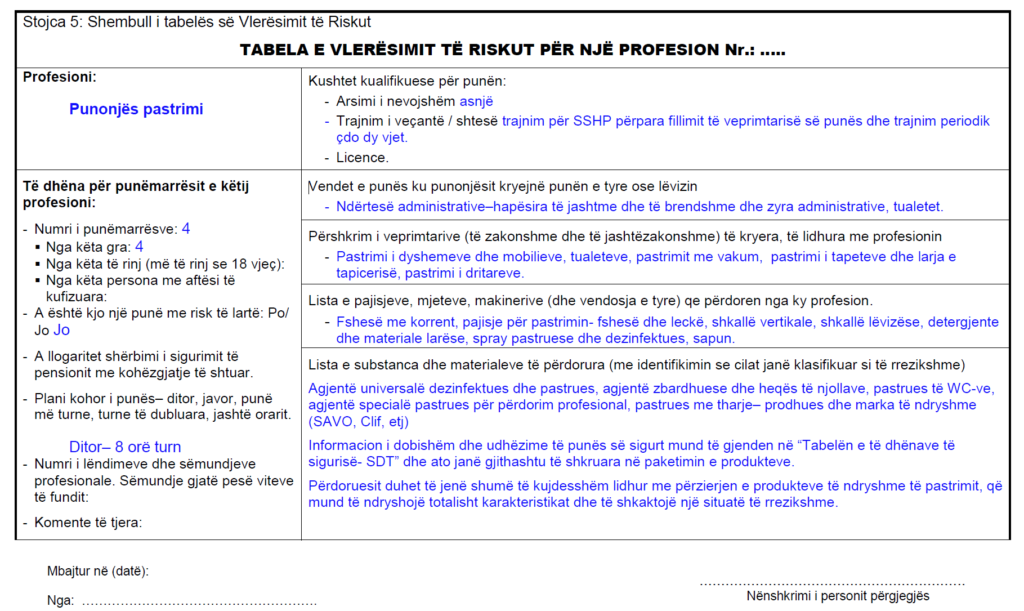
Appendix 5: Example of the Risk Assessment Table
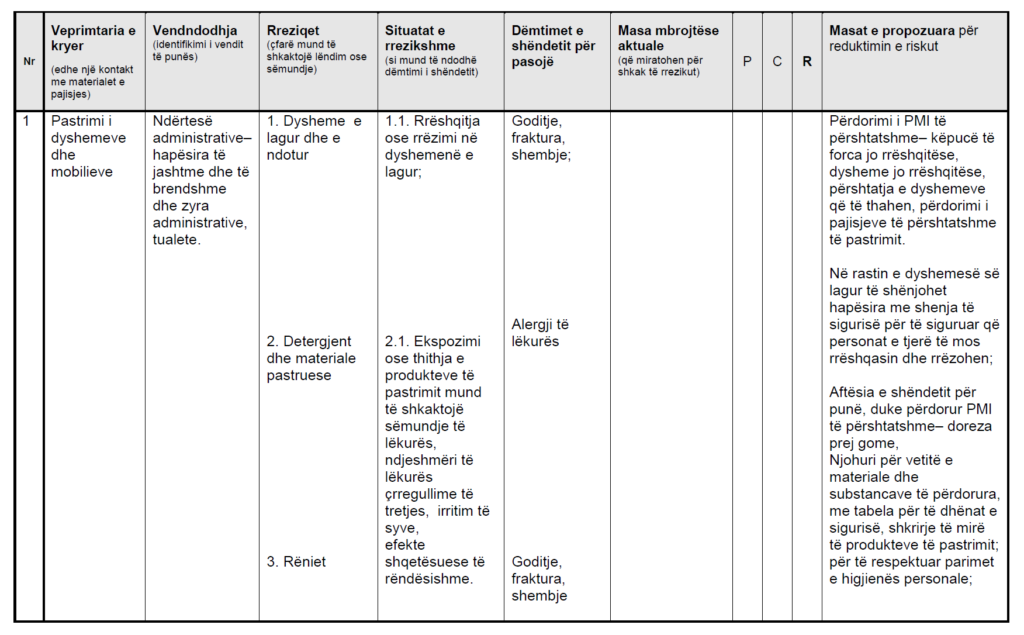
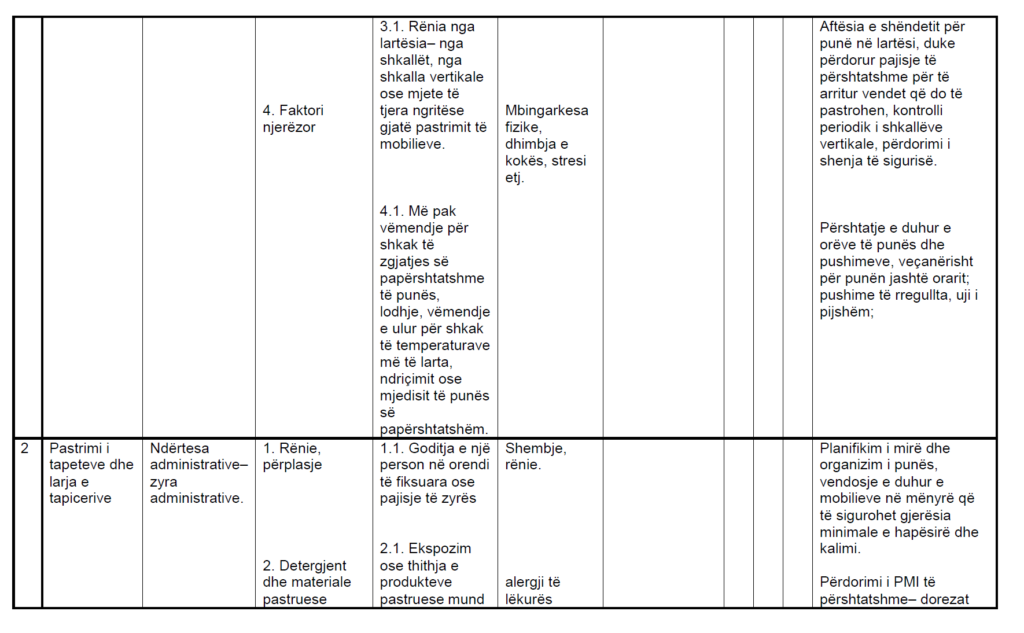
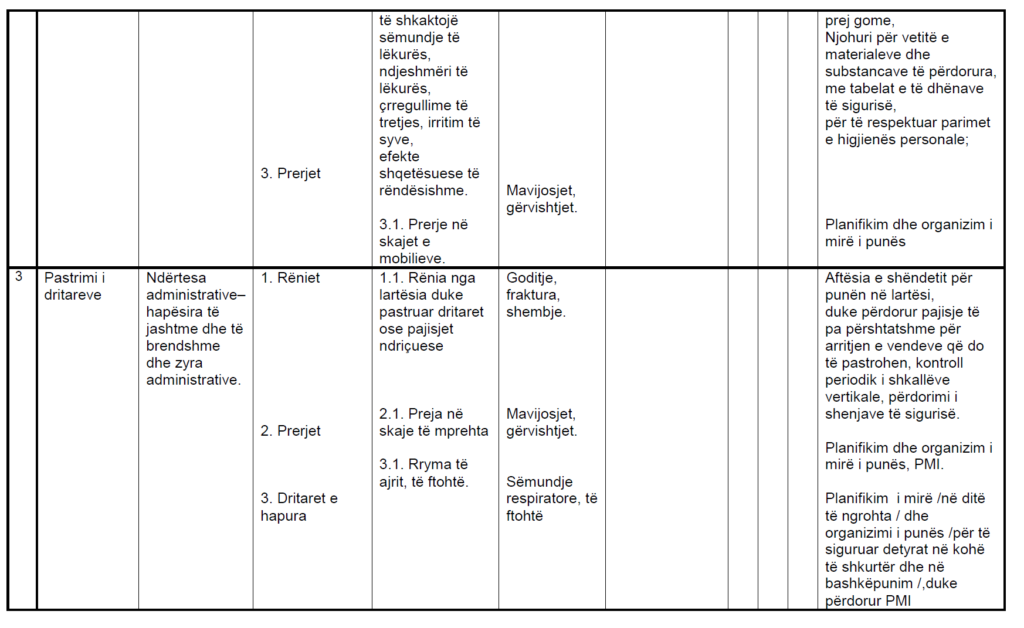
Appendix 6 Employee Interview Example
Guidelines for interviewing employees to identify risk
Risk identification is an important part of Risk Assessment. The designated working group and assessment teams must gather information about the risk and hazardous situations related to occupations, activities, specific equipment, and other assessed objects. Employees are one of the most important sources of information about hazards. Considering that initial training (information) on Risk Assessment has been provided to all employees and they have been informed about their role in Risk Assessment and about the need to provide information on hazards, hazardous situations, near misses, and all other SSHP-related issues connected to their work and workplace.
Assessors in designated positions must interview selected employees to obtain the information required for the Risk Assessment.
The proposed approach to interviewing
The assessor must explain his role and the purpose of gathering information on all objects that could cause harm or damage, and may cause the loss of the employee's life or harm to his health, which the employees fear, and may cause discomfort, stress, or other negative effects on him.
Suggested questions
- Which do you consider the most dangerous activity among your duties? What could happen?
- What do you consider to be risks, dangerous situations, or other hazards? (Are you afraid of anything else?)
- Is there anything at work that could cause you fatigue?
- What do you consider to be a stressor in your workplace?
- Have you ever witnessed a near miss? If so, what happened?
- Do you have any suggestions for improving workplace safety?
- Do you have sufficient support from your supervisor to improve workplace safety and health?
Records
Assessors may use Forms 2 and 3 for risk identification and make additional notes.
In Tirana, April 24, 2013 SSHP Specialist
Appendix 7Example of the monitoring system
Internal order
for Continuous Risk Assessment Monitoring System
April 24, 2013
Risk Assessment is considered one of the most important tools for prevention in our company. The procedure will be revised every two years. Considering that the Risk Assessment procedure cannot uncover all existing risks, a continuous monitoring system must be established. For this purpose:
Disclosure of risks:
- All employees (both workers and managers) must participate in the ongoing monitoring of hazards and dangerous situations and report any problems they discover. This means being perceptive and sensitive to anything that could harm people or cause adverse consequences and reporting it in accordance with the rules of this Order. This also means observing any failure to comply with or violation of safety rules and reporting them in accordance with this Order.
- All employees are required to submit any suggestions for improving health and safety at work, reducing or eliminating workplace risks, or improving working conditions.
- All employees are required to report near misses that occur at the workplace or in connection with work. A near miss means an event in which an incident occurred without any injury or significant damage. A near miss indicates that a hazard could cause an injury or damage. Voluntary reporting of near misses will not eliminate penalties for those who caused the incident. A safety rule violation in the event of voluntary reporting will be waived.
Reporting
- Whenever a hazard or a new dangerous situation is discovered, the employee may report it in writing or orally to the employee representative for SSHP, to his supervisor, or directly to the appropriate SSHP specialist in the SSHP Department.
- The manager or employee representative for SSHP who receives information about newly identified hazards, near misses, or suggestions for SSHP improvement must record them in writing and submit them to the Central Risk Database in the SSHP Department.
- The SSHP Department keeps a record of submissions and the individuals who made them. The most active employees who have reported issues will be rewarded in accordance with internal rules.
Risk assessment and the implementation of preventive and corrective measures
- The specialist responsible for SSHP is appointed as Administrator of a Central Risk Data Base (CRDA). He is responsible for organizing the working group to assess the risks posed by reported detected hazards and for approving the appropriate preventive and corrective measures. The measures must be implemented in all locations or similar work activities where such risks may exist.
- CRDA is responsible for providing feedback to employees who report a risk finding, informing them that the information has been addressed.
- CRDA is responsible for collecting information on hazards, hazardous situations, and risks from the technical documentation of machinery, equipment, materials, new technologies, etc.
- CRDA is responsible for collecting information on risks following workplace accidents, occupational diseases, internal and external inspections, as well as other findings.
- CRDA is responsible for collecting information on risks as provided in points 9 and 10, for assessing those risks, for approving appropriate measures, and for applying them to all similar cases.
- Employee information must be provided for all hazards and associated risks, as well as information on measures taken in a timely and appropriate manner, in accordance with the urgency of the information or the actions required.
Held in Tirana Director General
April 24, 2013
Download
Source: State Labor Inspectorate.
