
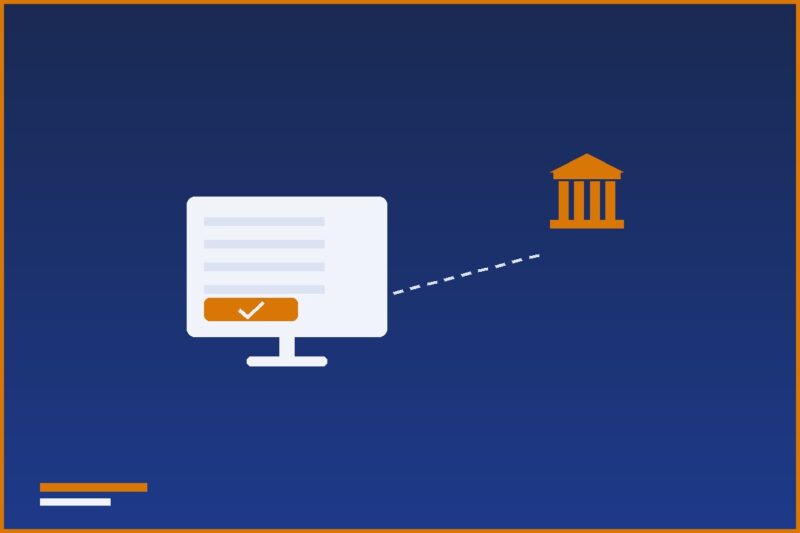
- In October 2019, the General Directorate of Taxes explained the practical steps for declaring the business bank account on the e-Filing platform, under the “My Profile” / “Bank Details” section.
- Taxpayers with passive status have no legal obligation to open and report bank accounts, but the obligation automatically arises if they move to active status.
- The exact steps in the e-Filing interface may have changed since 2019, so the general process remains valid, but the specific menu names should be verified on the current platform.
- The full rules on deadlines and exemptions are explained in our business bank account guides.
On October 26, 2019, the General Directorate of Taxes announced that the deadline for declaring bank accounts, originally October 26, was extended to October 28, since October 26 fell on a holiday. Along with the notice, the tax administration also explained the practical steps for filing on the e-Filing platform.
From our daily work we see that, beyond the question “when,” many taxpayers have a concrete need for the question “how,” namely, exactly how to enter their bank account details into the electronic filing system.
Read also: Business bank account, opening and reporting deadline under Law No. 9920/2008 and the Business bank account: who is exempt from the legal obligation.
How did the declaration work in e-Filing?
Steps for declaring bank details
According to the 2019 explanation, the declaration was made in the “e-Filing Im” menu, “My Profile” submenu, “Bank Details” section: selecting the bank's name, entering the IBAN, selecting the account's currency, the date from which the account is valid, and, optionally, uploading a supporting document. The procedure was repeated for each additional account the taxpayer wished to declare.
Who can avoid doing it altogether, passive status
Taxpayers with passive status before the tax administration are not legally required to open and report bank accounts. This exemption is not permanent; if the taxpayer later moves to active status, the obligation arises at that moment, in the same way as any other active taxpayer.
Every time there is a tax or financial change that affects your business, we notify you directly by email with a practical explanation.
Send me free notificationsWhy does it matter today?
The interface may have changed, but the principle hasn't.
The electronic filing platforms are updated over time, and the specific menu names or the sequence of steps in e-Filing may have changed since 2019. The fundamental principle remains the same: opening a bank account and reporting its details to the tax administration, but we recommend following the platform's current interface rather than copying the steps mentioned here word for word.
How we handle this with our clients
We file our clients' bank statement data in e-Filing ourselves as part of our monthly service, so they don't waste time adapting to the platform interface's frequent changes.
Frequently asked questions
Does the October 28, 2019 deadline still apply?
No. It was a one-time postponement due to a day off in that specific year.
Do I have to declare a bank account if I'm passive?
No, as long as you remain in passive status. The obligation automatically becomes active if you switch to active status.
Where can I find the full current rules?
In our guides linked above regarding the current deadline and exemptions, and on the e-Filing platform for the exact steps of today's interface.
