
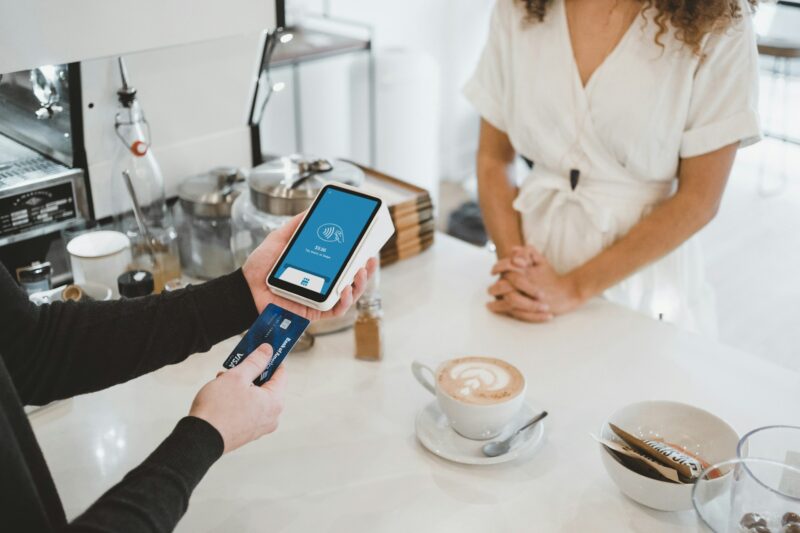
- SEPA fees for euro transfers from Albania are capped by a Bank of Albania regulation.
- Incoming transfers cannot exceed €3, regardless of the amount.
- For outgoing transfers up to €100,000, the cap is 0.011% of the amount via e-banking and 0.021% via the branch.
- The minimum commission for e-banking is €2, while the absolute cap reaches €25 for e-banking and €50 at branches.
- SEPA transfers became operational on October 7, 2025, after all 11 banks registered for the SEPA schemes.
SEPA fees are the commissions that Albanian banks may apply to euro transfers within the SEPA area. They are not set arbitrarily, because the Bank of Albania has established regulatory caps.
Albania was approved as a SEPA member on November 21, 2024, by the European Payments Council. Transfers became operational on October 7, 2025, after all eleven domestic banks registered as participants in the SEPA schemes.
By August 2026, the system will be fully operational. Therefore, the real question is no longer what will change, but how much you will specifically pay for a transfer.
Read also: Financial control, liquidity planning, and costs
Read also: Bank accounts, payments and transfers, what the bank requires
How much exactly does a transfer cost?
Fees are divided by transfer direction, channel used, and amount. The table below summarizes the regulatory caps.
| Case | Through e-banking | Through the branch |
|---|---|---|
| Incoming transfer | Up to 3 euros | Up to 3 euros |
| Loan up to 100,000 euros | Maximum of 0.011 TP3T of the total | Maximum of 0.021 TP3T of the total |
| Exceeding 100,000 euros | Maximum 25 euros | Maximum 50 euros |
| Minimum commission | two euros | four euros |
These are ceilings, not fixed rates. A bank may apply a lower rate, so comparing banks still makes sense even within the same limits.
Calculated example for a €10,000 transfer
For a €10,000 payment to a supplier in the SEPA area, made via e-banking, the percentage cap yields €0.011 per €100 of the amount, i.e. €1. Because the minimum fee is €2, the actual cost becomes €2.
The same transfer through the branch yields 0.021 TP3T, i.e., €2, and with a €4 minimum fee the cost becomes €4. The difference between the electronic channel and the branch is small in absolute terms but doubles as a percentage.
For a €200,000 transfer, the absolute ceiling applies. The cost does not exceed €25 in online banking, whereas a flat percentage would have yielded much more.
What is SEPA and why does it lower costs?
SEPA is the Single Euro Payments Area, where cross-border euro payments are treated under the same conditions as domestic payments. The common standard removed the layers of intermediation that had been driving up costs.
For an Albanian business that invoices abroad or pays European suppliers, this directly affects the margin. The tax treatment of invoicing abroad is provided on the page of VAT on imports and exports.
How long does a transfer take?
Standard SEPA transfers are completed within one business day. The instant transfer scheme completes it in seconds when both banks offer that service.
The processing time also depends on the time of submission and on the bank's verification. High-value transfers or those with incomplete documentation are held for review.
What should the business check?
Three things determine the real cost. First, the channel, because e-banking is systematically cheaper. Second, your specific bank's fees versus the cap, since there's a real gap between them. Third, the supporting documentation, because a stopped payment costs more than the commission.
The documentation requirements for incoming and outgoing international payments, such as contracts and invoices, are covered on the bank account blog. The recording of the exchange rate and the effect of fluctuations on accounting are related to Finance and accounting.
Read also: AIPS, AIPS Euro, and AECH payment systems
Read also: Euro exchange rate and protection against exchange risk
Read also: Tax legislation, obligations accompanying payments
Every time there is a tax or financial change that affects your business, we notify you directly by email with a practical explanation. Send me free notifications
Frequently asked questions
What are the SEPA fees for an incoming transfer?
Up to €3, regardless of the amount. This is the regulatory cap and applies to all incoming euro transfers within the SEPA area.
How much does an outbound transfer of €10,000 cost?
Through e-banking the cost is €2, because the interest rate cap yields €1 and the minimum fee is €2. Through the branch the cost reaches €4.
When did SEPA transfers start in Albania?
Operationally, on October 7, 2025. Approval as a member had come on November 21, 2024, while the banks were registered in the SEPA schemes during May 2025.
Are all Albanian banks in SEPA?
All eleven banks are registered as participants. Instant transfer service may not be offered by each, so please verify with your bank.
Can the bank apply a rate higher than the cap?
I can't. The ceilings are a regulatory requirement, while the bank may apply a lower fee.
Does SEPA affect payment tax obligations?
They are not affected. The tax treatment of the income or expense remains the same, and the payment is reported under the usual rules.
What is required to send a SEPA transfer?
Euro account, IBAN, and beneficiary details. For business-purpose payments, a supporting document such as a contract or invoice is also required.
