
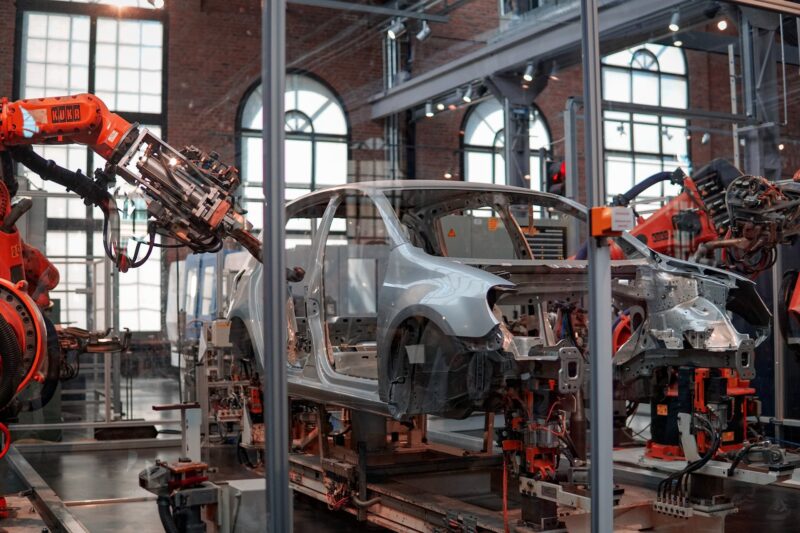
Section C – Processing
Processing involves the physical and chemical transformations of materials, substances, or components into a new product; however, this cannot be used as a simple, general criterion for defining processing. The transformed materials, substances, or components are material raw materials that are products of agriculture, forestry, fishing, and mining, as well as from other processing activities. Significant changes, renovation, or reconstruction of goods are generally considered processing activities.
The result of the processing may be finished in the sense that it is ready for use or consumption, or it may be semi-finished in the sense that it will enter production again for further processing. For example, aluminum production from the refinery is an input for primary aluminum production; aluminum is an input for the production of aluminum wires.
The processing of components and specialized parts, replacement parts and their associated attachments, machines and equipment generally falls under the same category as the manufacture of machines and equipment.
Processing of non-specialized parts and components of machinery and equipment, such as engines, pistons, electric motors, electrical assemblies, valves, distribution gears, bearings, are classified in the same class as manufacturing, regardless of the machinery and equipment in which these parts may be incorporated. However, the plastic molding of specialized components and supplementary parts is included in group 22.2.
The assembly of the constituent parts of processed products is considered processing. This includes assembling processed products from self-produced or purchased components.
Waste recovery, i.e., processing waste into secondary materials, is classified under group 38.3 (recovered materials). While this may involve physical and chemical transformations, it is not considered part of processing.
The primary purpose of these activities is considered to be the treatment or processing of waste, and they are classified in Section E (Water supply; waste treatment). However, the processing of the new final product is classified as processing even though this process uses waste as input. For example, the production of silver from film waste is considered a processing operation.
Specialized maintenance and repair of machinery and industrial, commercial, and similar equipment is generally classified under Division 33 (Repair, Maintenance, and Installation of Machinery and Equipment). However, the repair of computers and personal and household goods is classified in division 95 (Repair of personal and household computers and goods), while the repair of engines and vehicles is classified in division 45 (Wholesale and retail trade and repair of engines and motorcycles).
The installation of machinery and equipment, when carried out as a specialized activity, is classified under 33.20.
Note: The boundary between manufacturing and other sectors of the classification system is generally well defined. As a general rule, activities in the manufacturing section include transforming materials into new products. Their outcome is a new product. However, the definition of what constitutes a new product is subjective.
For clarification, the following activities are considered processing in classification:
- Processing of fresh fish is not included in fishing; see 10.20
- Pasteurization and packaging of milk, see 10.51
- Return of the skin, see 15.11
- wood preservation, see 16.10
- Printing and related activities, see 18.1
- Tire pull, see 22.11
- Ready-mix concrete production, see 23.63
- galvanizing, nickel plating, heat treatment of metal and brightening, see 25.61
- Remontage and reprocessing of machines, see 29.10
Otherwise, there are activities that, although sometimes involved in transformation processes, are classified in other sections of the classification (in other words, they are not classified under processing).
This includes:
- harvesting, transportation of bodies, are classified in Section A (Agriculture, Forestry and Fishing);
- The production of agricultural products is classified in Section A (Agriculture, forestry and fishing).
- Preparation of food for on-site quick consumption is classified under Division 56 (Food and beverage service activities).
- The extraction of metals and other minerals is classified in Section B (Extraction).
- The construction of structures and the fabrication of activities carried out on the construction site are classified in Section F (Construction).
- activities of breaking down bulky masses and redistributing them into small pieces, including packaging, repackaging, or products packaged in bottles, such as liquids or chemicals, scrap sorting, paints mixed according to the buyer's requirements; cutting metal to the buyer's specifications, and producing modified versions of the same product are classified under Section G (Wholesale and retail trade; repair of cars and motorcycles).
10 Food Product Processing
This division includes the processing of agricultural, forestry, and fishery products into foods and beverages for humans or animals, and includes the production of various intermediate products that are not directly food products. This activity often produces co-products of greater or lesser value (e.g., skins from slaughter or cattle by-products from oil production).
This breakdown is organized by activity into different product types: meat, fish, fruits and vegetables, fats and oils, cereal products, bakery and confectionery products, other food products, and animal feed. Production can be carried out for one's own account, for third parties, or for sale.
Some activities are considered processing (e.g., bakery products, confectionery shops, and meat-preparation shops, etc. that sell their own production), even though this is retail trade of products in the producer's own store. However, when processing is minimal and cannot be considered a genuine transformation, the unit is classified under Wholesale or Retail Trade (Section G).
Preparation of food for on-site quick consumption is classified under Division 56 (Food and beverage service activities).
The production of animal feed from slaughterhouse waste or by-products is classified under 10.9, while the processing of food and beverage waste into secondary raw materials is classified under 38.3 and the disposal of food and beverage waste is classified under 38.21.
This category does not include the preparation of foods for quick consumption, such as in restaurants.
10.1 Production and processing of meat and meat-based products
10.11 Meat production and processing
This class includes:
- slaughterhouse activities such as killing, dressing, or packaging meat: such as veal, pork, lamb, rabbit, sheep, camel, etc.
- production of fresh or frozen meat in carcasses
- production of fresh or frozen meat, in pieces
This class also includes:
- the slaughter and processing of whales on land or on specialized ships
- the production of original leather from slaughterhouses
- the rendering of pork fat and other animal-derived fats
- Processing of underwear
- wool production from shearing
This class does not include:
- Extraction of fats from poultry, see 10.12
- Meat packaging, see 82.92
10.12 Production and processing of poultry meat
This class includes:
- slaughterhouse activities such as killing, dressing, or packaging poultry meat
- the production of fresh or frozen meat in individual portions
- the removal of fats from poultry
This class also includes:
- the production of feathers and down
This class does not include:
- Meat packaging, see 82.92
10.13 Production of meat and poultry products
This class includes:
- the production of dried, salted, and smoked meat
- the production of meat products:
• salçiçe, mortadella, salami, hamburger, prosciutto, etc.
This class does not include:
- for processing of prepared frozen meat and poultry dishes, see 10.85
- for preparing the meat soup, see 10.89
- Wholesale meat trade, see 46.32
- Meat packaging, see 82.92
10.2 Processing and preservation of fish, crustaceans, and mollusks
10.20 Processing and preservation of fish, crustaceans, and mollusks
This class includes:
- preparation and preservation of fish, crustaceans, and mollusks: freezing, over-freezing, drying, smoking, salting, canning, brining, etc.
- production of fish-, crustacean- and mollusk-based products: cooked fish, fish fillets, caviar, caviar by-products, etc.
- the production of fish-based meals for human consumption or animal feed
- the production of edible foods from fish or other aquatic animals for human consumption
This class also includes:
- the activity of factory ships where only the processing and preservation of fish is carried out
- Processing of larvae
This class does not include:
- processing and preserving fish on fishing vessels, see 03.11
- for the processing of whales on land or specialized vessels, see 10.11
- production of fats or oil from seafood, see 10.41
- Processing of foods prepared with frozen fish, see 10.85
- for processing fish soup, see 10.89
10.3 Processing and Preservation of Fruits and Vegetables
10.31 Processing and preservation of potatoes
This class includes:
- processing and preserving potatoes:
• prepared frozen potatoes
• dehydrated potato puree
• sliced potatoes
• potato chip
• potato flour
This class also includes:
- industrial processing of potatoes
10.32 Processing of fruit and vegetable juice
This class includes:
- processing of fruit and vegetable juice
This class also includes:
- production of concentrates from fresh fruits and vegetables
10.39 Other processing and preservation methods for fruits and vegetables
This class includes:
- the processing of foods consisting mainly of fruits and vegetables, excluding ready-to-eat foods in frozen or canned form
- preservation of fruits, berries, and vegetables: such as freezing, drying, blanching in oil or vinegar, canning, etc.
- processing of food products from fruits and vegetables
- the processing of jelly, marmalade, and table gelatin
- baking fruit with the peel on
- the processing of foods from whole fruits and pasta
This class also includes:
- the processing of foods prepared with fruits or vegetables that spoil quickly, such as:
• salad
• crushed or chopped vegetables
• bean flour
This class does not include:
- Processing of flour from dry legumes, see 10.61
- Preserving fruits and berries in sugar, see 10.82
- Processing of foods prepared with vegetables, see 10.85
- for the processing of artificial concentrates, see 10.89
10.4 Processing of vegetable and animal oils and fats
This group includes the processing of crude and refined oils and fats from plant and animal materials, excluding the refining of lard and other animal fats.
10.41 Processing of oils and fats
This class includes:
- the production of crude vegetable oils: olive oil, soybean oil, palm oil, sunflower seed oil, cottonseed oil, rapeseed oil, safflower or mustard oil, flaxseed oil, etc.
- the production of flour from seeds, nuts, or plant almonds
- the production of refined vegetable oils: olive oil, soybean oil, etc.
- processing of vegetable oils: pressing, boiling, dehydration, hydrogenation, etc.
This class also includes:
- the production of oils and fats not from animal by-products
- the extraction of oil from fish and other marine mammals
- the production of cotton linters, oil linters, and other residues from oil production
This class does not include:
- refining of lard and other animal fats, see 10.11
- for margarine production, see 10.42
- for wet milling of corn, see 10.62
- for the processing of corn oil, see 10.62
- production of essential oils, see 20.53
- treatment of oils and fats by chemical processes, see 20.59
10.42 Production of margarine and other similar fats
This class includes:
- the production of margarine
- the production of mixed and similar fats
- the production of cooking oils
10.5 Production of dairy products
10.51 Processing of dairy products
This class includes:
- the production of fresh milk that is pasteurized, sterilized, homogenized, and/or subjected to ultra-short heating
- the production of drinking milk
- the production of cream from fresh, pasteurized, sterilized, homogenized liquid milk
- the production of milk powder, or of condensed milk, sweetened or unsweetened
- the production of milk or cream in solid form
- butter production
- the production of yogurt
- the production of cheese and ricotta
- whey production
- production of casein or lactose
This class does not include:
- for the production of fresh cow's milk, see 01.41
- the production of milk from (sheep, goats, donkeys, horses, camels, see 01.43, 01.44, 01.45)
- production of milk and non-dairy cheese products, see 10.89
10.52 Ice Cream Production
This class includes:
- the production of ice cream and other similar products such as ice cream with fruit juice This class does not include:
- pastry shop activities where ice cream is consumed, see 56.10
10.6 Processing of cereals, starch and starch products
This group includes the milling of flour or flour from cereals or vegetables, the milling, washing, and cleaning of rice, as well as flour as a semi-finished product. Also included in this group are the milling of corn and green vegetables and the production of starch and starch products.
10.61 Processing of cereal products
This class includes:
- grinding of cereals: production of flour, production of wheat groats, oat flour, spelt, corn and other types of cereals;
- rice milling: the production of white, polished, bright, dried rice; the production of rice flour;
- grinding of vegetables: the production of flour from dry legumes, or roots and tubers, or fruits with a rind
- the production of cereal-based breakfast foods
- the production of blended flour and the preparation of flour for the production of bread, cakes, cookies, or pancakes
This class does not include:
- for the production of potato flour, see 10.31
- for grinding sweet corn, see 10.62
10.62 Production of starch and starch products
This class includes:
- the production of starch from potatoes, rice, and corn
- grinding sweet corn
- the production of glucose, glucose syrup, maltose, insulin, etc.
- the production of gluten
- the production of tapioca and tapioca by-products prepared from starch
- the production of corn oil
This class does not include:
- for the production of potato flour, see 10.31
- Sugar production from sugarcane, see 10.81
10.7 Production of bread, confectionery, and pasta products
This includes the production of baked goods, pasta, and similar products.
10.71 Bread production; production of fresh pasta and cakes
This class includes:
- the production of fresh, frozen, and dry bakery products
- the production of ordinary and small loaves of bread
- the production of fresh pasta, cakes, pies, tarts, etc.
- the production of tortillas
- the production of frozen bakery products: pancakes, wafers, sheets
This class does not include:
- Production of dry bread products, see 10.72
- for pasta production, see 10.73
- Articles on oven-baked goods for quick consumption, see Section 56.
10.72 Production of cookies and crackers; production of pasta and canned cakes
This class includes:
- the production of cookies, crackers, and other dry baked goods
- the production of canned pasta and cakes
- production of appetizer products (dry biscuits, crackers, etc.) sweet or salty
This class does not include:
- Potato production, see 10.31
10.73 Pasta production
This class includes:
- the production of all types of pasta, cooked or uncooked, or filled
- the production of couscous
- the production of frozen dough products
This class does not include:
- Production of cooked couscous, see 10.85
- Production of noodle-based soup, see 10.89
10.8 Production of other food products
This group includes the production of sugar and confectionery, prepared foods, coffee, tea and essences, as well as special food products.
10.81 Sugar Production
This class includes:
- the production of refined sugar and sugar by-products obtained from sugarcane juice, sugar beet, sugar maple, and palm
- the production of sugar syrup
- the production of molasses
- the production of maple syrup and sugar
This class does not include:
- for the production of sucrose, see 10.62
10.82 Production of cocoa, chocolate and confectionery
This class includes:
- cacao production, cacao butter, cacao fat, cacao oil
- the production of chocolate and chocolate confections
- production of sugar confectionery: caramels, white chocolate, nougat,
- the production of chewing gum
- preserving fruits, fruit pulp, and other parts of plants in sugar
- the production of packaged tablets and pills
This class does not include:
- for the production of sucrose, see 10.81
10.83 Tea and coffee processing
This class includes:
- the removal of caffeine from coffee and coffee roasting
- the production of coffee products:
• ground coffee
• instant coffee
• coffee extract and concentrate - processing of coffee by-products
- the mixture of tea and boron
- processing of concentrates and tea-based preparations of tea bags
This class also includes:
- the preparation of herbal infusions (mint, chamomile, etc.)
This class does not include:
- for the processing of inulin, see 10.62
- For the production of alcoholic beverages, beer, wine, and table drinks, see Division 11.
- Preparation of botanical products for pharmaceutical use, see 21.20
10.84 Production of spices and sauces
This class includes:
- the production of meat-free spices, sauces, and spicy blends:
• mayonnaise
• flour and mustard powder
• prepared mustard, etc. - the production of vinegar This class also includes:
- the processing of salt into edible salt, such as iodized salt
This class does not include:
- Cultivation of products intended for the preparation of spices, see 01.28
10.85 Production of prepared foods
This class includes the ready production (prepared, seasoned, and cooked) of dishes, whether frozen or in solid form. These prepared dishes are typically packaged and ready for resale; this class does not include the preparation of food for immediate consumption, e.g., consumption in a restaurant.
This class includes:
- preparation of fresh or frozen dishes with meat or poultry
- preparation of frozen fish dishes, including fish and French fries
- the processing of dishes prepared with vegetables
- preparation of frozen pizzas
This class also includes:
- the production of local and national dishes
This class does not include:
- for the production of fresh foods or foods with fewer than two ingredients, see the corresponding class in Division 10.
- production of sandwiches, fresh pizzas, see 10.89
- Retail sale of prepared foods in stores, see 47.11, 47.29
- Wholesale of prepared meals, see 46.38
- Activities of food service contractors, see 56.29
10.86 Preparation of homogenized foods and dietary foods
This class includes:
- production of foods for special use
• milk and other foods for latents
• milk and other foods for children in the second stage of growth
• baby food
• Food products with low or reduced energy value, intended to help control weight
• Dietetic foods prepared for special medical purposes
• sodium-free foods including dietetic salts with little or no sodium
• gluten-free foods
• foods adapted for intensive muscular exertion, primarily for athletes
• foods intended for people suffering from a glucose metabolism disorder (diabetes)
10.89 Production of other food products n.e.c.
This class includes:
- the production of suphra
- the production of candies and artificial honey
- the preparation of foods that spoil quickly such as:
• sandwich
• fresh (unseasoned) pizzas
This class also includes:
- preparation of the yeast
- preparation of extracts and juices of meat, fish, crustaceans and mollusks
- the preparation of dairy and cheese by-products
- the production of egg products, powdered eggs
- the production of artificial concentrates
This class does not include:
- preparation of foods that spoil quickly with fruits or vegetables, see 10.39
- for preparing fresh pizzas, see 10.85
- For the preparation of alcoholic beverages, beer, wine, and table drinks, see Section 11.
10.9 Processing of prepared animal feed
10.91 Processing of prepared feeds for farm animals
This class includes:
- the processing of feed prepared for farm animals, including concentrates and feed supplements
- preparation of unblended feeds for farm animals
This class also includes:
- the treatment of waste from animal feed production
This class does not include:
- production of fish meal for animal feed, see 10.20
- production of olive oil pomace, see 10.41
- activities resulting from the treatment of fatty waste such as olive oil mill residues (see 10.41),
- residues from milling grains (see 10.61) etc.
10.92 Processing of prepared pet foods
This class includes:
- the processing of prepared foods for pets, including dogs, cats, birds, fish, etc.
This class also includes:
- the treatment of waste from animal feed production
This class does not include:
- Production of fish meal for animal feed, see 10.20
- production of olive oil pomace, see 10.41
- Activities resulting from the treatment of fatty residues such as olive oil pomace (see 10.41), milling residues from grain milling (see 10.61), etc.
11 Production of beverages
This division includes the production of beverages, such as non-alcoholic beverages and mineral waters, the production of primarily fermented alcoholic beverages, beer and wine, and the production of distilled alcoholic beverages.
This division does not include:
- For the production of fruit and vegetable juices, see 10.32.
- production of milk-based beverages, see 10.51
- For the production of coffee, tea, and similar products, see 10.83.
11.0 Beverage Production
11.01 Distillation, rectification, and blending of beverages
This class includes:
- the production of distilled alcoholic beverages for consumption, such as whiskey, brandy, gin, liqueurs, etc.
- the production of beverages mixed with distilled spirits
- the combination (mixture) of distilled spirits
- the production of pure alcohol
This class does not include:
- production of non-distilled alcoholic beverages, see 11.02 – 11.06
- For the production of synthetic ethyl alcohol, see 20.14
- Production of ethyl alcohol from fermented materials, see 20.14
- Bottling and label affixing, see 46.34 (if classified as part of wholesale trade) and see 82.92 (if classified as part of intermediations).
11.02 Wine production from grapes
This class includes:
- the production of wine
- the production of sparkling wine
- wine production from grape concentrates
This class also includes:
- blending, cleaning, and bottling the wine
- the production of low-alcohol or alcohol-free wine
This class does not include:
- bottling and labeling, see 46.34 (if classified as part of wholesale trade) and see 82.92 (if classified as part of brokerage)
11.03 Production of must and other fruit-based wines
This class includes:
- Fermented but undistilled alcoholic beverages: sake, cider, pear wine, and wines made from other fruits.
This class also includes:
- the production of fermented beverages and mixed beverages containing fruit wine.
This class does not include:
- bottling and labeling, see 46.34 (if classified as part of wholesale trade) and see 82.92 (if classified as part of brokerage)
11.04 Production of other fermented non-distilled beverages
This class includes:
- the production of vermouth and other similar products
This class does not include:
- bottling and labeling, see 46.34 (if classified as part of wholesale trade) and see 82.92 (if classified as part of brokerage)
11.05 Beer Production
This class includes:
- the production of malt beverages such as beer, stout, and ale. This class also includes:
- the production of low-alcohol or non-alcoholic beer
11.06 Malt Production
This class includes: - the production of malt
11.07 Production of table beverages; production of mineral water and other bottled waters
This class includes:
- the production of non-alcoholic beverages, excluding non-alcoholic beer and wine
- the production of natural mineral water and other waters in bottles
- the production of table beverages:
• non-alcoholic sweetened beverages: lemonade, orangeade, Coca-Cola, fruit drinks, tonic water, etc. This class does not include: - For the production of fruit and vegetable juices, see 10.32.
- production of milk-based beverages, see 10.51
- production of coffee, tea, and similar products, see 10.83
- production of non-alcoholic wine, see 11.02
- production of non-alcoholic beer, see 11.05
- ice production, see 35.30
- bottling and label affixing, see 46.34 (if classified as part of wholesale trade) and see 82.92 (if classified as part of intermediations)
12 Production of tobacco products
This section covers the processes related to tobacco, from its by-products through to final consumption.
12.0 Production of tobacco products
12.00 Production of tobacco products
This class includes:
- the manufacture of tobacco products and tobacco derivatives such as: cigarettes, cigarette tobacco, cigars, pipe tobacco, chewing tobacco, snuff
- the production of “homogenized” and “regenerated” tobacco”
This class also includes:
- re-lighting the cigarette
This class does not include:
- For tobacco cultivation and preliminary processes, see 01.15, 01.63
13 Textile Processing
This division includes the preparation and spinning of textile fibers as well as the weaving of textiles, finishing and manufacturing of clothing, and the production of artificial textile articles (such as household linens, blankets, carpets, and sponge). Cultivation of natural fibers is included in division 01, while the processing of textile fibers is a chemical process classified under class 20.60. Garment manufacturing is included in division 14.
13.1 Preparation of Textile Fibers and Spinning
13.10 Preparation of Textile Fibers and Spinning
This class includes preparatory operations on textile fibers and the spinning or weaving of textile fibers. This may be carried out using various raw materials such as silk, wool, animal- or plant-based fibers, artificial or synthetic fibers, paper or glass, etc.
This class includes:
- Preparatory processes for the treatment of textile fibers:
• Washing silk
• The de-greasing and carbonizing of wool and the dyeing of shorn wool
• Combing and braiding of all types of animal, plant, and synthetic fibers - spinning and processing of yarns and thread for weaving and sewing, for sale and for further processing
• stripping the flax fibers
• spinning, weaving, winding, cabling, and dipping of filaments of artificial and synthetic fibers
This class also includes:
- processing of paper fibers
This class does not include:
- Preparatory operations carried out in combination with agriculture; see division 01.
- Name of plants that produce plant-based textile fibers (jute, flax, etc.), see 01.16
- Removing the cotton from the seeds, see 01.63
- processing of synthetic and artificial fibers and filaments; processing of simple yarns (including grab yarns and carpet yarns) of synthetic or artificial fibers, see 20.60
- for processing of glass fibers, see 23.14
13.2 Textile Weaving
13.20 Textile Weaving
This class covers textile finishing. It can be carried out on various raw material sources such as silk, wool, animal- or plant-based fibers, artificial or synthetic fibers, paper or glass, etc.
This class includes:
- the production of fabrics from cotton, wool, silk, including blended, artificial, or synthetic fibers (polypropylene, etc.)
- the production of other fabrics using flax, hemp, ramie, jute, bark fiber, and other special fibers
This class also includes:
- the production of gauze-like fabrics or lightweight materials such as gauze, silk towels, etc.
- the production of woven fabrics with fiberglass
- the production of woven carbon and aramid fibers
- the production of faux fur for clothing
This class does not include:
- production of woven and knitted fabrics, see 13.91
- Production of textiles for floor covering, see 13.93
- for the production of nonwoven fabrics, see 13.95
- Production of fabrics as narrow strips, see 13.96
- For filter production, see 13.99
13.3 Final textile processing processes
13.30 Final textile processing procedures
This class includes the finishing processes for textiles and garments such as bleaching, dyeing, printing, and similar activities.
This class includes:
- bleaching and dyeing of textile fibers, yarns, fabrics, and textile articles, including garments
- the coating, drying, vaporizing (vaporization), shrinking, fixing, and lustring of textiles and textile articles, including garments
This class also includes:
- lightening the jeans
- folding and similar work on textiles
- waterproofing, lining, plasticizing, or conditioning of purchased clothing items.
- Printing on textiles and clothing
This class does not include:
- processing of textile fabrics that are saturated, laminated, coated, or covered with rubber, where rubber is the main component; see 22.19
13.9 Production of other textiles
This group includes the production of textile products, excluding clothing, such as artificial textile articles, carpets and rugs, floor coverings, closely woven fabrics, trimmings, etc.
13.91 Production of other textiles, woven and knitted fabrics
This class includes:
- the manufacturing and production of woven and knitted fabrics:
• Down and silk fabric
• fabrics of types used for drapery, curtains, and showcases, woven on Raschel-type or similar machines
• other woven or knitted fabrics
This class also includes:
- the production of knitted faux furs
This class does not include:
- fabrics of types used for fillets, curtains, and lace-woven display panels on Raschel-type or similar machines, see 13.99
- for the production of woven or knitted fabrics, see 14.39
13.92 Manufacturing of finished textile articles, excluding clothing
This class includes:
- the manufacture of finished articles of any textile material, woven or knitted:
• blankets, including travel covers
• the lines of the bed, table, toilet, or kitchen
• bed covers, duvets, comforters, down comforters, pillows, sleeping bags, etc. - the production of ready-made articles for furniture:
• curtains, valances, bedspreads, blankets, upholstery, car covers, etc.
• tarps, tents, camping gear, sails, sun awnings, loose covers for cars, machinery, or furniture, etc.
• flags, banners, signal flags, etc.
• Dust cloth, dishcloth and similar items, life jackets, parachutes, etc.
This class also includes:
- the production of textile parts for electric heating blankets
- the production of hand-woven tapestries
This class does not include:
- production of textile articles for technical use, see 13.96
13.93 Production of carpets and rugs
This class includes:
- the production of textile floor coverings:
• carpet, rug and mat, squares
This class also includes:
- the production of covers on a pin loom
This class does not include:
- the production of mats and small baskets from braided material, see 16.29
- Production of rush mat floor coverings, see 16.29
- manufacture of elastic floor coverings such as vinyl, linoleum, see 22.23
13.94 Production of ropes, twines, and nets
This class includes:
- manufacture of ropes, twines, cables, and cords of textile fibers, dyed, covered, or sheathed in rubber or plastic
- the production of nets with tied knots, using spang and ropes as a base
- the manufacture of articles made of rope or cord: fishing nets, ship-protection nets, loading and unloading nets, ropes fitted with metal rings, etc.
This class does not include:
- production of hairnets, see 14.19
- For the production of wire ropes, see 25.93
- production of nets for sport fishing, see 32.30
13.95 Production of nonwoven fabrics and nonwoven articles, except clothing
This class includes all activities related to textiles or textile products not classified in divisions 13 or 14, encompassing a large number of processes and a wide variety of manufactured products.
13.96 Production of other technical and industrial textiles
This class includes:
- the production of narrow knitted fabrics, including fabrics without fibers or threads arranged parallel and interlinked
- the production of labels, etc.
- the production of decorative items, cords, tassels, etc.
- the production of fabrics that are saturated, layered, coated, or laminated with plastic material
- production of metallized yarns or metallized twisted yarns, rubber thread and cord, with textile material, textile yarn or covered strip, saturated, laminated and coated with rubber or plastic
- Production of fabrics for tires made from synthetic or artificial fibers with tensile strength.
- the production of various textile articles: wicks, incandescent covers, etc.
- the production of wrapping fabrics, pump tubes, transmission belts or conveyor belts,
(coated or uncoated with metallic materials, metal materials, or other materials), bottle coating, filter coating - manufacturing of vehicle decorations
- the production of wicker articles
This class does not include:
- manufacture of transmission belts or conveyor belts of textile fabric, filament or cord laid up, saturated, coated or laminated with rubber, where the main component is rubber, see 22.19
- manufacture of plastic or rubber combined with textile sheets or plates for resurfacing purposes only, see 22.19, 22.21
- Production of metal wire garments, see 25.93
13.99 Production of other textiles, n.e.c.
This class includes:
- the production of labels, etc.
- the production of tulle and other mesh fabrics, lace, and embroidered fabrics, in pieces, in strips, and in patterns
- the production of adhesive strips for clothing
- Manufacturing textile shoelaces
- the production of powder puffs and sports gloves
This class does not include:
- Production of coverings on a pin loom, see 13.93
- manufacture of textile wadding and wadding articles: such as sanitary napkins, tampons, etc., see 17.22
14 Garment Assembly
This category includes all sewn garments (ready to wear or ready to be fitted), in all types of materials (leather, fabric, woven or knitted), all clothing items (outerwear, undergarments for men, women, and children; workwear, leisurewear, etc.) and accessories. Here there is no distinction between adult clothing and children's clothing, nor between modern and traditional attire. Division 14 also includes the fur industry (fur skins and fur garments).
14.1 Garment manufacturing, except fur garments
This group includes the manufacturing of garments. The material used may be of any type and may be laminated, impregnated, or rubberized.
14.11 Finishing leather garments
This class includes:
- the manufacture of garments from leather or leather-composite materials, including leather work aids such as protective work aprons.
This class does not include:
- manufacturing of articles with fur skin, see 14.20
- manufacturing of leather gloves and sports caps, see 32.30
- manufacturing of protective and flame-resistant clothing, see 32.99
14.12 Assembly of work clothing
This class includes:
- manufacturing of work clothes
This class does not include:
- shoe manufacturing, see 15.20
- manufacturing of protective and flame-resistant clothing, see 32.99
- Repairing clothing, see 95.29
14.13 Assembly of other outer garments
This class includes:
- the manufacturing of other woven, knitted, non-knitted, etc. outer garments for men, women, and children:
• coats, trench coats, suits, jackets, dresses, skirts, etc.
This class also includes:
- the making of costumes in tailoring
- packaging the parts of the listed products
This class does not include:
- manufacturing of garments of fur skins (excluding caps), see 14.20
- The manufacture of rubber or plastic garments, not tailored but simply glued together; see 22.19, 22.29.
- manufacturing of protective clothing and flame-retardant clothing, see 32.99
- Repairing clothing, see 95.29
14.14 Finishing of inner garments
This class includes:
- manufacturing of knit, woven, or crocheted underwear and nightwear, lace, for men, women, and children:
• blouse, T-shirt, pajamas, underwear, nightgown, blouse, nightgown, corset, etc.
This class does not include:
- Repairing clothing, see 95.29
14.19 Manufacturing of other garments and accessories
This class includes:
- manufacturing of baby clothes, jumpsuits, ski suits, swimwear, etc.;
- the manufacturing of hats and hoods
- manufacturing other clothing accessories: gloves, belts, scarves, collars, ties, hairnets, etc.
This class also includes:
- manufacturing fur hats
- the manufacturing of shoes from textile material without installing a sole
- packaging the parts of the listed products
This class does not include:
- manufacturing of sports caps, see 32.30
- manufacturing of protective helmets (except sports helmets), see 32.99
- manufacturing of protective clothing and flame-retardant clothing, see 32.99
- Repairing clothing, see 95.29
14.2 Assembly of fur articles
14.20 Finishing fur articles
This class includes:
- manufacturing of articles with fur skin:
• fur clothing and accessories
• joints of fur leather pieces, squares, strips, etc.
• Various fur leather items such as: rugs, unlined fur pieces, industrial polishing leather
This class does not include:
- production of raw fur, see 01.4, 01.70
- For the production of raw leather, see 10.11.
- manufacturing of faux fur (long-haired fabrics obtained by weaving or knitting), see 13.20, 13.9
- for the making of fur hats, see 14.19
- The making of garments with fur trim, see 14.19
- For the ear flaps and the fur's coloring, see 15.11.
- For the assembly of the furred parts of boots and shoes, see 15.20.
14.3 Garment Construction with Bias Tape
14.31 Finishing knits with ribbing
This class includes:
- the manufacturing of knitwear, including socks, anklets, and stockings
14.39 Finishing other garments with trims
This class includes:
- the manufacturing of garments with ribbed edges and other knitwear items such as sweaters, sleeveless vests, waistcoats, and similar knitted articles
This class does not include:
- manufacturing of knitted textiles, see 13.91
- the making of socks, see 14.31
15 Production of leather and leather products
This category includes the tanning and drying of leather and the transformation of leather into tanned or rawhide leather, as well as the manufacturing of leather products for end use.
This also includes similar products made from other materials (leather imitations or leather by-products), such as rubber shoes, textile suitcases, etc. Products made from leather by-products are included here, as they are produced by methods similar to those used for leather products (such as luggage) and are often manufactured in the same facility.
15.1 Tanning and leatherworking, manufacturing of suitcases, handbags, horse tack, clothing, and dyeing of furs
This group includes the processing of leather and fur and the products made from them.
15.11 Tanning and leather dyeing and fur coloring
This class includes:
- tanning, drying, and curing of leather
- tanned camel leather, tanned parchment, polished or metallized leather
- processing of leather components
- cleaning, scraping, tanning, bleaching, shearing, and flaying of hair-bearing skin
This class does not include:
- skin processing as part of the farm, see 01.4
- skin processing as part of the slaughterhouse, see 10.11
- manufacturing of leather garments, see 14.11
- processing of non-leather imitation leather, see 22.19, 22.29
15.12 Manufacturing of suitcases, handbags and similar containers, horse tack and other goods
This class includes:
- the manufacture of suitcases, handbags and similar items, made of leather components and of any other material, such as plastic sheets, textile materials, vulcanized fibers or cardboard, where the technology used is the same as for leather
- manufacturing of horse tack
- the production of non-metallic watch straps (such as fabric, leather, plastic)
- the production of various leather goods or leather components: car belts, packaging, etc.
- the production of leather shoelaces
- the production of horse harnesses
This class does not include:
- manufacturing of leather garments, see 14.11
- production of leather caps and hats, see 14.19
- shoe manufacturing, see 15.20
- manufacture of bicycle seats, see 30.92
- Production of precious metal watch bands, see 32.12
- Production of watches with non-precious metal cases, see 32.13
- for the manufacture of protective belts for power tools and other belts for professional use, see 32.99
15.2 Shoe Production
15.20 Shoe manufacturing
This class includes:
- the production of shoes for all purposes, from any material, by any process, including casting molds
- manufacturing leather parts for shoes, manufacturing of uppers and upper components, outsoles and insoles, heels, etc.
- the production of knee joints, limbs, and similar articles
This class does not include:
- the production of shoes from textile material without the application of a sole, see 14.19
- production of wooden shoe parts (heels and lasts), see 16.29
- manufacture of rubber footwear, shoe heels, soles and other rubber footwear parts, see 22.19
- production of plastic parts for shoes, see 22.29
- production of ski boots, see 32.30
- for the production of orthopedic shoes, see 32.50
16 Production of wood and wood and cork articles, excluding furniture; manufacture of articles of straw and rushes.
This division includes the production of wood products, such as lumber, plywood, veneer, wood transport equipment, wood flooring, wooden crates, and prefabricated wooden buildings. These production processes include sawing, carpentry, shaping, laminating, and assembling wood products, starting from timber cut to length or sawn lumber. Also, the timber can be further cut. Wooden material or other transformed wood forms are also finished and assembled into finished products, such as wooden containers.
Except for sawing, this division is primarily based on the specific products manufactured. This division does not include furniture manufacturing (31.0) or the installation of wood fixtures and fittings such as (43.32, 43.33, 43.39).
16.1 Sawing and Woodworking
16.10 Sawing and Woodworking
This class includes:
- sawing, planing, and machining of wood
- peeling, skinning, or flaking of tree stumps
- the production of wooden railroad ties
- the production of parquet boards
- the production of wood chips, wood dust, shavings, and other parts
This class also includes:
- drying the wood
- the curing or chemical treatment of wood with preservative agents from other materials
This class does not include:
- For forest harvesting and production of raw wood, see 02.20.
- Production of thin veneer for use in plywood, boards, and panels, see 16.21
- For the production of listels, rods, etc., see 16.23.
- for the production of firewood or sawtimber, see 16.29
16.2 Production of wood, wicker, basket and plaited materials products
This group includes the production of wood products, cork, baskets, and woven materials, including basic shapes and plywood products.
16.21 Production of plywood, remesh, and specialty panels
This class includes:
- the production of thin veneer sufficient for use in re-facing, making plywood, or other purposes:
• softening, drying, lamination, saturation, strengthening (with paper or fabric)
• production in the form of motifs - the production of plywood, particleboard, and similar laminated wood panels and sheets
- the production of oriented thin board with a special edge banding
- the production of medium-density wood fibers and other wood fibers
- production of compressed wood
- the production of laminated wood with glue, laminated wood veneer
16.22 Production of prefinished flooring
This class includes:
- the production of wooden floors:
• Wooden blocks for parquet, strips, etc., mounted on panels
This class does not include:
- Production of unfinished wood flooring, see 16.10
16.23 Production of builders' carpenters and joiners
This class includes:
- the production of wooden parts that are mainly used in the construction industry, such as:
• beams, roof beams
• glued and fastened timber with metal parts and crossbeams, small beams, thick beams
• doors, windows, gates and their frames, whether or not they contain metal parts such as hinges, locks, etc.
• stairs, stair length - the production of blocks for the manufacture of tobacco pipes
- the production of prefabricated buildings, or their elements, where wood predominates
- the production of household furniture
- the production of wooden parts
This class does not include:
- manufacturing of kitchen cabinets, buffets, wardrobes, etc., see 31.01, 31.02, 31.09
- manufacturing of wooden parts for loose seating, see 31.01, 31.02, 31.09
16.24 Production of wooden containers
This class includes:
- the production of packaging boxes, boxes, crates, pallets, and similar wood packaging;
- the production of pallets, crate pallets, and other wooden bases
- the production of barrels, casks, pipes, and other wooden vessel products;
- the production of wooden cables
This class does not include:
- for the production of suitcases, see 15.12
- Production of boxes from woven materials, see 16.29
16.29 Manufacturing of other wood products; manufacturing of articles of wicker, basket, and plaited material
This class includes:
- the production of various wooden products:
• handle, wooden part for tools, for brushes, for brooms
• shoe lasts, wooden clothes hangers
• kitchenware and wooden kitchen utensils
• wooden statues and decorative objects
• box, tray, jewelry box, and similar wooden items
• spindles, bobbins for spinning and weaving, as well as holders for thread for sewing and similar items made of round wood
• other wooden items
- the production of natural cork and agglomerated cork
- the production of articles from natural cork or agglomerated cork
- the production of products from woven material: baskets, boxes, shields, etc.
- basket production and wickerwork
- the production of logs for firewood and energy, made from sawn timber or other materials
- manufacturing of frames for mirrors and paintings
- the production of wooden parts for shoes (heels and soles)
- the production of canopies for tents, poles, etc.
- the production of blocks for the manufacture of tobacco pipes
- the production of paintings by artists
This class does not include:
- Production of baskets of textile material, see 13.92
- for the production of suitcases, see 15.12
- for the production of wooden shoes, see 15.20
- for the production of matches, see 20.51
- for the production of watch cases, see 26.52
- production of bobbins that are part of textile machinery, see 28.94
- furniture manufacturing, see 31.0
- for the production of wooden toys, see 32.40
- Production of brushes and brooms, see 32.91
- Production of archives, see 32.99
- for the production of hats, see 32.99
17 Production of paper and paper products
This division includes the production of paper pulp, paper, and paper-converted products. The production of these products has been grouped together because they form a series of vertically integrated processes. Typically, more than one activity is carried out in a single unit.
Here there are essentially three activities: the production of paper pulp by separating cellulose fibers from impurities in wood and used paper; the production of paper, including the formation of these fibers into sheets. The production of converted paper, which is formed from paper and various technically cut and engraved materials, including layering and laminating activities.
Paper articles may be printed (wallpaper, packaging paper, etc.), as long as the printing of information is not the primary purpose. The manufacture of paper pulp, paper, and cardboard in large quantities is included in group 17.1, while the classes include the production of further-processed paper and paper products.
17.1 Production of paper pulp, paper, and cardboard
17.11 Production of paper pulp
This class includes:
- the production of bleached, semi-bleached, and unbleached paper pulp using mechanical, chemical, and semi-chemical processes
- production of cellulose cotton pulp (viscose)
- removing paint and producing dough from paper impurities
17.12 Paper and Cardboard Production
This class includes:
- the production of paper and cardboard for further industrial processing
This class also includes:
- further production of paper and cardboard:
• Coating and saturation of paper and cardboard
• the production of crumpled and crinkled paper
• the production of varnished and laminated paper, if the lamination has been carried out on paper or cardboard - the production of handmade paper
- the production of newspaper paper or paper for other printing
- the production of paper for filling with cellulose and cellulose fibers
- the production of carbon paper or copy paper in rolls or on large sheets
This class does not include:
- Production of shredded paper and cardboard, see 17.21
- for the further manufacture of articles of paper, cardboard or paper pulp, see 17.22, 17.23, 17.24, 17.29
- the production of paper coated with a thin, glossy, and saturated layer, where coating or saturation is the primary component; see the class in which the manufacture of coatings is classified
- for the production of abrasive paper, see 23.91
17.2 Production of paper and cardboard articles
17.21 Production of newsprint and corrugated paper and paperboard, and paper and paperboard packaging
This class includes:
- the production of shredded paper and cardboard
- the production of corrugated paper and cardboard packaging
- the production of folded cardboard packaging
- the production of packaging with homogeneous cardboard
- the production of other paper and cardboard packaging
- the production of paper bags and pouches
- manufacturing of office boxes and similar items
This class does not include:
- the production of envelopes, see 17.23
- for the manufacture of molded paper articles or printing (egg-packing boxes, molded paper plates, etc.), see 17.29
17.22 Production of household and sanitary paper products, toilet paper
This class includes:
- the production of household and personal hygiene paper and cellulose wadding products:
• cleansing paper
• handkerchief, napkin, hand towel
• toilet paper
• toilet paper and tampons, diapers and baby diapers
• cup, plate, and tray - the production of textile wadding and wadding articles: sanitary paper, tampons, etc. This class does not include:
- for the production of cellulose vat, see 17.12
17.23 Production of ordinary immovable paper
This class includes:
- the production of ready-to-use printing and writing paper
- The production of computer paper ready for use.
- ready-to-use self-copying paper production
- the production of photocopy paper and ready-to-use carbon paper
- the production of coated paper and ready-to-use adhesives
- the production of envelopes and playing cards
- the production of note pads, folders, registers, etc., where printing information is not the primary feature
- the production of boxes, bags, wallets, and holders for note-taking or writing paper
This class does not include:
- For printing on paper products, see 18.1
17.24 Production of wallpaper
This class includes:
- the production of wallpaper or similar wall coverings, including self-adhesive wallpaper or wallpaper with textiles
This class does not include:
- Block production of paper and cardboard, see 17.12
- Production of plastic wall paper, see 22.29
17.29 Production of other articles of paper and paperboard, n.e.c.
This class includes:
- the production of printed or non-printed labels
- the production of filter paper and filter cardboard
- the production of coils, paper and cardboard tubes, spoons, etc.
- Production of egg packaging and other packaging products made from molded paper pulp.
- the production of new paper products
This class does not include:
- production of playing cards (playing cards), see 32.40
- Production of paper and cardboard games and toys, see 32.40
18 Printing and re-grouping of recorded media
This division includes the printing of products such as newspapers, books, magazines, commercial forms, greeting cards, and other materials, as well as the supporting activities for their production, such as bookbinding, typographic plate-making services, and data-entry equipment. The supporting activities included here are integral parts of the printing industry and a product (such as a typographic plate, a bound book, or a computer disk or file). that is an integral part of the printing industry is almost always conditioned by these activities.
The processes used in printing include various methods for transferring the image from a plate, print, or computer file onto a standard medium such as paper, plastic, metal, textile items, or wood.
The most important of these methods involves transferring the image from a plate or original onto a medium through lithographic printing, engraving, writing, or flexography. A sudden increase in new technology uses computer files directly in the print-drive mechanism to create images and new electrostatic and other types of equipment (digital or non-impact printing).However, printing and publishing can be carried out by the same unit (such as a newspaper, for example), and even more rarely do these different activities take place in the same physical location.
This classification also includes the regrouping of recorded communication media, such as compact discs, video recordings, software on disc or tape, documents, etc.
This category excludes publishing activities (see Section J).
18.1 Printing activities and printing-related services
This group includes the printing of products such as newspapers, books, magazines, commercial forms, greeting cards, and other materials, as well as supporting activities such as bookbinding, typographic plate-making services, and data entry. Printing can be carried out using various techniques and on different materials.
18.11 Newspaper Printing
This class includes:
- newspaper printing
This class also includes:
- the printing of periodicals that are published at least four times a week
This class does not include:
- For printing of printed materials, see 58.1
- Photocopying of documents, see 82.19
18.12 Other printouts
This class includes:
- the printing of magazines and other periodicals that are published less than four times a week
- the printing of books and brochures, music and musical manuscripts, maps, atlases, posters, advertisements, catalogs, notices and other printed announcements, postage stamps, tax stamps, document titles, checks and other security papers, credit cards, registers, albums, diaries, calendars, commercial forms, and other commercial materials, personal writing instruments and other materials printed in text, offset, photogravure, flexographic printing, letterpress printing and other printed notices, on duplicating machines, on computer printers, embossed decorations, etc.
- direct printing on textiles, plastic, glass, wood, and ceramics
This class also includes:
- label printing (lithography, engraving printing, flexographic printing, others)
This class does not include:
- Silk printing on textiles and clothing, see 13.30
- the production of stationery (notepads, ring-binder folders, ledgers, financial books, commercial forms, etc.), where printed information is not the primary feature, see 17.23
- for the publication of printed materials, see 58.1
18.13 Prepress and pre-communication services
This class includes:
- data entry activity: composition, sequencing, photosequencing, data entry including scanning and character capture via optical character recognition (OCR), electronic summarization.
- creation of data files for multimedia applications (printing on paper, CD, internet, etc.)
- plate-making service, including image placement and plate mounting (for offset printing processes)
- preparation of the cylinder: designing and sketching (engraving or carving) of the cylinders for printing engravings
- plate processing “computer-to-plate” CTP (also photopolymer plates)
- preparation of plates for embossing or relief printing
- the preparation of:
• technical artistic works such as lithographic stones and woodblocks
• media presentation, such as inscriptions on metal plates and other presentation forms such as:
• sketches, layouts, and mockups
• production of barrels
This class does not include:
- Specialized sketching (designing) activity, see 74.10
18.14 Link and related services
This class includes:
- professional binding, model frames, and press-mail services in support of printing activities, such as professional binding and finished books, brochures, magazines, catalogs, etc., according to folding, cutting, mounting, sewing, thread stitching, adhesive binding, die-cutting and cover, gluing, gathering, painting, gold stamping; spiral binding and plastic wire binding
- the binding and production of printed paper or printed cardboard, including folding, stamping, punching, hole-punching, embossing, gluing, laminating, etc.
- Other finishing activities such as stamping, embossing, hole opening and drilling, decoration, lacquer painting and lamination, fitting and squaring, crimping, etc.
- completion service for CD-ROM
- Final e-mail delivery services such as orders (as requested, envelope preparation and routine procedures)
18.2 Reproduction of recordings of communication tools
18.20 Reproduction of recordings of communication tools
This class includes:
- reproduction from master copies on gramophone recordings, compact discs, and cassette tapes of music or other sound recordings
- reproduction from master copies of recordings, compact discs, and videotapes and videocassettes
- reproduction from master copies of software and data on disk or tape
This class does not include:
- reproduction of printed materials, see 18.11, 18.12
- for the publication of software, see 58.2
- production and distribution of films, videocassettes, and films on DVD or similar media, see 59.11, 59.12, 59.13
- Reproduction of films for theatrical distribution, see 59.12
- production of master copies for recorded or audio materials, see 59.20
19 Coke Processing and Petroleum By-Product Refinery
This division includes the transformation of crude oil and coal into usable products. The main process is oil refining, which involves separating crude oil from its components through technical methods such as cracking and distillation. This separation also includes the processing of characteristic products (such as coke, butane, propane, gasoline, kerosene, fuel oil, etc.) as well as service processes (such as in a conventional refinery). This separation includes the processing of gases such as ethane, propane, and butane as products of the oil refinery.
This does not include the processing of certain gases such as: processed gases (see other unit 20.14), processing of industrial gases (20.11), extraction of natural gas (methane, ethane, butane or propane) (06.20), and the processing of combustible gas, other than petroleum gas (such as coal gas, manufactured gas, town gas, 35.21).
Petrochemical processing at the oil refinery is classified under Division 20.
19.1 Processing of coke oven products
19.10 Processing of coke oven products
This class includes:
- operations of coke ovens
- the processing of coke and semi-coke
- the production of tar and tar coke
- the production of coke oven gas
- production of heavy coal and lignite bitumen
- agglomeration of coke
This class does not include:
- For the production of coal briquettes, see 19.20.
19.2 Processing of petroleum refinery products
19.20 Processing of petroleum refinery products
This class includes the processing of fuels, liquid or gaseous, or other products from crude oil, bituminous minerals, or their fractions. A petroleum refinery includes one or more of the following activities: separation, distillation of crude oil, and cracking.
This class includes:
- the production of fuels such as diesel, kerosene, etc.
- Fuel production: light, medium, and heavy; gas refineries such as ethane, propane, butane, etc.
- the processing of petroleum lubricating oils or greases, using petroleum residues
- processing products for the petrochemical industry and for the processing of the road surface (asphalt)
- the processing of various products: white spirit, petroleum jelly, paraffin, petroleum gelatin, etc.
- processing of heavy coal and lignite briquettes
- the processing of oil briquettes
- the mixture of biofuels, i.e., the mixture of alcohol with diesel
This class also includes:
- production of heavy and light coal briquettes
- the production of poor-quality briquettes
20 Production of chemicals and chemical products
This division includes the transformation of organic and inorganic raw materials through chemical processes and the formation of products. This defines the production of basic chemicals that constitute the first group of the industry, from the production of intermediate and final products, through the further processing of the basic chemicals that make up the remaining classes of the industry.
20.1 Production of basic chemical products, chemical fertilizers and nitrogen compounds, plastics and synthetic rubber in primary form.
This group includes the production of basic chemical products, chemical fertilizers and nitrogen compounds, as well as primary synthetic plastics and rubber.
20.11 Industrial gas production
This class includes:
- the production of liquefied or compressed inorganic gas for industrial or medical use:
• Common gas
• liquefied or compressed air
• Refrigerant
• Mixed industrial gas
• inert gases such as carbon dioxide
• insulating gas
This class does not include:
- extraction of methane, ethane, butane or propane, see 06.20
- production of combustible gases such as ethane, butane, or propane at the oil refinery, see 19.20
- production of combustible gases from coal, waste, etc., see 35.21
20.12 Production of dyes and pigments
This class includes:
- the production of dyes and pigments, regardless of origin, in primary or concentrated form
This class also includes:
- the production of products of the type used as fluorescent or luminescent brightening agents
This class does not include:
- for the processing of dyes and ready-made pigments, see 20.30
20.13 Production of other inorganic-based chemicals
This class includes the production of chemicals using basic processes. The result of these processes is usually specific chemical elements or chemically defined compounds.
This class includes:
- production of chemical elements (excluding industrial gases and base metals)
- the production of inorganic acids, with the exception of nitric acid
- the production of alkalis, caustic soda and other basic inorganic elements, excluding ammonia;
- baking of the pit;
- the production of distilled water.
This class also includes:
- enrichment of uranium and thorium minerals
This class does not include:
- For the production of industrial gases, see 20.11.
- For the production of nitrogen chemical fertilizers and nitrogen compounds, see 20.15.
- for ammonia production, see 20.15
- For the production of ammonium chloride, see 20.15.
- For the production of nitrates and potassium nitrate, see 20.15.
- Production of ammonium carbonates, see 20.15
- Production of aromatic distilled water, see 20.53
- For the production of base metals, see Division 24.
20.14 Processing of other organic-based chemical products
This class includes the processing of chemicals using basic processes such as thermal cracking and distillation. The result of these processes is usually isolated chemical elements or chemically defined compounds.
This class includes:
- the processing of organic chemical products
• saturated and unsaturated acyclic hydrocarbons
• cyclic hydrocarbons, saturated or unsaturated
• aliphatic and cyclic alcohols
• mono- and polycarboxylic acids, including acetic acid
• other oxygen derivatives, including aldehydes, ketones, quinones, and dual or polyoxygen
• synthetic glycerol
• organic nitrogen-containing components, including amines
• fermentation of sugarcane, or similar alcohols and esters produced
• other organic components, including products from wood distillation (e.g., charcoal) etc. - the processing of synthetic aromatic products
- distillation of coal bitumen
This class does not include:
- Processing of plastic raw materials into primary form, see 20.16
- Processing of primary synthetic rubber, see 20.17
- for the processing of crude glycerol, see 20.41
- processing of natural essential oils, see 20.53
- For the processing of salicylic and O-acetylsalicylic acids, see 21.10.
20.15 Production of chemical fertilizers and nitrogen compounds
This class includes:
- the production of chemical fertilizers:
• simple or compound nitrogenous, phosphatic, or potassic fertilizers;
• urea, raw natural phosphates and raw natural potash; - the production of composite nitrogen products:
• nitric and sulfonitric acids, ammonia, ammonium chloride, ammonium chloride, ammonium carbonate, potassium nitrite and potassium nitrate
This class also includes:
- the processing of clay for pottery with peat as the main ingredient;
- the processing of clay for pottery as a mixture of natural clay, sand, and minerals
This class does not include:
- Artificial fertilizer extraction, see 08.91
- production of agrochemical products, such as pesticides, see 20.20
20.16 Processing of primary plastic materials
This class includes the processing of resins, plastics, and non-vulcanized thermoplastic elastomers and common compounded resins, as well as the processing of non-conventional synthetic resins.
This class includes:
- primary processing of plastic materials:
• polymers, including ethylene, propylene, styrene, vinyl chloride, vinyl acetate, and acrylics
• polyamides
• Phenolic resins, epoxies, and polyurethanes
• alkyd and polyester resins and polyethers
• Silicones
• polymer-based electric ion exchanges
This class also includes:
- the processing of cellulose and its chemical derivatives
This class does not include:
- Processing of synthetic and artificial fibers, filaments and yarns, see 20.60
- Recycling of plastic products, see 38.32
20.17 Processing of primary synthetic rubber
This class includes:
- processing of primary synthetic rubber:
• synthetic rubber
• soft rubber - the processing of a blend of synthetic rubber and natural rubber or similar – such as gum (e.g., balata)
20.2 Processing of pesticides and other agrochemical products
20.20 Processing of pesticides and other agrochemical products
This class includes:
- the processing of insecticides, gypenticides, fungicides, and herbicides
- the processing of anti-germination products, plant growth regulators
- the processing of disinfectants (for agriculture and other uses)
- the processing of other agrochemical products not classified in another country
This class does not include:
- for processing of chemical fertilizers and nitrogen compounds, see 20.15
20.3 Processing of paints, varnishes and similar coatings, ink and mastics
20.30 Processing of paints, varnishes and similar coatings, ink and mastics
This class includes:
- the processing of paints and varnishes, enamels, or lacquers
- processing of prepared pigments and colors, opaque and colored
- the processing of glazed enamels and glasses and similar preparations
- processing of mastic
- processing of stucco components and other similar non-refractory and surface preparations
- processing of the organic components of diluents and solvents
- processing of paint and varnish solvents
- processing of printing inks
This class does not include:
- for the processing of dyes, pigments, and turpentine, see 20.12
- for the processing of writing and painting inks, see 20.59
20.4 Processing of soaps and detergents, cleaning and polishing solutions, perfumes and toilet preparations
20.41 Processing of soaps and detergents, cleaning and polishing solutions
This class includes:
- the processing of agents that act on active surfaces
- the processing of paper, felt, burlap, etc., layered or coated with soap or detergent
- processing of crude glycerol
- the processing of soaps, except for cosmetic soaps
- the processing of solutions for active surfaces:
• solid or liquid laundry powders and detergents
• Dishwashing solutions
• fabric softeners - the processing of cleaning and polishing products:
• solutions for room fragrancing and deodorizing
• artificial wax and prepared wax
• lotions and skin creams
• polish and wood creams
• polish and creams for carriages, glass, and metal
• cleaning paste and powder, including paper, cotton wool, etc., layered or coated with it
This class does not include:
- processing of chemically separated specified components, see 20.13, 20.14
- for the processing of glycerol obtained from petroleum products, see 20.14
- for the processing of cosmetic soaps, see 20.42
20.42 Processing of perfumes and toilet solutions
This class includes:
- the processing of perfumes and toilet solutions:
• perfumes and cologne
• beauty and makeup solutions
• Anti-solar and anti-sunburn solutions
• Pedicure and manicure solutions
• shampoo, hairspray, solutions for curling and straightening hair
• Toothpaste and oral hygiene solutions, including solutions for fixing dental work
• Shaving solutions, including pre-shave and post-shave solutions
• Deodorants and bath salts
• epilators - processing of cosmetic soaps This class does not include:
- extraction and the refinery of natural oil essences, see 20.53
20.5 Processing of other chemical products
This group includes the processing of explosives and pyrotechnic products, adhesives, other chemical products, and oil essences not classified elsewhere, e.g., chemical preparations for photographic use (including film papers and sensitizers), gelatin, and diagnostic components.
20.51 Processing of explosives
This class includes:
- processing of propellant powder
- the processing of explosives and pyrotechnic products, including primers, detonators, signal pistols, etc.
This class also includes:
- processing of matches
20.52 Processing of adhesives
This class includes:
- the processing of prepared adhesives and adhesives, including rubber-based adhesives and adhesives.
20.53 Processing of essential oils
This class includes:
- processing of natural aromatic product extracts
- processing of resins
- Processing of ingredients based on odoriferous products for perfumery and food.
This class does not include:
- processing of synthetic aromatic products, see 20.14
- for the processing of perfumes and toilet solutions, see 20.42
20.59 Processing of other chemical products n.e.c.
This class includes:
- processing of photographic plates, films, sensitive paper, and other unexposed sensitive materials
- processing of chemical preparations for photographic use
- the processing of gelatin and its derivatives
- the processing of various chemical products:
• peptones, peptone derivatives, other proteinaceous substances and their p.t.c. derivatives
• chemically modified oils and fats
• materials used in the finishing of leather and textiles
• powders and pastes used in welding, tinning, or soldering
• substances used in chemical baths for the removal of metal scale
• supplementary cementitious materials
• activated carbon and active mineral materials, additives for lubricating oils, prepared rubber accelerators, catalysts for industrial use
• anti-foam, anti-freeze preparations
• fluids for hydraulic transmissions
• laboratory reagents and diagnostic components
This class also includes:
- for processing writing inks and for paintings
This class does not include:
- processing of specified chemical products in large quantities, see 20.13, 20.14
- for the processing of distilled water, see 20.13
- for the processing of other organic chemical products, see 20.14
- for processing of printing ink, see 20.30
- for processing asphalt-based adhesives, see 23.99
20.6 Processing of synthetic and artificial fibers
20.60 Processing of synthetic and artificial fibers
This class includes:
- Processing of skeins of synthetic and artificial filaments
- processing of major synthetic and artificial fibers, uncut, unspun, uncombed, or other spinning processes
- the processing of synthetic or artificial yarn, including those with high strength
- processing of synthetic or artificial monofilaments or straps
This class does not include:
- feel of synthetic or artificial fibers, see 13.10
- Processing of synthetic or artificial fibers according to their type, see 13.10
21 Processing of pharmaceutical products and pharmaceutical preparations
This division includes the processing of basic pharmaceutical products and pharmaceutical preparations. It also includes the production of chemical and botanical medical products.
21.1 Processing of pharmaceutical products
21.10 Processing of basic pharmaceutical products
This class includes:
- the processing of active pharmaceutical ingredients for use of their pharmacological properties in the manufacture of medicines: antibiotics, basic vitamins, salicylic acids, O-acetylsalicylic acids, etc.
- blood processing This class also includes:
- the processing of chemically pure sugar
- the processing of glands and the processing of gland extracts, etc.
21.2 Processing of pharmaceutical preparations
21.20 Processing of pharmaceutical preparations
This class includes:
- processing of medications:
• blood serums and other blood fractions
• vaccines
• various medications, including homeopathic preparations - the processing of chemical contraceptive products for external use and hormonal contraceptives
- the processing of medical diagnostic preparations, including pregnancy tests
- processing of radioactive diagnostic substances
- processing of biotechnological pharmaceuticals
This class also includes:
- the processing of medical devices such as cotton wool, gauze, sterile dressings, bandages, bandaging materials, suture threads for surgery, etc.
- preparation of botanical products (grinding, manufacturing, processing) for pharmaceutical use
This class does not include:
- for the processing of plant extracts (menthol, spearmint, chamomile, etc.), see 10.83
- processing of dental amalgam, processing of dental cement, see 32.50
- Processing of cements for bone repair, see 32.50
- Production of operating room curtains, see 32.50
- Wholesale of pharmaceutical products, see 46.46
- retail sale of pharmaceutical products, see 47.73
- Research and development in pharmaceuticals and biotech pharmaceuticals, see 72.1
- Pharmaceutical product packaging, see 82.92
22 Production of rubber and plastic products
This division includes the processing of rubber and plastic products.
This classification is characterized by the raw materials and materials used in the processing processes. However, this does not imply that all products manufactured from these materials are classified here.
22.1 Production of rubber products
This group includes the processing of rubber products.
22.11 Production of tires and inner tubes, retreading and reconstruction of tires and inner tubes
This class includes:
- the processing of rubber tires for vehicles, equipment, mobile machinery, aircraft, toys, furniture, and other uses:
• pneumatic tire
• hard or soft rubber - Processing of inner tubes for tires
- the processing of interchangeable rubber surfaces, rubber flaps, “camel-back” strips for pulling rubber, etc.
- Tire repair and removal
This class does not include:
- for processing materials for pipe repair, see 22.19
- repairing, installing, and reinstalling pipes and drums, see 45.20
22.19 Manufacture of other rubber products
This class includes:
- the production of other synthetic or natural rubber products, whether unvulcanized, vulcanized, or cured:
• rubber sheets, plates, strips, rods, and profiles
• tube, joints and markers
• conveyor belts and transmission
• hygienic rubber items: contraceptives, baby bottles, hot water bags, etc.
• rubber garments (if they are glued together, not sewn)
• rubber sole and other plastic parts for shoes
• rope and rubber cord
• rubberized yarn and fabrics
• ring, circles, rubber coupling
• Rubber re-sleeving of cylinders
• inflatable rubber mattress
• air cushion - the production of rubber brushes
- the production of cigarette holder tubes made of hard rubber
- the production of combinations of hard rubber, headed pins, bristles, etc.
This class also includes:
- the production of products for repairing rubber materials
- the production of textile fabrics that are layered, coated, saturated, or laminated with rubber, where the rubber constitutes the main part
- the production of rubber water mattresses
- the production of rubber cups and platforms for bathtubs
- the production of rubber kits and frames
- the production of sexy rubber articles
This class does not include:
- production of fine fabrics for rubber, see 13.46
- for the manufacture of garments from elastic fabric, see 14.14, 14.19
- Production of plastic shoes, see 15.20
- production of base rubber adhesives and adhesives, see 20.52
- Production of camel back straps, see 22.11
- Production of conveyors and pneumatic vessels, see 30.11, 30.12
- production of uncoated porous rubber mattresses, see 31.03
- manufacture of rubber sporting goods, excluding garments, see 32.30
- the manufacture of rubber games and toys (including small children's pools), animals, balls, and other similar items, see 32.40
- regeneration of tires, see 38.32
22.2 Production of plastic products
This group includes the processing of new or used (i.e., recycled) plastic resins as intermediate products or as a final product, using processes such as press molding, injection molding, etc. For many of these, the manufacturing process is such that a wide range of products can be produced.
22.21 Production of plastic sheets, films, tubes and profiles
This class includes:
- production of semi-finished plastic products:
• plastic sheets, film, blocks, strips, etc. (which may be self-adhesive or adhesive) - processing of finished plastic products:
• plastic pipes, hoses and tubing; hose and pipe fittings - film or cellophane sheet This class does not include:
- Primary plastic production, see 20.16
- production of synthetic or natural rubber articles, see 22.1
22.22 Production of plastic packaging goods
This class includes:
- the production of plastic articles for packaging goods:
• plastic bag, pouch, holder, box, safe, bottle, demijohn, etc.
This class does not include:
- Production of plastic suitcases and bags, see 15.12
22.23 Production of plastic goods for construction
This class includes:
- processing of plastic goods for construction:
• plastic doors, windows, frames, grilles, baseboard holders
• cistern, reservoirs
• plastic flooring, walls or ceilings made of plastic in sheet or tile form, etc.
• plastic sanitary fixtures such as toilets, shower toilets, bathtubs, sinks, cisterns, etc. - the production of plastic floor coverings such as linoleum, vinyl, etc.
- the production of artificial stones
22.29 Production of other plastic products
This class includes:
- manufacturing of plastic tables, kitchens, and toilet articles
- the production of various products from plastic material:
• plastic helmets, insulating parts, lighting fixture parts, office equipment, school supplies, clothing articles (if glued, not sewn), furniture trim, statues, drive belts and conveyor belts, plastic adhesives, plastic wallpaper, plastic sponge, plastic shoe last, plastic cigarette and cigar holders, comb, plastic hair clips, new plastic articles, etc.
This class does not include:
- Production of plastic suitcases, see 15.12
- Production of plastic shoes, see 15.20
- manufacturing of plastic furniture, see 31.01, 31.02, 31.09
- production of mattresses covered with porous plastic, see 31.03
- manufacture of plastic sporting goods, see 32.30
- Production of plastic toys, see 32.40
- manufacture of plastic medical and dental equipment, see 32.50
- manufacture of plastic ophthalmic products, see 32.50
- manufacture of hard plastic hats and other plastic safety equipment, see 32.99
23 Production of non-metallic mineral products
This division includes activities related to a simple substance of mineral origin. This division includes the production of glass and glass products (glass sheets, glass lenses, fibers, technical glass, etc.), ceramic products, bricks and baked clay products, concrete and plaster, from raw materials to the finished product. This division also includes the production of crushed and finished stone and other mineral products.
23.1 Production of glass and glass products
This group includes glass in all its forms, produced by any process, and glass articles.
23.11 Flat Glass Production
This class includes:
- the production of flat glass, including drawn, tinted, or coated sheet glass
23.12 Forming and transforming flat glass
This class includes:
- the production of rough or laminated flat glass
- the production of glass mirrors
- the production of multi-walled insulating glass
23.13 Production of spoon glass
This class includes:
- the production of bottles and other glass or crystal holders
- the production of tableware, household glassware, and crystal items
This class does not include:
- production of glass toys, see 32.40
23.14 Production of glass fibers
This class includes:
- the production of glass fibers, including glass wool and nonwoven products made from these materials
This class does not include:
- production of glass filaments for weaving fabrics, see 13.20
- for the production of optical fiber cables for data transmission and direct image transmission, see 27.31
23.19 Production and transformation of other glasses, including technical glass
This class includes:
- manufacture of glassware for laboratory, hygiene, or pharmaceutical use
- production of watch and wall clock glass, optical glass, and non-optically worked optical elements
- the production of glass articles used in imitation jewelry
- the production of glass insulators and their parts
- the production of glass envelopes for lamps
- the production of glass figurines
- the production of glass bricks
- the production of glass rods and tubes
This class does not include:
- production of optically worked optical elements, see 26.70
- manufacture of test tubes and other laboratory equipment, see 32.50
23.2 Production of refractory products
This group includes the production of intermediate products from mining or the extraction of non-metallic minerals, such as sand, gravel, stones, or clay.
23.20 Production of refractory products
This class includes:
- the production of refractory mortar, concrete, etc.
- the production of refractory ceramic products:
• Ceramic products for installing heaters made from siliceous fossil flour
• refractory bricks, blocks and bricks, etc.
• the production of vessels, tube bulbs, joints, etc., from refractory ceramics
This class also includes:
- the production of refractory articles containing magnesites, dolomites, or chromites
23.3 Production of clay building materials
23.31 Production of ceramic tiles and bricks
This class includes:
- the production of tiles for non-refractory ceramic hearths and walls, cube-mosaics, etc.
- production of tiles and non-refractory ceramic paving products
This class does not include:
- Production of artificial stones, see 22.23
- manufacture of refractory ceramic products, see 23.20
- production of ceramic tiles, bricks, see 23.32
23.32 Production of bricks, tiles and building products from baked clay
This class includes:
- the production of non-refractory structures of clay building materials:
• the production of ceramic bricks, roofing tiles, chimney parts, pipes, ducts, etc. - the production of floor tiles from fired clay This class does not include:
- manufacture of refractory ceramic products, see 23.20
- production of non-refractory, non-structural ceramic products, see 23.4
23.4 Production of other ceramic and porcelain products
This group includes the production of finished products from nonmetallic minerals from mines or quarries such as sand, gravel, stones, or clay.
23.41 Production of ceramic articles for household and decorative use
This class includes:
- the production of ceramic tableware and other household or toilet articles
- the production of ceramic statues and ornamental items
This class does not include:
- Production of imitation jewelry, see 32.13
- production of ceramic toys, see 32.40
23.42 Production of ceramic sanitary ware
This class includes:
- the production of sanitary ware such as sinks, bathtubs, bidets, water cisterns, etc.
- the production of other ceramic wares
This class does not include:
- manufacture of refractory ceramic products, see 23.20
- Production of ceramic building materials, see 23.3
23.43 Production of ceramic insulators and insulating equipment
This class includes:
- the production of electrical insulators and ceramic insulating equipment
This class does not include:
- manufacture of refractory ceramic products, see 23.20
23.44 Production of other technical ceramic products
This class includes:
- production of ceramic and ferrite magnets
- the production of laboratory, chemical, and industrial ceramic products
This class does not include:
- for the production of artificial stone (such as artificial marble), see 22.23
- manufacture of refractory ceramic products, see 23.20
- Production of ceramic building materials, see 23.3
23.49 Production of other ceramic products
This class includes:
- the manufacture of ceramic vases, pots, and similar items of a type used for transmission and packaging
- the production of ceramic products of p.k.t.
This class does not include:
- manufacture of ceramic sanitary ware, see 23.42
- for the production of artificial teeth, see 32.50
23.5 Production of cement, plaster and lime
23.51 Cement production
This class includes:
- the production of cement clinker and hydraulic cements, including Portland cement, aluminous cement, superfosfate cement, and lime-slag (scoria) cement
This class does not include:
- For the production of refractory mortar, concrete, etc., see 23.20.
- Production of ready-to-use dry-mixed mortar and concrete, see 23.63, 23.64
- manufacture of cement articles, see 23.69
- production of cement for filling for dental use, see 32.50
23.52 Production of plaster and lime
This class includes:
- the production of quicklime, hydraulic lime, and lime slag
- the production of plaster, calcined gypsum and calcined sulfate
This class also includes:
- the production of calcined dolomites
This class does not include:
- manufacturing of plaster articles, see 23.62, 23.69
23.6 Production of concrete, cement, and plaster articles
23.61 Production of concrete products for construction purposes
This class includes:
- the production of precast concrete, cement products, and artificial stone for use in construction
• bricks, tiles, roof tiles, panels, squares, pipes, columns, etc. - the production of prefabricated structural elements for construction or engineering works made of cement, concrete, or artificial stone
23.62 Production of gypsum products for construction purposes
This class includes:
- the production of plaster elements used in construction:
• edging, tiles, panels, etc.
23.63 Production of ready-mixed concrete for use
This class includes:
- the production of ready-to-use concrete and mortar
This class does not include:
- Production of refractory cement, see 23.20
23.64 Production of mortar
This class includes:
- production of drywall mud
This class does not include:
- for the production of refractory mortar, see 23.20
- Production of mortar and dry concrete, see 23.63
23.65 Production of cement-fiber products
This class includes:
- the production of building materials from plant-based substances (wood wool, straw, reeds) agglomerated with cement, gypsum, and other binding minerals
- the production of articles made of asbestos cement or cellulose fiber cement, such as:
• corrugated sheets, other sheets, panels, bricks, pipes, columns, tanks, basins, furniture, window frames, covers, etc.
23.69 Production of other articles of concrete, plaster and cement
This class includes:
- the production of other articles of concrete, cement, plaster or artificial stone:
• statues, furniture, bas-reliefs, urns, flower vases, etc.
23.7 Stone Breaking, Shaping, and Finishing
23.70 Stone Breaking, Shaping, and Finishing
This class includes:
- the breaking, shaping, and finishing of stone for building structures, in funerary monuments, in roads, as paving for sidewalks, etc.
- the production of stone furniture
This class does not include:
- quarrying activity, e.g., production of raw stone, see 08.11
- manufacture of mill stone, abrasives and similar products, see 23.9
23.9 Production of abrasive products and non-metallic minerals, n.e.c.
This group includes the production of other nonmetallic mineral products.
23.91 Production of abrasive products
This class includes:
- the production of millstones, sharpening or grinding stones, and natural and artificial abrasive products, including abrasives on a soft-backed backing (such as sandpaper)
23.99 Manufacture of miscellaneous non-metallic mineral products.
This class includes:
- manufacture of friction materials and unassembled parts containing mineral substances or cellulose:
• shale, rock wool and wool of similar minerals; usable clay and similar mineral materials for thermal insulation, sound insulation, and sound-absorbing materials. - the production of articles from various mineral substances:
• worked mica or mica articles, thin mineral layers, graphite (for uses other than electrical), etc. - the production of articles made of asphalt or similar materials, such as asphalt-based adhesives, coal tar, etc.
- production of carbon and graphite fibers and products (excluding electrodes and electrical applications)
This class does not include:
- manufacture of fiberglass and fiberglass products, see 23.14
- Production of graphite electrodes, see 27.90
- For the production of graphite and carbon washers, see 28.29.
24 Metallurgy
This division includes the smelting and/or refining of iron and nonferrous metals from ores, cast metal, or metal ingots, using electrometallurgical techniques and other metallurgical processes. This division also includes the production of metal alloys and superalloys by adding other chemical elements to the base metal. The result of smelting or refining, usually in ingot form, is used in rolling, drawing, and extrusion operations to produce sheet, strip, bar, rod, or wire, and in molten form for casting or other metal products.
24.1 Iron and steel industry, production of iron, steel and ferroalloys
This group includes activities such as the reduction of iron ore; the production of cast iron in molten form or as solid shapes; the conversion of cast iron into steel; and the production of ferroalloys.
24.10 Iron and steel industry, production of iron, steel, and ferroalloys
This class includes:
- blistering oven activity, steel exchange, lamination, and finishing
- production of iron and cast iron molds, blocks, or other primary forms
- production of ferroalloys
- the production of ferrous products from the direct reduction of iron and other porous ferrous products;
- the production of iron, particularly pure, by electrolysis and other chemical processes;
- melting of scrap iron and steel ingots;
- the production of granular iron and iron powder;
- the production of steel in blooms or other primary forms;
- the production of steel products;
- the production of hot- and cold-rolled steel products in various forms (rail, bar, etc.);
This class does not include:
- Cold drawing of rods, see 24.31
24.2 Production of pipes, tubing, spoon profiles, and other steel parts
24.20 Production of pipes, tubing, spoon profiles, and other steel parts
This class includes:
- the production of tubes and piping with non-circular cross-sections, or with voids in a circular cross-section, for further processing, by hot lamination and hot drawing or by other hot processes using an intermediate product which may be a billet or rod obtained by hot forging or continuous casting
- the production of precision and/or non-precision seamless tubes and piping, hot-laminated or hot-extruded for further processing, by cold drawing (rolling) of tubes and pipe fittings with circular cross-sections and by cold extrusion only for tubes and pipe fittings with non-circular cross-sections and spoon profiles.
- the production of welded pipes and pipe fittings with an outside diameter exceeding 406.4 mm, flat products, longitudinal and spiral welded products that have been rolled and cold-formed
- the production of welded tubes and pipelines with an outer diameter of 406.4 mm or less, and flat products, longitudinally and spirally welded, with a circular or non-circular cross section, which have been formed hot or cold, and their cold or hot forging
- the production of precision-butt-welded pipes and pipelines with an outside diameter of 406.4 mm or less, of articles that are hot- or cold-formed or rolled, and from hot- or cold-rolled stock, longitudinally welded pipes that are not subjected to any further processes after welding or that are further processed by drawing, rolling, or cold forming for the forging of steel pipes and tubing with non-circular cross-sections
- the production of flat bars and forged bars by hot forging steel billets
- the production of welded fittings, such as elbows and reducers, as well as hot-forged steel pipes
- the production of interrupted or other steel tubes or piping.
This class does not include:
- Production of seamless steel tubes and piping by the centrifugal system, see 24.52.
24.3 Production of other products after the initial transformation of steel
This group includes the production of other cold-finished steel products.
24.31 Cold drawing of rods
This class includes:
- the drawing of solid steel rods and sections by cold drawing, sharpening, or threading
This class does not include:
- cold drawing of the wire, see 24.34
24.32 Cold-laminating of belts
This class includes:
- the production of flat steel strip products, re-coated or uncoated, rolled or not, with a length not exceeding 600 mm, obtained by cold rolling.
24.33 Cold profiling by bending
This class includes:
- the production of open profiles by progressive die forming on roll-forming machines or on roll-forming presses for steel sheet products
- cold-rolled or cold-formed profiles, top sheets, or multi-layer panels.
24.34 Cold drawing of wires
This class includes:
- production of cold-drawn steel wires or drawing of steel tubes
This class does not include:
- filtration of the rods and the solid steel sections, see 24.31
- Processing of derived wire products, see 25.93
24.4 Production of precious and non-ferrous metals
24.41 Production of precious metals
This class includes:
- production of precious metals:
• the production and refining of raw precious metals: gold, silver, platinum, etc., from ore and scrap - production of alloys from precious metals
- the production of semi-finished products from precious metal
- the production of double silver plates on ordinary metal
- the production of double gold plates on a common metal or silver base
- the production of double platinum plates or platinum-group metal layers on gold, silver, or common metals
This class also includes:
- the production of wires by drawing these metals
- the production of sheet-rolled precious metals
This class does not include:
- casting of nonferrous metals, see 24.53, 24.54
- for the processing of precious metal jewelry, see 32.12
24.42 Aluminum production
This class includes:
- production of aluminum from alumina
- production of aluminum from an electrolytic refinery of aluminum residues or scrap
- production of aluminum alloys
- production of aluminum semi-finished products
This class also includes:
- the production of wires from these metals by drawing
- the production of aluminum oxide (alumina)
- the production of aluminum foil wrapping paper
- the production of aluminum (tin) laminated sheets made from aluminum (tin) coils as the primary component.
This class does not include:
- casting of nonferrous metals, see 24.53, 24.54
24.43 Production of lead, zinc, and tin
This class includes:
- the production of lead, zinc, and tin from minerals
- the production of lead, zinc, and tin from the electrolytic refining of lead, zinc, and tin residues or waste
- the production of lead, zinc, and tin alloys
- production of lead, zinc, and tin semi-finished products
This class also includes:
- the production of wires from these metals by drawing
- the production of tin sheets
This class does not include:
- casting of nonferrous metals, see 24.53, 24.54
24.44 Copper production
This class includes:
- production of copper from the mineral
- production of copper from the electrolytic refining of copper residues or scrap
- production of copper alloys
- production of copper wire or strips and copper semi-finished products
This class also includes:
- the production of wires by drawing these metals
This class does not include:
- casting of nonferrous metals, see 24.53, 24.54
24.45 Production of other nonferrous metals
This class includes:
- the production of chromium, magnesium, nickel, etc. from minerals or oxides
- the production of chromium, magnesium, nickel, etc., by electrolytic or aluminothermic refining of chromium, magnesium, nickel, etc., residues or scrap
- the production of chromium, magnesium, nickel, etc. alloys
- the production of semi-finished products of chromium, magnesium, nickel, etc.
- the production of the nickel meter
This class also includes:
- the production of foil from these metals
This class does not include:
- casting of nonferrous metals, see 24.53, 24.54
24.46 Processing of nuclear metals
This class includes:
- the production of uranium metal from a mixture of tar or other minerals
- co-enrichment and uranium refinement
24.5 Metal Casting
This group includes:
- the production of semi-finished products and various castings from the casting process.
This group does not include:
- the production of cast and finished products such as:
• boilers and radiators, see 25.21
• household cast items, see 25.99
24.51 Casting (foundry) of the gizz
This class includes giza foundry activities.
This class includes:
- the casting (foundry) of gray cast iron semi-finished products
- the casting (foundry) of the gray cast iron detail
- casting (foundry) of cast spheroidal graphite cast iron
- the casting (foundry) of wrought cast-iron products
- production of cast iron pipes and fittings
24.52 Steel casting (foundry)
This class includes steel foundry activities.
This class includes:
- the casting (foundry) of steel semi-finished products
- casting of steel cast metals
- production of seamless pipes and steel pipes by centrifugal casting
- manufacturing parts for pipes or tubes from cast steel
24.53 Foundry for light metals
This class includes:
- casting (foundry) of semi-finished products made of aluminum, magnesium, titanium, zinc, etc.
- casting (foundry) of light-weight cast metals
24.54 Foundry of other nonferrous metals
This class includes:
- casting (foundry) of heavy cast metals
- the casting (foundry) of precious metals
- casting stamp of cast nonferrous metals
25 Manufacture of fabricated metal products, excluding machinery and equipment
This section covers the “clean” processing of metal products (such as parts, containers, and metal structures) usually with a static, stable function, in contrast to divisions 26–30 that follow, which cover the processing of combinations or assemblies of several metal products (sometimes with other materials) into much more complex units that, except when they are electrically, electronically, or optically pure, operate with moving parts.
This category also includes the production of weapons and ammunition.
This division does not include:
- Specialized maintenance and repair activities; see group 33.1
- Specialized installation of machinery and other processed goods in buildings, such as central heating boilers; see 33.20
25.1 Production of structural metal products
This group includes the production of structural metal products (such as metal frames and their components for construction).
25.11 Production of metal structures and structural parts
This class includes:
- the production of metal structures or building frames and their parts (towers, bridges, etc.)
- the production of metal industrial structures (furnace frames, elevators, handling equipment, etc.)
- the production of prefabricated building structures, mainly made of metal:
• construction sites, movable exhibition elements, etc.
This class does not include:
- Production of parts for naval fleets and boilers, see 25.30
- manufacture of fixed furniture mounted on railroad cars, see 25.99
- production of ship sections, see 30.11
25.12 Production of metal doors and windows
This class includes:
- manufacture of metal doors, windows and their frames, gates and railings
- Division of metal rooms for apartment additions
25.2 Production of metal tanks, reservoirs, and containers
This group includes the production of tanks, central heating radiators, and boilers.
25.21 Production of radiators and boilers for central heating
This class includes:
- the production of electric ovens and water heaters
25.29 Production of other metal tanks, reservoirs, and containers
This class includes:
- the manufacture of metal tanks, cisterns, and similar containers of standard types, installed as fixed equipment for storage or for use in further processing.
- processing of metal containers for compressed or liquefied gases
This class does not include:
- manufacture of metal barrels, cylinders, drums, buckets, boxes, etc., of a type used for transporting and packaging goods, with a capacity not exceeding 300 liters; see 25.91, 25.92
- Production of transport containers, see 29.20
- production of tanks (armored military vehicles), see 30.40
25.3 Production of steam generators, excluding hot-water boilers for central heating
This group includes the production of steam generators.
25.30 Production of steam generators, excluding hot-water boilers for central heating
This class includes:
- the production of steam generators or other types of generators
- the manufacture of other auxiliary devices for use with steam generators:
• condensers, economizers, superheaters, steam collectors, and receivers - the production of nuclear reactors, except for isotope separations
- manufacturing electrical power components for marine fleet boilers
This class also includes:
- the construction of the sewer network, which includes supplementary treatment of the pipes so that
To carry out primarily the sewer system or the pressurized network, as well as the supplementary design and installation work.
This class does not include:
- Production of boilers and hot water radiators for central heating, see 25.21
- Production of the boiler turbine complete set, see 28.11
- production of isotope separators, see 28.99
25.4 Production of weapons and ammunition
25.40 Production of weapons and ammunition
This class includes:
- the production of heavy weapons (artillery, mobile guns, rocket launchers, torpedo tubes, heavy weapons machinery)
- the production of small arms (revolvers, hunting rifles, light weapon machinery)
- the manufacture of gas- or air-powered weapons and pistols
- the production of war munitions
This class also includes:
- the manufacture of firearms for hunting, sporting or defensive purposes and ammunition
- the production of explosive derivatives such as bombs, mines, and torpedoes
This class does not include:
- Production of percussion caps, detonators or signaling caps, see 20.51
- for the production of knives, swords, bayonets, etc., see 25.71
- manufacturing of armored vehicles for transporting banknotes or valuables, see 29.10
- production of space vehicles, see 30.30
- production of tanks and other combat vehicles, see 30.40
25.5 Forging, blacksmithing, stamping and drawing of metals, metallurgical dust
This group includes general metalworking activities, such as forging and cutting, which are typically carried out with intermediaries.
25.50 Forging, blacksmithing, stamping and rolling, metalworking powder
This class includes:
- forging, cutting, stamping, and piercing of metals
- metallurgical powder: the production of metal objects directly from metal powder by heat treatment (sintering) or under pressure
This class does not include:
- production of metal powder, see 24.1, 24.4
25.6 Machinery; metal treatment and coating
This group includes general metalworking activities such as plating, coating, engraving, drilling, polishing, welding, etc., which are typically carried out with the aid of intermediaries.
25.61 Treatment and coating of metals
This class includes:
- Metal coating, anodic treatment, etc., of metals
- heat treatment of metals
- adjustment, sandblasting, breaking, and metal cleaning
- Painting, metal engraving
- the non-metallic coating of metals:
• plasticizing, enameling, varnishing, etc. - strengthening, metal forging This class does not include:
- Blacksmith activities, see 01.62
- Pitting between metals, see 18.12
- Coating of metals with plastic, see 22.29
- the joining of plated precious metals onto base metals or other metals, see 24.41, 24.42, 24.43, 24.44
- gravitation services “while waiting,” see 95.29
25.62 Instruments
This class includes:
- drilling, turning, breaking, commissioning, planning, directing, grinding, pouring, sharpening, welding, etc., of metalworking parts
- metal cutting and metal engraving by laser tools
This class does not include:
- Blacksmith activities, see 01.62
25.7 Production of machine knives, tools, and general metal equipment
This group includes cutlery, hand tools, and general metal equipment.
25.71 Knife production
This class includes:
- the production of household cutlery such as knives, forks, spoons, etc.
- the production of other household dishware items:
• Beetroot and sorrel
• razors and razor blades
• scissors and hair scissors - the production of knives, swords, bayonets, etc.
This class does not include:
- the production of articles (pots, kettles, etc.), dinner service (soup tureens, plates, etc.) or cup service (trays, cups, cup sets, etc.), see 25.99
- Production of precious metal knives, see 32.12
25.72 Production of hinges and joints
This class includes:
- the production of hinges, keys, latches, bolts, and other similar items for buildings, furniture, vehicles, etc.
25.73 Tool manufacturing
This class includes:
- the production of knives and cutting blades for machinery or mechanical equipment
- the production of hand tools such as pliers, tongs, tweezers, etc.
- the production of hand tools for agriculture without using power
- the manufacture of saws and saw blades, including circular saw blades and chainsaws
- manufacturing of replacement parts for hand-operated, mechanical, or non-mechanical equipment and machine tools: drilling and stamping guns
- the production of cutting tools
- the production of blacksmith's tools: anvil, hammer, etc.
- the production of molded boxes and models (excluding ingot modules)
- the production of clamps, vises
This class does not include:
- manufacturing power-operated hand tools, see 28.24
- production of ingot modules, see 28.91
25.9 Production of other fabricated metal products
This group includes the production of various metal products, such as buckets and nails; sieves and colanders; metal household items; metal furniture; ship screws and anchors; equipment mounted on railroad tracks, etc., for various industrial and household uses.
25.91 Production of steel crank pails and other similar holders
This class includes:
- the production of buckets, boxes, excavator buckets, etc.
This class does not include:
- Production of cisterns and reservoirs, see 25.2
25.92 Production of light metal packaging
This class includes:
- the production of cans and boxes for food products, tubes, and folding cartons.
- the production of metal joints
25.93 Production of wire, chain, and spring products
This class includes:
- manufacturing of metal cables, metal sleeves, and similar items
- the production of uninstalled metal cables or installed cables that are not fit for use as electrical conductors
- the production of nails and thumbtacks
- the production of wire products: cable wire, knitting wire, grilles, nets, fabrics, etc.
- the manufacture of springs (except for watch springs):
• metal spring, coil spring, torsion springs
• spring plate - the manufacture of chains, except power transmission chains This class does not include:
- manufacture of springs for watches and wall clocks, see 26.52
- Production of wires and cables for the transmission of electric power, see 27.32
- Production of power transmission chains, see 28.15
25.94 Production of nuts and bolts
This class includes:
- the production of screws, washers, and similar seamless products
- the production of nuts for cars
- production of bolts, nuts, and similar fasteners
25.99 Manufacture of other miscellaneous metal products
This class includes:
- the production of metal tableware:
• flatware: plates, saucers, etc.
• cookware: pots, kettles, etc.
• Dinner sets: soup bowls, main plates, etc.
• deep pan, baking sheet, and other kitchen utensils for use at the table or in the kitchen
• small kitchen appliances and gadgets
• Metal scouring pad for scrubbing dishes
- the production of tools with zinc components:
• the manufacture of bathtubs, sinks, dishwashers, and similar items - Metal processing for office use, excluding furniture
- manufacturing of safes, strongboxes, armored doors, etc.
- the production of various metal articles:
• ship's helicopter and knives for this
• anchors
• bells
• Fixed equipment mounted for railways
• hook, clamp, clamp - Butterfly paper bag
- production of metal permanent magnets
- the production of vacuum metalized bottles and brocks
- the production of metal distinguishing insignia and metal military insignia
- the production of metal hairpins, the metal frame and metal handle of the umbrella, comb
This class does not include:
- production of swords, bayonets, see 25.71
- Production of store cards, see 30.99
- manufacturing of metal furniture, see 31.01, 31.02, 31.09
- manufacture of sports equipment, see 32.30
- for the manufacture of toys and games, see 32.40
26 Production of optical, electronic, and computer products
This division includes the manufacture of computers, computer peripherals, communication equipment, and similar electronic products, as well as the production of components for these products. The manufacturing processes in this division are characterized by the design and use of integrated circuits and the application of specialized, high-level miniaturized technology. This division also includes the production of consumer electronics, measuring and testing equipment, navigation and control devices, lighting equipment, electromedical and electrotherapy products, optical devices and instruments, and the manufacture of magnetic and optical media.
26.1 Production of electronic components
26.11 Production of electronic substrates
This class includes:
- capacitor production, electronics
- manufacturing of resistors, electronics
- microprocessor production
- the production of electrical tubes
- manufacturing of electrical connectors
- the production of printed circuit board holders
- the production of compound circuits (analog, digital, or hybrid)
- production of diodes, transistors, discrete bonded devices
- manufacturing of inductors (e.g., chokes, coils, transformers), electronic components of these types
- the production of electronic crystals and crystalline compounds
- manufacturing of solenoids, closers, and switches for electronic applications
- semiconductor manufacturing, finished or semi-finished
- production of screen components (plasma, polymers, and LCD)
- the production of light-emitting diodes (LEDs)
This class also includes:
- manufacturing of printer cables, monitor cables, USB cables, connectors, etc.
This class does not include:
- For printing smart cards, see 18.12.
- manufacturing of computer or television screens, see 26.20, 26.40
- production of modems (carrying devices), see 26.30
- Production of X-ray tubes and similar irradiating devices, see 26.60
- manufacture of optical equipment and instruments, see 26.70
- For the manufacture of similar connections for electrical applications, see section 27.
- production of fluorescent lamps, 27.11
- Production of electrical connections, see 27.12
- Production of electrical conductors, see 27.33
- the production of complete equipment, based on the complete classification of this equipment
26.12 Production of charged electronic carriers
This class includes:
- the production of printed loaded circuit boards
- loading of components via printed circuit board carriers
- the production of surface-mount cards (e.g., audio, video, controller, network, modem)
This class does not include:
- For printing smart cards, see 18.2.
- Production of circular circuit board holders, see 26.11
26.2 Production of computers and peripheral devices
26.20 Manufacture of computers and peripheral equipment
This class includes the manufacturing and/or assembly of electronic computers, such as mainframes, desktop computers, laptops, and computer servers, and their peripheral devices such as storage units and input/output devices (printers, monitors, keyboards). Computers may be analog, digital, or hybrid. Digital computers, the most common type, are devices that perform all of the following operations:
(1) the storage of the program or programs to be processed and the necessary data required to execute a program; (2) they may be programmed to meet user requirements; (3) performs mathematical operations specified by the user; and (4) executes a processing program without human intervention that requires the computer to modify its execution based on logical decisions during processing. Analog computers are wired to simulate mathematical models and are included among the analog control loops and programming elements.
This class includes:
- the production of desktop computers
- the production of laptop computers
- the production of the main computer system
- the production of handheld computers (such as PDAs)
- magnetic disk drive manufacturing, high-speed transmission, and other storage equipment
- optical disc drive manufacturing (such as CD-RW, CD-ROM, DVD-ROM, DVD-RW)
- printer production
- the production of monitors
- manufacturing of keyboards
- the production of all types of mice, gloves, and other trackball devices
- the production of computer-compatible terminals
- computer server production
- scanner output, including encoded scanners
- the production of smart card readers
- the production of virtual reality headsets
- the production of computer projectors (video beamers)
This class also includes:
- the production of computer terminals, such as automated teller machines (ATMs) and point-of-sale (POS) terminals, that do not operate mechanically
This class does not include:
- Reproduction of recorded media (computer, audio, video, etc.), see 18.20
- Production of electronic components and electronic assemblies used in computers and peripherals, see 26.12
- Production of internal and external computer modems, see 26.12
- For the production of interface cards, modules, and assemblies, see 26.12.
- modem production, transport devices, see 26.30
- manufacture of digital communications switches, data communication equipment (such as bridges, routers, gateways), see 26.30
- manufacture of electronic devices and accessories, such as CD games and DVD games, see 26.40
- Production of monitors and screens, see 26.40
- for the production of video game control panels, see 26.40
- Production of black glass and magnetic media for use with computers and other devices, see 26.80
26.3 Production of communication equipment
26.30 Manufacturing of communication equipment
This class includes the manufacturing of telephones and data communication equipment used to transmit electronic signals through wire or through the air, such as radio and television transmissions and wireless communication devices.
This class includes:
- the production of central switching equipment
- the production of cordless phones
- the production of branch exchange equipment (PBX)
- the manufacture of telephone and fax equipment, including autodialing machines
- the production of data communication equipment, such as bridges, roads, and gates
- the production of transmitting and receiving antennas
- manufacturing of cable television equipment
- signal production (biper)
- the production of cell phones
- manufacturing of cellular communication devices
- the production of transmission equipment and radio and television studio equipment, including television cameras
- modem production, signal transmission devices
- Computer input/output modem production
- the manufacture of fire and theft alarm systems that send signals to the control station
- radio and television studio production and broadcast equipment, including television cameras
- the production of radio and television transmitters
- the production of infrared devices (such as distance controls)
This class does not include:
- the production of electronic components and subsystems used in communication devices, including internal or external computer modems, see 26.1
- Production of fatigued electronic carriers, see 26.12
- manufacture of computer peripheral equipment and computers, see 26.20
- manufacture of audio and video equipment for consumers, see 26.40
- for the production of GPS devices, see 26.51
- Production of scoreboards, see 27.90
- Production of traffic lights, see 27.90
26.4 Production of consumer electronics products
26.40 Production of consumer electronics products
This class includes the manufacture of audio and video electronic equipment for home entertainment, vehicles, public address systems, and musical instrument amplification.
This class includes:
- the production of video cassette recorders and dubbing equipment
- television production
- the production of television screens and monitors
- the production of audio recording and dubbing systems
- manufacture of stereophonic reproduction equipment
- the production of radio receivers
- the production of speaker systems
- the production of family-style video cameras
- the production of coin-operated gramophones
- the production of amplifiers for musical instruments and public address systems
- manufacturing of microphones
- the production of CD and DVD players
- the production of karaoke machines
- the production of radios, stereos, and computers used in computers
- the production of game control panels
This class does not include:
- Reproduction of recorded media (computer media, audio, video, etc.), see 18.2
- manufacture of computer peripheral equipment and computer monitors, see 26.20
- production of self-responsive phones, see 26.30
- manufacture of signaling devices (bipers), see 26.30
- Production of control devices (radio and infrared), see 26.30
- the manufacture of broadcast studio equipment such as playback equipment and transmission and reception antennas, commercial video cameras, see 26.30
- for antenna production, see 26.30
- for the production of digital cameras, see 26.70
- production of electronic games with fixed software (without occupying space), see 32.40
26.5 Production of measuring, testing, verifying, and controlling devices for clocks and wall clocks
This group includes measuring, testing, verifying, and controlling devices for various industrial or non-industrial purposes, including basic time-measuring devices such as clocks and wall clocks and their related equipment.
26.51 Production of instruments and apparatus for measurement, verification, and control
This class includes the manufacture of systems and instruments for research, detection, verification, guidance, aeronautics and nautics, automatic controls and automatic regulators for application, such as heaters, air conditioners, refrigerators and appliances, instruments and apparatus for measurement, displays, indicators, recorders, transmitters and measurement of temperature, humidity, pressure, vacuum, oxidation, speed, level, viscosity, density, acidity, concentration and rotation, betting recorders (for recording), measuring clocks and calculating devices, instruments for measuring and testing electrical power characteristics and signals
Electrical instruments and instrumentation systems for laboratory analyses of the physical and chemical compositions or concentrations of solid, liquid, gaseous, and mixed material samples; measuring and testing instruments and their parts. The manufacture of non-electrical measuring, testing, and verifying equipment (excluding simple mechanical tools) is included here.
This class includes:
- the production of aircraft engine instruments
- manufacture of self-propelled emission testing equipment
- the production of meteorological instruments
- the production of testing and inspection equipment for physical properties
- the production of printing machines
- the production of radiation monitoring and detection instruments
- the production of observation instruments
- the production of liquid-in-glass and bimetallic thermometers (excluding medical ones)
- the production of humidifiers
- production of hydro-water limit controls
- manufacture of fire control devices
- the production of spectrometers
- production of pneumatic calipers
- the production of consumption meters (such as for water, gas, etc.)
- the production of speedometers and counting devices
- the production of ticket counters
- production of mine detectors, signalling generators, metal detectors
- manufacturing of search, verification, aeronautical, and nautical equipment
- manufacturing of radar equipment
- manufacturing of GPS devices
- the production of environmental controls and automatic controls for equipment
- the production of measuring and recording equipment (such as flight recorders)
- the production of operational detectors
- the production of radars
- the production of laboratory analytical instruments (such as blood analysis equipment)
- laboratory-scale production, balances, incubators, and various laboratory instruments for measurement, testing, etc.
This class does not include:
- Responsible production of auto phones, see 26.30
- manufacture of radiation and medical testing equipment, see 26.60
- manufacturing of positioned optical equipment, see 26.70
- Production of sewing machines, see 28.23
- manufacture of weighing devices (excluding laboratory balances), level gauges, etc., see 28.29
- production of medical thermometers, see 32.50
- Installation of industrial process control equipment, see 33.20
- Production of simple mechanical measuring tools (such as measuring tapes and calipers); see class production according to the primary material used.
26.52 Production of clocks and wall clocks
This class covers the manufacture of watches, wall clocks, their mechanisms, and their parts. This class includes:
- the manufacture of clocks and wall clocks of all kinds, including clock panel instruments
- the production of watch cases and wall clocks, including precious metal cases
- the manufacture of time-recording devices and measuring instruments, for recording and timing intervals with clocks or portable wall clocks or with synchronous motors, such as:
• parking meters
• Hours of time
• time/date stamps
• Process meters
- the production of timing switches and other devices related to a clock, a wall clock, or a synchronous motor:
• time locks - the production of components for wall clocks and clocks:
• moving parts of all kinds for watches and wall clocks:
• heart, spring, stones, field, needle, metal watch bracelets, bridge and other parts
• watch cases and casings and wall clocks of all materials
This class does not include:
- manufacture of non-metallic watch cases (textile, leather, plastic), see 15.12
- Production of precious metal watch cases, see 32.12
- Production of base metal watch cases, see 32.13
26.6 Production of radiating, electromedical, and electrotherapy equipment
26.60 Production of radiating, electromedical, and electrotherapy equipment
This class includes the manufacture of electromedical and electrotherapy devices such as magnetic resonance imaging equipment, medical ultrasonic devices, cardiac pacemakers, hearing assistive devices, electrocardiographs, and electromedical endoscopic devices, as well as the manufacture of radiation-emitting apparatus and application tubes for medical diagnostics, medical therapies, industrial, research, and scientific development.
Radiation can be received in the form of beta rays, gamma rays, X-rays, or other ionizing radiation.
This class includes:
- the production of radiation devices and tubes (for industrial, medical diagnostic, medical therapeutic, research, and scientific applications)
- manufacturing of X-ray equipment
- CT scanner production
- PET scanner production
- manufacturing of MRI equipment
- manufacturing of ultrasound medical devices
- the production of electrocardiograph medical devices
- manufacturing of endoscopic medical devices
- manufacturing of laser medical devices
- production of cardiac pacemaker medical devices
- manufacturing of medical hearing devices
This class also includes:
- the production of food and milk irradiation devices
This class does not include:
- For solar bank production, see 28.99
26.7 Production of optical instruments and equipment
26.70 Manufacturing of optical instruments and equipment
This class includes the manufacture of optical instruments and lenses, such as binoculars, microscopes (except electron, proton), telescopes, prisms and lenses (except eyeglasses); coating and polishing (except for the eye) mounting of lenses (except for the eye) and the manufacture of photographic equipment such as cameras and photographic devices.
This class includes:
- manufacturing of optical mirrors
- the production of optical rifle sighting devices
- manufacturing of optical positioning devices
- the production of magnifying optical instruments
- the production of precision optical tools for machinists
- the production of optical comparators
- the production of cameras (optical and digital)
- the production of moving pictures and projectors
- the production of hanging slide projectors
- manufacturing of optical measuring and control apparatus and instruments (such as fire control devices, light photographic apparatus)
- lens manufacturing, optical microscopes, binoculars, and telescopes
- manufacturing of laser devices
This class does not include:
- Production of computer projectors, see 26.20
- For the production of video cameras and commercial TVs, see 26.30.
- Production of family-use video cameras, see 26.40
- manufacturing complete equipment using laser components; see the manufacturing class by machine type (such as medical laser equipment; see 26.60)
- Production of photocopying machines, see 28.23
- Production of optical instruments, see 32.50
26.8 Production of optical and magnetic communication equipment
26.80 Production of optical and magnetic communication equipment
This class includes:
- the production of optical and magnetic recording media, such as cassettes and tape recorders, floppy disks, optical discs, and hard drive media.
This class does not include:
- reproduction of recorded records (computer recordings, audio, video, etc.), see 18.2
27 Production of electrical equipment
This division includes the production of products that generate, distribute, and use electrical power. It also includes electric lighting, signaling equipment, and household electrical appliances.
This division does not include the manufacture of electronic products (see division 26).
27.1 Production of electric motors, generators, transformers and electrical energy distributors and control apparatus
This group includes power generation, distribution, and special transformers; electric motors, generators, and motor-generator sets.
27.11 Production of electric motors, generators, and transformers
This class includes:
- the production of electric motors
- the production of distribution electrical transformers
- the production of fluorescent lamps (as a transformer)
- the production of substations transformers for the distribution of electrical energy
- the production of voltage regulators for transmission and distribution
- the production of power generators (excluding alternating current generators for internal combustion engines)
- the manufacture of equipment for motor-generators (excluding generator turbine equipment units)
- Rotor rebobbling in an industrial line
This class does not include:
- For the production of transformers and electronic‐type component changers, see 26.12.
- manufacture of equipment with electrical bonding and welding, see 27.90
- Production of heavy-duty static, rectifier, and converter switches—see 27.90
- For the production of generator turbines, see 28.11.
- Production of engines and generators for internal combustion use, see 29.31
27.12 Production of electrical energy distribution and control apparatus
This class includes:
- the production of apparatus for plucking
- the production of control panels for the distribution of electrical power
- the production of electrical relays
- manufacturing of electrical panel devices
- production of electrical fuses
- manufacturing of power conversion equipment
- the production of electrical energy converters (except for push buttons, gaps, solenoids, and drums)
- production of primary motion generators
This class does not include:
- manufacture of industrial process control instruments and associated controls, see 26.51
- The manufacture of electrical circuit switches such as automatic buttons and snap switches, see 27.33
27.2 Production of batteries and accumulators
27.20 Production of batteries and accumulators
This class includes the production of non-rechargeable and rechargeable batteries. This class includes:
- the production of primary cells and battery cells
• the battery contains magnesium dioxide, mercury dioxide, silver oxide, etc. - the production of electric accumulators, including their parts:
• separators, holders, wraps - lead-acid battery production
- the production of NiCad batteries
- NiMH battery production
- production of lithium batteries
- manufacture of dry cell batteries
- the production of wet cell batteries
27.3 Production of insulated wires and cables
This group includes the manufacture of electrical power transmission cables and non-transmission cables for the conduction of electrical energy of any material. It also includes metal installation and the manufacture of optical fiber cables.
27.31 Production of optical fiber cables
This class includes:
- the production of optical fiber cables for data transmission or the direct transmission of images
This class does not include:
- production of glass fibers or filaments, see 23.14
- The manufacture of optical cables in which connectors or other coupling devices have been installed or mounted; see, depending on the application, 26.11.
27.32 Production of wires and other electrical and electronic cables
This class includes:
- production of insulated wires and cables made of steel, copper, and aluminum
This class does not include:
- Production of wires, see 24.34, 24.41, 24.42, 24.43, 24.44, 24.45
- manufacture of computer cables, printer cables, USB cables and similar fixed or assembled cables, see 26.11
- manufacture of electric cords with wires and insulating connectors, see 27.90
- manufacture of cables, protective conductors and similar cords, laid or mounted for use in vehicles, see 29.31
27.33 Production of transmission wires
This class includes the production of wires of any material that conduct or do not conduct electricity and that facilitate the flow of electric current.
This class includes:
- manufacturing and processing of bus bars, electrical conductors (except the changeover mechanism type)
- GFCI production (ground fault circuit interrupters)
- the production of the lantern
- production of coils and bobbins
- the production of energy-saving electrical wiring devices (such as push-in, self-tapping, spool-type, etc.)
- the production of electrical outlets and switches
- the production of boxes for distributing wires (such as junction boxes, outlets, switch boxes)
- the production of electrical tubes and equipment
- the production of transmission poles and heavy-duty lines
- the production of non-electrical current conductors and including plastic distribution boxes, plates and the like, plastic pipes
This class does not include:
- Production of ceramic insulators, see 23.43
- for the production of electronic component-type connectors, see 26.11
27.4 Production of electrical lighting equipment
27.40 Production of electric lighting equipment
This class includes the manufacture of electric lighting equipment such as lamps and tubes, and parts and components (excluding the glass envelope for electric lighting lamps); electric lighting fixtures (except those for vehicles); non-electrical lighting equipment and components of lighting installations (excluding the wiring mechanism that transmits current).
This class also includes the manufacture of non-electric lighting equipment.
This class includes:
- the production of electric lamps and tubes, incandescent, fluorescent, ultraviolet, infrared, etc.
- manufacturing of high-altitude lighting tubes
- the production of lampshades
- the production of table lamps (such as fluorescent tubes)
- the production of Christmas tree light bulbs
- manufacturing of electric fireplace light fixtures
- the production of signaling lamps
- the production of insect-shaped electric lamps
- the production of lamps (carbide, electric, gas, oil, kerosene)
- manufacture of spotlights (excluding vehicle)
- the production of street lighting tubes (excluding traffic signals)
- manufacturing lighting equipment for transporting equipment (such as for vehicles, aircraft)
This class also includes:
- the production of non-electric lighting equipment
This class does not include:
- Production of glass and glass parts for lighting tubes, see 23.19
- manufacture of electrical current transmission equipment for lighting tubes, see 27.33
- For the manufacture of ceiling fan fixtures or bathroom fans with integrated lighting, see 27.51.
- manufacturing of electrical signaling equipment such as traffic lights and pedestrian lighting equipment, see 27.90
- Production of electrical signs, see 27.90
27.5 Production of household appliances
This group includes the production of small electrical and electro-household appliances, household fans, household electric vacuum cleaners, household electric floor-washing vacuum cleaners, household cooking appliances, household washing machines, refrigerators, minibar freezers, and other household electrical and non-electrical appliances such as dishwashers, water heaters, and waste disposal units. This group also includes the production of appliances powered by electricity, gas, and other fuel sources.
27.51 Production of electric household appliances
This class includes:
- manufacturing of household electrical appliances:
• refrigerator
• freezers
• the dishwasher
• Washing machine and dryer
• electric vacuum cleaner
• mop for washing the floor
• Waste Cleaner
• grinder, fruit grinder
• can opener
• electric razor, electric toothbrush, and other personal electric devices
• knife sharpener
• ventilation or recirculation caps - manufacture of household electrothermal appliances:
• electric water heaters
• electric blanket
• hair dryer, comb, brush, electric curling iron
• electric iron
• portable, household-type space heater
• electric oven,
• microwave
• cooking plate
• toaster
• coffee or tea maker
• Bread toaster, grill,
• electric resistances for heating, etc.
This class does not include:
- production of refrigerators and industrial and commercial refrigerators, room air conditioners, permanent space heaters, and commercial fans, commercial-type cooking equipment, washing equipment
Commercial-type washing machines, commercial-type press extractors, industrial, commercial and institutional electric vacuum cleaners; see Division 28. - for the production of home sewing machines, see 28.94
- installation of central vacuum cleaning systems (blowing or suction), 43.29
27.52 Production of non-electric household appliances
This class includes:
- the production of non-electric cooking and household heating equipment:
• non-electric space heaters, cooking stoves, grinders, stoves, water heaters, cooking appliances, hot plates
27.9 Production of other electrical equipment
27.90 Production of other electrical equipment
This class includes the manufacture of other mixed electrical equipment such as motors, generators and transformers, batteries and accumulators, wires and cables, lighting equipment or household appliances.
This class includes:
- production of solid-state battery chargers
- manufacturing of electrical door opening and closing equipment
- the production of electric bells
- the production of electrical cords made from purchased insulated wire
- the manufacture of ultrasonic cleaning machines (excluding those for laboratories and dentists)
- the production of durable inverters, corrective equipment, regulators, or power supplies
- manufacturing of uninterruptible power supply (UPS) equipment
- the production of wave printers
- the production of connecting cords, their extension, and other electrical connectors
- the production of carbon and graphite electrodes, contactors, and other graphite and carbon products
- the production of particle accelerators
- the production of capacitors, resistors, condensers, and similar accelerators
- manufacturing of electromagnets
- the production of sirens
- the production of electronic signage
- production of electrical signs
- the manufacture of electrical signaling equipment such as traffic lights for vehicles and pedestrians (traffic lights)
- manufacture of electrical insulators (excluding glass and porcelain), metal-based tubes and pipes
- manufacture of electrical equipment and components for internal combustion engines
- the manufacture of electric soldering and welding equipment, including hand soldering irons
This class does not include:
- Production of porcelain electrical insulators, see 23.43
- production of carbon and graphite fibers and products (except electrodes and electrical apparatus), see 23.99
- manufacture of electronic component-type refiners, integrated voltage regulation circuits, integrated power conversion circuits, electronic capacitors, electronic resistors, and similar devices, see 26.11
- Production of transformers, motors, generators, and electrical controllers, see 27.1
- Battery production, see 27.20
- production of communication and electrical power cables, transmission cables for electrical and non-electrical current, see 27.3
- manufacturing of lighting equipment, see 27.40
- production of household-type appliances, see 27.5
- manufacturing of non-electric fastening and soldering equipment, see 28.29
- manufacture of vehicle electrical equipment, such as generators, transformers, door and window condensing systems, voltage regulators, see 29.31
28 Manufacture of machinery and equipment, n.e.c.
This division includes the production of machines and equipment that act independently on materials in a mechanical or thermal manner or perform operations on materials (such as conveying, spraying, weighing, or packaging), including mechanical components that produce and exert force and any processing of special primary parts. This division includes fixed or portable hand equipment, whether intended for industrial, building and engineering works, agricultural, or household use. Also, within this division, within the permitted limits, the production of special vehicle parts for the transport of goods and passengers is also included.
This division is made between the production of special-purpose machines, such as machines used in a particular classification industry or group of classification industries, and general-purpose machines, i.e., machines used across a broader range of classification industries.
This division also includes special-purpose machines not covered by any other classification, or not used in any other processing or manufacturing process, etc.
This does not include the manufacture of metal products for general use (division 25), accompanied control apparatus, computer equipment, control and testing equipment, electrical power control and distribution apparatus (divisions 26 and 27) and general-purpose vehicles (divisions 29 and 30).
28.1 Production of general-purpose machinery
28.11 Production of engines and turbines, except for aircraft, vehicle, and motorcycle engines
This class includes:
- the production of internal combustion engines, except for engines for aircraft, vehicles, and motorcycles:
• Engines for naval fleets
• motors for rail vehicles - manufacture of pistons, piston rings, carburetors, and other parts for all types of internal combustion engines, diesel engines, etc.
- the production of intake and exhaust valves for internal combustion engines
- the production of turbines and their parts:
• steam turbines and other types of steam turbines
• hydraulic turbines, hydraulic wheels, and their governors
• wind turbines
• gas turbines, other than turbojet or turbofan engines, to provide thrust for aircraft - the production of hot water turbines
- the production of complete turbine-generator sets
- production of engines for industrial applications
This class does not include:
- production of electric generators (except turbine-generators), see 27.11
- production of generators with primary driving force (excluding turbine generators), see 27.11
- manufacture of electrical equipment and internal combustion engine components, see 29.31
- manufacturing of engines for the propulsion of automobiles, airplanes, and motorcycles, see 29.10, 30.30, 30.91
- For the production of turbo-reactors and helicopter propellers, see 30.30.
28.12 Production of hydraulic equipment
This class includes:
- the production of hydraulic and pneumatic components (including hydraulic pumps, hydraulic motors, hydraulic and pneumatic cylinders, hydraulic and pneumatic valves, tubes and
hydraulic and pneumatic cylinders) - manufacturing equipment for preparing air for use in pneumatic systems
- the production of systems powered by liquids or gases
- manufacturing of hydraulic transmission equipment
- manufacturing of hydrostatic transmission equipment
This class does not include:
- for compressor production, see 28.13
- manufacture of pumps for non-hydraulic uses, see 28.13
- manufacture of valves for hydraulic and pneumatic applications, see 28.14
- Production of mechanical transmission equipment, see 28.15
28.13 Manufacturing of pumps and other compressors
This class includes:
- the production of air and vacuum pumps, compressors using steam or other gases
- the production of pumps for liquids, with or without a measuring device,
- the production of pumps for internal combustion engines: oil, water, and fuel pumps for vehicles, etc.
This class also includes:
- the production of hand pumps
This class does not include:
- Production of hydraulic and pneumatic equipment, see 28.12
28.14 Production of Stoppers and Valves
This class includes:
- the production of industrial plugs and valves, including regulating valves and inlet plugs
- the production of sanitary plugs and valves
- the production of heating plugs and valves
This class does not include:
- manufacture of unvulcanized rubber valves, glass or ceramic material, see 22.19, 23.19 or 23.44
- For the production of intake and exhaust valves for internal combustion engines, see 28.11.
- manufacture of pneumatic and hydraulic valves and equipment for air preparation for use in pneumatic systems, see 28.12
28.15 Production of kitchens, gears, gear sets, and steering components
This class includes:
- the production of bearings and roller units and parts thereof
- the production of mechanical power transmission equipment:
• transmission shafts and cranks: studded shaft, studded hub, crank, etc.
• Kitchen chassis and flat-shaft bearings - the production of gears, gear sets, gearboxes, and other transmission chassis
- the production of gripping devices and spline shafts
- the production of steering wheels and pulleys
- the production of chains with articulated rings
- manufacture of transmission chains This class does not include:
- for the production of other chains, see 25.93
- Production of hydraulic transmission equipment, see 28.12
- Production of hydrostatic transmission equipment, see 28.12
- For the production of electromagnetic frictions, see 29.31.
- the production of power transmission equipment sub-assemblies identifiable as parts of vehicles or aircraft, see divisions 29 and 30
28.2 Manufacture of other machinery for general purposes
28.21 Production of furnaces, stoves, and combustion equipment
This class includes:
- the manufacture of electric ovens and furnaces and other laboratory and industrial ovens, including waste incineration equipment
- manufacturing of combustion equipment
- the production of durable bases for electric space heaters, electric swimming pool heaters
- the production of durable bases for non-electric household heaters, such as solar heaters, steam heaters, oil heaters, and similar furnaces and heating appliances
- the production of family-type electric ovens (electric convection ovens, heating pumps, etc.), family-use non-electric convection ovens
This class also includes:
- the manufacture of mechanical ovens, waste removal equipment, etc. This class does not include:
- for the production of household ovens, see 27.51
- production of agricultural drying machines, see 28.93
- Production of baking ovens, see 28.93
- manufacture of machines for drying wood, paper pulp, paper or cardboard, see 28.99
- manufacture of medical, surgical or laboratory sterilizers, see 32.50
- manufacture of laboratory (dental) ovens, see 32.50
28.22 Production of lifting and moving equipment
This class includes:
- the manufacture of hoisting, moving, loading, and unloading machines, operated manually or by motor:
• winch, crane, mobile crane, bucket lift, and jack
• drilling derricks, jib cranes, mobile elevator frames, boom-type conveyors, etc.
• trucks, with or without the installation of lifting or moving equipment, with or without self-propulsion, of the types used in factories (including two-wheeled handcarts and handcarts)
• mechanical manipulators and industrial robots specifically designed for elevators, moving, loading, or unloading equipment - the production of conveyors and cable cars, etc.
- the production of elevators, escalators, and moving staircases
- manufacturing of specialized parts for elevators and moving equipment
This class does not include:
- manufacture of industrial robots for multiple uses, see 28.99
- manufacture of continuous-action elevators and conveyors for underground use, see 28.92
- Production of mechanical shovels, excavators and bucket loaders, see 28.92
- production of bridges, railway cranes, and overhead cranes, see 30.11, 30.20
- Installation of elevators and lifts, see 43.29
28.23 Manufacturing of office machines and equipment, except computers and peripheral equipment
This class includes:
- the production of calculating machines
- manufacturing of cash collection machines, recording of money
- the production of calculators, electronic or otherwise
- manufacturing of mailboxes, hand-operated mailing machines (envelope filling, waxing and addressing machines, opening, sorting, inspection)
- the production of typewriters
- the production of stenographic machines
- the production of official-type binding devices (such as plastic fasteners or binders)
- manufacturing of check-writing machines
- the production of coin counting and wrapping machines)
- the production of pencil sharpeners
- machine production for placing and removing clamps
- the production of voting machines
- the production of strip apparatus
- production of hole-opening machines
- manufacturing of cash recording devices, mechanical operations
- the production of photocopying machines
- the production of replacement toner
- blackboard production, whiteboard, and marker boards
- production of sewing machines
This class does not include:
- manufacture of computers and peripheral equipment, see 26.20
28.24 Production of portable tools with an incorporated motor
This class includes:
- the production of portable tools, with electric or non-electric motors or pneumatic drives, such as:
• Circular and reciprocating saws
• drill and drill hammer
• Hand-powered loom
• pneumatic nailer
• shock absorber
beautiful
• sharpener
• stud fastener machine
• Pneumatic nailer drilling
• zdukth
• large and small scissors
• twisting
• placement of the gunpowder
This class does not include:
- manufacture of interchangeable tools for hand tools, see 25.73
- manufacture of hand-held electrical apparatus for welding and brazing, see 27.90
28.25 Production of non-residential cooling and ventilating equipment
This class includes:
- manufacturing of industrial cooling and refrigeration equipment, including assembly of major components
- the production of air conditioning machines, including those for vehicles
- production of non-residential fans
- the production of heat exchangers
- the production of machines for liquefying air or gas
- the production of ventilators for attic ventilation (peaked roof ventilator, roof ventilators, etc.)
This class does not include:
- manufacture of cooling equipment and household refrigerators, see 27.51
- Production of household fans, see 27.51
28.29 Manufacture of other general-purpose machinery, n.e.c.
This class includes:
- the manufacture of weighing machines (other than sensitive laboratory balances):
• household and shop scales, platform scales, continuous weighing scales, bridge scales, scales, etc. - manufacturing of machines and equipment for filtering and purifying liquids
- the manufacture of equipment for the design, distribution, or spraying of liquids or powders:
• spray guns, fire extinguishers, sandblasting machines, steam cleaning machines, etc. - the production of machinery for packaging and wrapping:
• filling, sealing, waxing, crimping, labeling, etc. - the production of machines for cleaning and drying bottles and for aerating beverages
- the production of the plant for rectification or distillation for oil refineries, chemical industries, beverage industries, etc.
- the production of gas generators
- the manufacture of calendering and rolling machines and their cylinders (excluding those for metal and glass)
- the production of centrifuges (except for cream separators and clothes dryers)
- the production of washers and similar items made for a combination of materials or a facing of the same material
- the production of automatic merchandise vending machines
- manufacturing of general-purpose machine parts
- level production, tape measure and similar hand tools, machinist's precision tools (optical)
- the production of non-electric equipment for brazing and welding
This class does not include:
- production of sensitive scales (laboratory type), see 26.51
- manufacture of cooling equipment and household refrigerators, see 27.51
- Production of household fans, see 27.51
- manufacture of electric soldering and welding equipment, see 27.90
- Production of spraying machines for agriculture, see 28.30
- manufacture of machines for turning glass and metal and their cylinders, see 28.91, 28.99
- production of agricultural dryers, machines for filtering and cleaning foods, see 28.93
- Production of machinery for filtering and cleaning foods, see 28.93
- Production of the cream separator, see 28.93
- Commercial clothes dryer manufacturing, see 28.94
- Production of textile printing machines, see 28.94
28.3 Production of agricultural and forestry machinery
28.30 Production of agricultural and forestry machinery
This class includes:
- the production of tractors used in agriculture and forestry
- production of foot-controlled tractors (foot control)
- the production of mowers, including the lawn mower
- the production of trailers and semi-trailers with self-loading and self-unloading
- the production of machinery for land preparation, planting, and fertilization:
• plug, sprayer, seed spreader, fertilizer, etc. - the production of harvesting and threshing machines:
• harvester, thresher, sorter, etc. - the production of milking machines
- production of sprayers for agricultural use
- the production of various machines for agriculture:
• machinery for poultry raising, machinery for beekeeping, equipment for preparing forage, etc.
• machine for cleaning, sorting, and grading eggs, fruits, etc.
This class does not include:
- manufacture of hand tools for agricultural use, see 25.73
- manufacture of conveyors for use on farms, see 28.22
- Production of power-operated tools, see 28.24
- Production of cream separators, see 28.93
- manufacture of machines for cleaning, sorting, and grading seeds, grains, or dry legumes, see 28.93
- Production of road tractors with semi-trailers, see 29.10
- Production of road tractors and semi-trailers, see 29.20
28.4 Production of machinery and tools for metalworking
This group includes machines and instruments for metalworking, such as instrument manufacturing, and for working metals and other materials (wood, bone, horn, hard plastic, hard rubber, cold glass, etc.) including machines that work with laser beams, ultrasonic waves, plasma arcs, magnetic pulsation, etc.
28.41 Production of metalworking tools
This class includes:
- the production of tools for metal machining, including those using laser beams, ultrasonic waves, plasma arcs, magnetic pulsation, etc.
- the production of tools for turning, drilling, broaching, engraving, planing, sharpening, etc.
- the production of stamping or pressing tools
- the production of punching presses, hydraulic presses, piercing hammers, forge machines, etc.
- bank production for wire drawing, wire-rod drawing, and wire-working machines
- production of electrogalvanizing machines
This class also includes:
- manufacturing of parts and accessories for metalworking tools
This class does not include:
- Production of interchangeable tools with hand tools, see 25.73
- manufacture of hand-held electrical apparatus for welding and brazing, see 27.90
28.49 Manufacture of other unspecified instruments and appliances.
This class includes:
- the production of tools for machining wood, bone, stone, hard rubber, hard plastic, cold glass, etc., including the use of laser beams, ultrasonic waves, arc welding, magnetic pulses, etc.
- the production of workbenches for instruments
- the production of separator heads and other special parts that attach to the instruments
- the manufacture of stationary machines for nailing, driving, gluing, or other woodworking operations, such as wood, cork, bone, rubber, or hard plastic, etc.
- the production of fixed rotary drills, grinders, metal cutters, etc.
- the production of presses for manufacturing special holders and other similar items
- the production of machines for electrolytic treatment
This class also includes:
- the production of parts and accessories for instruments: such as divider heads, and separate parts that attach to instruments
This class does not include:
- the manufacture of interchangeable tools with instruments (drill, punch, stamp, filleting tool, cutting, grinding, lathe, blades, knives, etc.), see 25.73
- Production of electric welding rods and electric brazing, see 27.90
- Production of tools using power, see 28.24
- manufacturing of machinery used in metal plants or foundries, see 28.91
- Production of extraction machines, see 28.92
28.9 Manufacture of other special-purpose machinery
This group includes the production of special-purpose machines, such as machines for exclusive use in a single industry or a small group of industries. While many of these have been used in other processing, food processing, and textile processing, this group also includes the production of machines specific to other (non-manufacturing) industries, such as aircraft landing gear or amusement park equipment.
28.91 Production of machinery for metallurgy
This class includes:
- manufacture of machines and equipment for the heat treatment of metals:
• returns, ingot molds, cups, casting machines - the production of presses for sheet-metal and roll mills for certain presses This class does not include:
- For the production of the outlined banks, see 28.41.
- Production of die boxes and dies (except ingot dies), see 25.73
- Production of machines for forming foundry molds, see 28.99
28.92 Production of machinery for the extractive industry and construction
This class includes:
- the manufacture of continuous-action elevators and conveyors for underground use.
- manufacture of machines for drilling, breaking, longitudinal drilling, and tunneling (for underground or non-underground use)
- the production of machinery for the treatment of mineral ores for screening, sorting, separation, washing, destruction, etc.
- production of concrete and mortar mixtures
- the production of earthmoving machinery:
• bulldozer, angle-dozer, scraper, grader, mechanical shovel, shovel fillers, etc. - the production of machinery for driving and extracting piles, mortar spreaders, bitumen spreaders, surface concrete placement machines, etc.
- the production of dual-purpose tractors and tractors used in construction or extraction
- the production of bulldozer and angle dozer blades
- the production of road-working trucks
This class does not include:
- Production of elevators and lifting equipment, see 28.22
- production of other tractors, see 28.39, 29.10
- manufacturing of machine tools for stone working, including machines for separating and cleaning stone, see 28.49
- Production of concrete mixers for processing concrete, see 29.10
28.93 Production of machinery for processing food, beverages, and tobacco
This class includes:
- the production of dryers for food products
- the production of machinery for the dairy industry:
• Skimmer
• milk processing machinery (such as a homogenizer)
• dairy conversion machinery (such as butter blending machines, butter working machines, and butter extraction machines)
• cheese production machines: (such as homogenizer, cheese production machines, pressing) etc. - the production of machinery for processing grains
• machinery for cleaning, sorting, and sizing seeds, grains, or dry legumes (sifting, sieving, separators, grain harvesting machines, etc.)
• Machines for wheat flour, cornmeal, etc. (flour mills, mixers, sifters, cleaners, mixers, rice hullers, pea separators) - the production of presses, crushers, etc., used to make wine, cider, fruit juice, etc.
- the production of machinery for the baking industry or for making pasta, spaghetti, and similar products such as:
• Bread ovens, mixers, dividers, slicers, cake-making machines, etc. - the production of machines and equipment for various foods:
• machines for making jam, cocoa, and chocolate; for sugar processing; breweries; machines for meat or poultry to prepare fruits, nuts, or vegetables; for preparing fish, shells, or other seafood products
• machinery for filtering and cleaning
• other machinery for the preparation and processing of food and beverages - the production of machines for extracting and processing vegetable or animal oils and fats
- the manufacture of machines for preparing tobacco and for making cigarettes and cigarillos, or for pipes, or for chewing tobacco, or for snuff
- the production of machines for food preparation in hotels and restaurants
This class does not include:
- manufacture of lighting equipment for fruits and milk for irradiation, see 26.60
- manufacturing of machines for packaging, wrapping, and weighing, see 28.29
- manufacture of machines for cleaning, sorting or separating eggs, fruits and other agricultural products (excluding seeds, cereals and dry legumes), see 28.39
28.94 Manufacturing of machinery for producing textiles, clothing, and leather goods
This class includes:
- production of textile machinery:
• machines for the preparation, production, spinning, drawing, texturizing, or cutting of textile, synthetic, and artificial fibers, materials, or filaments;
• machinery for the preparation of textile fibers: cotton scutching machines, cotton beaters, leveling machines, garnet-type spinning machines, wool carbinizing machines, combs, spinning frames, filament winding machines, etc.
• spinning machine
• machinery for preparing textile fibers: bobbins, twisters, and related machines
• Confiscated weaving machines (looms), including hand looms
• cutting machines
• machines for making nets, lace, netting, bows, etc. - the production of machines or auxiliary equipment for textile machinery:
• Jakuart mechanical parts, shuttle-changing mechanisms (thread nest) for needle passage, etc. - the production of machinery for printing textiles
- the production of machinery for processing fabrics:
• machinery for washing, bleaching, dyeing, printing, finishing, coating, and laminating textile fabrics
• the manufacture of machines for winding, unwinding, unfolding, cutting, or finishing textile fabrics - the production of laundry machines:
• ironing machines, including cutting
• Commercial washers and dryers
• dry cleaning machines - the manufacture of sewing machines, sewing machine heads, and sewing machine needles (for hand use or not for household use)
- the production of machines for the production or finishing of felt or nonwoven fabrics
- the production of machines for leather production:
• machinery for the preparation, tanning, or working of hides, rawhides, or furs
• machinery for making and repairing shoes or other articles of leather, or fur
This class does not include:
- Production of paper or cardboard machines for use with Jakuart machines, see 17.29
- Production of household washing machines and dryers, see 27.51
- For the production of calendering machines, see 28.29
- for the production of machines used in bookbinding, see 28.99
28.95 Manufacturing of machines for producing paper and cardboard
This class includes:
- the production of machines for making paper pulp
- the production of machines for making paper and cardboard
- the production of machines for manufacturing paper and cardboard products
28.96 Production of plastic and rubber machinery
This class includes:
- the manufacture of machines for producing rubber or soft plastics, or for producing products from these materials:
• molding, dies, machines for making or drawing rubber and other machinery for manufacturing specific rubber or plastic products
28.99 Production of other general-purpose machinery, n.e.c.
This class includes the manufacture of special-purpose machines not classified elsewhere. This class includes:
- the production of machines for drying wood, paper pulp, paper and cardboard, and other materials (excluding agricultural and textile products)
- the production of machines for printing and bookbinding and machines for auxiliary printing activities from various materials
- the production of machinery for manufacturing bricks, tiles, formed ceramic ware, pipes, graphite electrodes, blackboard erasers, foundry patterns, etc.
- manufacturing of machines for processing semiconductors
- industrial robot production used only for special purposes
- the production of various machines and equipment:
• machine for assembling electric or electronic lamps, tubes, valves,
• machine for the hot working of glass or glass products, glass fibers or glass filaments
• machinery or apparatus for separating isotopes - the manufacture of equipment for tire mounting and balancing, balancing equipment (excluding wheel balancers)
- manufacture of aircraft galleys, aircraft catapult carriers, and related equipment
- the production of tanning vats
- the production of equipment for automatic decoration (such as silvering needles)
- the production of amusement rides for fairs, toss games, shooting galleries, etc.
This class does not include:
- manufacture of household appliances, see 27.5
- the production of photocopying machines, etc., see 28.23
- manufacture of machines and equipment for processing heavy rubber, heavy plastic, or cold glass, see 28.49
- Production of ingot molds, see 28.91
29 Production of transport vehicles, trailers and semi-trailers
This division includes the production of vehicles for transporting passengers or goods. It also includes the production of replacement parts for various components, as well as the manufacture of trailers and semi-trailers.
Maintenance and repair of tools manufactured in this division are classified under class 45.20.
29.1 Production of transport equipment
29.10 Production of transport equipment
This class includes:
- the production of passenger cars
- the production of commercial transport vehicles:
• trucks, vans, road tractors with semi-trailers, etc. - the production of buses, trolleybuses, and microbuses
- production of engines for vehicles
- production of chassis for vehicles
- the production of other means of transportation:
• snowmobile, golf course vehicle, amphibious vehicle
• fire trucks, street sweepers, mobile libraries, armored vehicles, etc.
• concrete mixer - the production of all-terrain vehicles, ATVs, mini cars, and similar vehicles, including race cars
This class also includes:
- Capital repair of transport vehicle engines
This class does not include:
- production of electric motors (excluding starter motors), see 27.11
- manufacture of lighting equipment for vehicles, see 27.40
- Production of pistons, piston rings, and carburetors, see 28.11
- production of agricultural tractors, see 28.30
- Production of tractors used in construction and mining, see 28.92
- Production of dump trucks, see 28.92
- manufacturing of vehicle bodies for transport equipment, see 29.20
- manufacture of electrical parts for vehicles, see 29.31
- manufacture of parts and accessories for means of transport, see 29.32
- production of tanks and other combat vehicles, see 30.40
- Maintenance and repair of transportation equipment, see 45.20
29.2 Carriage manufacturing for transport vehicles: production of trailers and semi-trailers
29.20 Carriage manufacturing for transport equipment: production of trailers and semi-trailers
This class includes:
- the production of vehicle bodies, including cabs for transport vehicles
- the production of all types of trailer and semi-trailer vehicles
- the production of trailers and semi-trailers:
• for transporting goods: tankers, semi-trailers, etc.
• for passenger transport: van, etc. - the production of special equipped carriers that attach to means of transport for one or more modes of transportation
This class does not include:
- manufacture of trailers and semi-trailers primarily intended for agricultural use, see 28.30
- manufacture of parts and replacement parts of vehicle bodies, see 29.32
- production of vehicles designated for animals, see 30.99
29.3 Production of vehicle parts and their engines
29.31 Production of electrical and electronic parts for vehicles and their engines
This class includes:
- the production of electrical parts for motors such as generators, alternators, ignition electrical components, door and window opening systems, voltage regulators, etc.
This class does not include:
- manufacture of batteries for transportation equipment, see 27.20
- manufacture of lighting equipment for vehicles, see 27.40
- manufacture of pumps for vehicles and their engines, see 28.13
29.32 Production of parts and other accessories for vehicles and their engines
This class includes:
- production of parts and accessories for means of transport:
brakes, gearbox, axles, wheels, shafts, gears, shock absorbers, radiators, exhaust pipes, steering wheel, steering column and box, connecting rods, pistons, rings, etc. - production of body parts and accessories for vehicles:
Seatbelt, airbag, doors, bumper, rear bumper - car seat production This class does not include:
- pneumatic tire production, see 22.11
- production of rubber hoses and belts and similar rubber articles, see 22.19
- production of pistons, piston rings and carburetors, see 28.11
- Maintenance and repair of transportation equipment, see 45.20
30 Production of other means of transport
This division includes the production of means of transport such as the production of commercial ships and boats, the production of train wagons and locomotives, airplanes, and their parts.
30.1 Building of ships and boats
This group includes the construction of ships, boats, and other floating structures for transportation and commercial purposes, as well as for sport or recreational purposes.
30.11 Shipbuilding and floating structures
This class includes shipbuilding, excluding boats for sport and recreational purposes, and the construction of floating structures:
- merchant shipbuilding
• passenger ships, cargo ships, container ships, tankers, tugboats, etc. - warship construction
- the construction of fishing vessels and factory ships that process fish
This class also includes:
- air cushion vehicle construction - motorboats (other than leisure motorboats)
- The construction of water, floating, and underwater drilling platforms
- construction of floating structures
• boats, barges, floating cisterns, ferries, flat-bottomed boats, non-recreational ferries, etc. - production of sections for ships and floating structures This class does not include:
- production of ship parts, other than the assembly of the main ship's hull, such as:
candle, sail 13.42
• Boat hooks, see 25.99
Iron and steel anchors, see 25.99
• motorboats, see 28.11 - production of ship steering equipment, see 26.51
- production of lighting equipment for ships, see 27.40
- production of amphibious vehicles, see 29.10
- recreational boat production, see 30.12
- specialized repair and maintenance of ships and floating structures, see 33.15
- shipbreaking production, see 38.31
- internal installation of barges, see 43.3
30.12 Construction of recreational and sports boats
This class includes:
- production of wide boats and ferries
- construction of sailing vessels with or without auxiliary engine
- Motorboat construction
- construction of ferry boats of the entertainment type
- production of personal ferries
- production of other sports or recreation boats:
canoe, canoe, boat, canoe, ski
This class does not include:
- production of sport and pleasure boat parts:
• velat, shih 13.42
• iron or steel anchor, see 25.99
• fleet vehicles, see 28.11 - production of the sailboat hull and surfboard hull, see 32.30
- maintenance and repair of pleasure boats, see 33.15
30.2 Production of locomotives and rolling stock for rail transport
30.20 Production of locomotives and supporting rolling stock
This class includes:
- production of electric, diesel, steam, and other railway locomotives
- production of self-propelled rail vehicles and trams, wagons, their maintenance and repair
- production of non-self-propelled railway vehicles or trams such as:
• passenger cars, freight cars, tank cars, self-unloading cars, work cars, crane cars, fuel cars, etc. - production of specialized parts for railway locomotives, trams, or support vehicles such as:
• undercarriage, wheels, brakes and their parts, bogies, and mounting systems, shock absorbers, chassis of wagons and locomotives, body, communication corridors, etc.
This class also includes:
- production of mechanical and electromechanical signals, traffic and safety control equipment for trains, trams, inland waterway vessels, roads, parking, airport aprons, etc.
- production of locomotives and mining train cars
- train seat production
This class does not include:
- production of unfurnished iron, see 24.10
- production of mounted railway flatcars, see 25.99
- production of electric motors, see 27.11
- production of electrical signals, control and safety equipment, signalling equipment, see 27.90
- production of engines and turbines, see 28.11
30.3 Production of aircraft and related parts
30.30 Aircraft manufacturing and parts thereof
This class includes:
- the production of airplanes for transporting cargo and passengers, for use by defense forces, for sport, or for other purposes
- helicopter production
- the production of motorless airplanes and hang gliders
- production of dirigibles (powered aerostats) and hot air balloons
- production and assembly of aircraft parts and accessories such as:
• aircraft fuselage, wings, doors, control surfaces, ground galleys, fuel tanks, cockpit, etc.
helicopters, helicopter rotors, and helicopter rotor blades
• motors and rotors of any kind located in the space
• Parts for jet engines and turboprop engines for spacecraft - production of trainers from the ground up
- spacecraft production, satellites, planetary probes, orbital stations, spacecraft
- Intercontinental ballistic missile production
This class also includes:
- Capital repairs and overhaul of aircraft and aircraft engines
- production of aircraft vehicle seats
This class does not include:
- parachutes, see 13.92
- Military artillery and ammunition production, see 25.40
- production of telecommunication equipment for satellites, see 26.30
- manufacture of aircraft and aerospace instruments, see 26.51
- the production of steering systems in space, see 26.51
- manufacture of lighting equipment for aircraft, see 27.40
- manufacture of ignition parts and other electrical parts for internal combustion engines, see 27.90
- Production of pistons, piston rings, and carburetors, see 28.11
- production of aircraft launch catapults, aircraft carrier catapults, and related equipment, see 28.99
30.4 Production of military combat vehicles
30.40 Production of military war materiel
This class includes:
- tank production
- production of armored amphibious military vehicles
- the production of other military weapons
This class does not include:
- production of arms and ammunition, see 25.40
30.9 Production of other transport equipment n.e.c.
This group includes other transport equipment such as automotive, railway, water, air, or space vehicles, and combat vehicles.
30.91 Motorcycle Manufacturing
This class includes:
- production of motorcycles, motorbikes, and bicycles equipped with auxiliary motors
- motorcycle engine production
- basket production
- Production of motorcycle parts and accessories
This class does not include:
- bicycle manufacturing, see 30.92
- production of invalid carriages, see 30.92
30.92 Manufacture of bicycles and invalid carriages
This class includes:
- production of non-motorized bicycles and other bicycles, including tricycles, bicycles, and children's tricycles
- Production of bicycle parts and accessories
- The production of wheelchairs with or without motors
- Manufacturing of wheelchair parts and accessories
- baby stroller manufacturing
This class does not include:
- production of bicycles with auxiliary motors, see 30.91
- production of wheeled toys, including plastic bicycles and tricycles, see 32.40
30.99 Production of other transportation equipment n.e.c.
This class includes:
- production of hand-propelled vehicles: trolleys, hand trucks, dollies, shopping carts, etc.
- production of animal-drawn vehicles: carriages, steam carts, hearses, etc.
This class does not include:
- manufacture of work trucks, equipped or not with elevators or lifting equipment, self-propelled or not, of the type used in factories (including hand trucks and wheeled carts), see 28.22
- Production of carts for restaurant decorations, such as dessert carts, food trolleys, see 31.01
31 Furniture production
This division includes the manufacture of furniture and related products made of any material, except stone, concrete, and ceramics. Furniture manufacturing processes are the standard methods of forming materials or assembled parts, including cutting, shaping, and laminating. The sketching of items, for both aesthetic and functional purposes, is an important aspect of the manufacturing process.
Some of the processes used in furniture manufacturing are similar to processes used in other manufacturing segments. For example, cutting and assembly occur in the manufacturing of wood tools that are classified in division 16 (Woodworking and wood products). However, repetitive processes distinguish the manufacturing of wooden furniture from the manufacturing of wood products.
Similarly, the production of metal furniture uses techniques that are also used in the metal forming and sheeting processes classified in division 25 (Manufacture of fabricated metal products). The process of plastic furniture molding is similar to the molding of plastic products. However, plastic furniture production tends to be a specialized activity.
31.0 Furniture Manufacturing
31.01 Office and shop furniture manufacturing
This class includes the production of furniture of any type, of any material (except stone, concrete or ceramics) for any place and for any purpose.
This class includes:
- manufacturing of office chairs and seating for offices, workshops, hotels, restaurants, and public and private establishments
- production of chairs and seats for theaters, cinemas, and similar venues
- production of specialized furniture for shops such as counters, display cases, shelves, etc.
- Office furniture production
- manufacturing of laboratory stools, stools and other seating for laboratories, laboratory furniture (such as cabinets and tables)
- manufacturing of furniture for churches, schools, and restaurants
This class also includes:
- production of decorative carts for restaurants, such as dessert carts, for food
This class does not include:
- Production of the blackboard, see 28.23
- production of motor vehicle seats, see 29.32
- production of railway vehicle seats, see 30.20
- aircraft seat production, see 30.30
- production of medical, surgical, dental, or veterinary furniture, see 32.50
- Installation and assembly of furniture models, partial installation, installation of laboratory equipment furniture, see 43.32
31.02 Production of kitchen furniture
This class includes:
- kitchen furniture production
31.03 Mattress Production
This class includes:
- mattress production:
• mattresses equipped with springs or internal materials and springs with auxiliary material
uncovered plastic or rubber mattresses with cells - Mattress support production This class does not include:
- for the production of inflatable mattresses, see 22.19
- production of rubber mattresses filled with water, see 22.19
31.09 Production of other furniture
This class includes:
- production of sofas, sofa beds, and armchairs
- production of garden chairs and seats
- production of furniture for bedrooms, living rooms, gardens, etc.
- Production of sewing machine cabinets, televisions, etc.
This class also includes:
- finishing such as the upholstery of chairs and seats
- furniture finish such as spraying, painting, varnishing, etc.
This class does not include:
- production of down, duvets, pillows, quilts, and featherbeds, see 13.92
- production of furniture of ceramic, concrete, and stone, see 23.42, 23.69, 23.70
- manufacture of lamps or lighting fittings, see 27.40
- production of motor vehicle seats, see 29.32
- production of railway vehicle seats, see 30.20
- aircraft seat production, see 30.30
- Furniture restoration, see 95.24
32 other industries, n.e.c.
This division includes the production of various goods not covered elsewhere in the classification. Since this is a division for waste, the goods in process, materials entering the process, and finished products can vary widely, and the criterion usually used for regrouping classes in a division does not apply here.
32.1 Manufacture of jewelry and related items
This group includes the production of precious jewelry and imitation precious items.
32.11 Coin flip
This class includes:
- Coin minting, including legal tender coins, with or without precious metals
32.12 Production of precious jewelry and related articles
This class includes:
- pearl production
- production of precious and semi-precious stones, worked, including the working of industrial and synthetic quality stones or reconstructed precious and semi-precious stones
- diamond cutting
- The production of jewelry made of precious metal or base metal plated with precious metal, or precious or semi-precious stones, or combinations of precious metals with precious or semi-precious stones or other materials
- manufacture of articles of goldsmiths or silversmiths from precious metals or of base metals clad with precious metals:
• tableware, dishes, cups, toiletries, office or desk items, items for religious use, etc. - production of precious metal technical and laboratory articles (except instruments and their parts): crucibles, spatulas, electroplating anodes, etc.
- precious metal production of watch straps, bracelets, cigarette cases.
This class also includes:
- production of precious or semi-precious metal engravings
This class does not include:
- production of non-metallic watch straps (fabric, leather, plastic, etc.), see 15.12
- manufacture of metal articles plated with precious metal (excluding imitation jewelry), see division 25
- for the production of watch cases, see 26.52
- Manufacture of metal watch bands (non-precious)
- production of imitation jewelry, see 32.13
- jewelry repair, 95.25
32.13 Production of imitation jewelry and similar articles
This class includes:
- imitation jewelry and furniture production
- rings, bracelets, necklaces, and similar articles of jewelry made of metal
• jewelry containing imitation stones such as imitation pearls, imitation diamonds and the like - production of metal watch bands (other than precious metal)
This class does not include:
- production of jewelry of precious metal or metal clad with precious metal, see 32.12
- production of jewelry containing genuine pearls, see 32.12
- production of precious metal watch straps, see 32.12
32.2 Manufacture of musical instruments
32.20 Manufacture of musical instruments
This class includes:
- string instrument production
- production of stringed keyboard instruments, including player pianos
- production of organ keyboards, including accordions and free-reed keyboard instruments
- production of tuned and similar instruments, including harmonicas
- production of wind instruments
- Percussion instrument manufacturing
- the production of musical instruments whose sound is produced electronically
- production of music boxes, orchestrions, barrel organs, etc.
- production of instrument parts and accessories
• metronome, tuning fork, disc, and rotating parts for mechanical instruments, etc.
This class also includes:
- production of whistles, sounding horns, or other warning or signaling devices
This class does not include:
- reproduction of tapes and disks, containing previously recorded sound and video recordings, see 18.2
- production of microphones, amplifiers, loudspeakers, headphones and similar components, see 26.40
- Production of tape recorders, record players, etc. similar, see 26.40
- production of musical toy instruments, see 32.40
- Restoration of musical instruments and other historical musical instruments, see 33.19
- "rental of sound and video tapes and discs, see 59.20"
- piano chord, see 95.29
32.3 Production of Sport Articles
32.30 Production of sports goods
This class includes the manufacturing of sports and athletic goods (except for clothing and footwear).
This class includes:
- production of articles and equipment for sports, indoor and outdoor games, made of any material:
hard, soft, or puffy bumps
• rocket, golf equipment
• side strap, ski poles etc
snow boots
• sailboat and surfboard
• Article about sport fishing, including fishing nets
• hunting article, mountain climbing
• Genuine leather sports collar and hood
• Swimming pools and pool fillers, etc.
ice skates, roller skates, etc.
• Arches and crosses for arches,
• Gear for gymnastics, fitness centers, or athletics
This class does not include:
- production of sails for ships, see 13.92
- production of sportswear, see 14.19
- production of horse tack items, see 15.12
- production of spurs and riding equipment, see 15.12
- production of sports footwear, see 15.20
- sporting arms and ammunition production, see 25.40
- production of metal scales for weighing, see 25.99
- production of other sporting goods except skis, sleds and the like, see divisions 29 and 30
- shipbuilding, see 30.12
- production of billiard tables, see 32.40
- production of nose and mouth protectors (such as swimming nose clips), see 32.99
- repair of sports articles, see 95.29
32.4 Production of games and toys
32.40 Manufacture of games and toys
This class includes the manufacture of dolls, toys, and games, such as doll kits, doll parts, doll clothes, action figures, toys, games (including electronic games), play vehicles, and children's toy vehicles (excluding metal bicycles and tricycles).
This class includes:
- Doll making and doll clothes and accessories
- toy animal production
- Production of sketch racing toys with wheels, including plastic bicycles and tricycles
- production of toy musical instruments
- production of playground articles, board games, or arcade machines
- producing letters for playing
- production of pin-table games, token games, billiards, special casino tables, etc.
- Electronic game production: video games, etc.
- production of reduced models and similar models for entertainment, electric trains, assembled toys, etc., etc.
- Puzzle (forming) production, etc.
This class does not include:
- production of remote-controlled toys, see 26.40
- bicycle manufacturing, see 30.92
- production of objects for parties, carnivals, or other entertainment, see 32.99
- writing and publishing of video game software with controllers, see 58.21, 62.01
32.5 Manufacture of medical and dental instruments and appliances
32.50 Manufacture of medical and dental instruments and appliances
This class includes laboratory apparatus and equipment, medical and surgical instruments, dental apparatus and instruments, orthodontic goods, dental, and orthodontic appliances.
This class includes:
- production of sterile surgical dressings and tampon threads
- production of filling material and dental cement (except adhesive), dental wax, and other dental preparations
- cement production for bone structure reconstruction
- dental laboratory equipment manufacturing
- Ultrasonic laboratory cleaning machine production
- production of laboratory sterilizers
- production of laboratory distilling and centrifuging equipment
- production of furniture for medicine, surgery, dentists, veterinary, such as:
operating tables
reception desks
• hospital beds equipped with mechanisms
dentist's office - production of bone plates and screws, syringes, needles, tubes, cannulas, etc.
- dental instrument manufacturing
- production of artificial teeth, bridges, etc., made in dental laboratories
- production of orthopedic devices and prosthetics
- production of artificial glass eyes
- Manufacture of medical thermometers
- production of essential eyewear, optical glasses, sunglasses, lenses, contact lenses, protective goggles
This class does not include:
- dental adhesive production, see 20.42
- Processing of medical devices such as: cotton wool, gauze, sterile dressings, bandages, bandaging materials, surgical sutures, etc., see 21.20
- manufacturing of electro-medical and electro-therapeutic apparatus, see 26.60
- production of invalid carriages, see 30.92
- optical shop activities, see 47.78
32.9 Other Industries
32.91 Manufacturing of brooms and brushes
This class includes:
- production of brooms and brushes, including car part brushes, mechanically operated hand-held floor sweepers, dust cloths and feathers, paint brushes, paint pads and rollers, scrubbers and other brushes, brooms, cloths, etc.
- production of brushes for clothes and shoes
32.99 Other industries n.e.c.
This class includes:
- production of protective safety equipment
• fire-protective clothing and protective safety clothing
• Beginner safety belts and other belts for professional use
• Hard plastic helmets and other plastic personal protective equipment (such as sports helmets).
• complete fire protection
• Protective helmets and other personal protective metal equipment
• Ear and nose taping equipment (such as for swimming and noise protection)
Gas masks - Production of pencils and pens of all types with or without mechanical function
- Graphite pencil production
- production of wax or numbered date stamps, hand-operated devices for impressing labels and reliefs, hand-stamping kits, and devices for printing, stamping labels, prepared printing tape, and ink pads
- production of globes
- production of umbrellas, sunshades, walking sticks, trekking poles
- production of buttons, compression washers, split washers, compression pins, split pins
- cigarette lighter production
- personal use articles: pipes, lighters, hair combs, steamers
toilets and other thermal appliances for domestic and personal use, wigs, false beards, false eyelashes. - manufacture of mixed articles: candles, wax articles, artificial flowers, fruits and leaves, as pipes, smoking pipes, toys and novelty items, hand sieves and dust pans, mannequins, coffins, etc.
- animal embalming activities
This class does not include:
- spark plug production, see 13.49
- workwear and service clothing production (such as lab coats, work suits, uniforms), see 14.12
- production of new paper articles, see 17.29
33 Repair and installation of machinery and equipment
Specialized repair of machinery and equipment includes the specialized repair of goods produced in the manufacturing or processing sector with the aid of restorative machinery, equipment, and processed products. This includes general preparations or routine maintenance (such as servicing) on many products to ensure their work efficiency and to prevent breakdowns and unnecessary repairs.
This division includes only specialized repairs and maintenance activities. Repairs are also carried out by units producing machinery, equipment, and other goods, and in these cases, the classification of these repair and maintenance activities is based on the principle of added value, which often determines the combined activities of goods production. The same principle applies to the combination of trade and repair. The reconstruction or reproduction of machinery and equipment is considered production and is included in other divisions of this section.
Repair and maintenance of goods that are used as capital goods as well as consumer goods are primarily classified as repair and maintenance of household goods (such as repair of office and household furniture), see 95.24. This division also includes the specialized installation of machinery. However, the installation of equipment that forms an integral part of buildings or similar structures, the installation of electrical wiring, the installation of escalators, the installation of air-conditioning systems, are classified under construction.
This division does not include:
- industrial machine maintenance, see 81.22
- repair and maintenance of computers and communication equipment, see 95.1
- repair and maintenance of household items, see 95.2
33.1 Repair of manufactured metal products, machinery and equipment
Repair and maintenance of manufactured metallic product goods, machinery, and equipment includes specialized repair of goods produced in the processing or manufacturing sector with the aim of restoring these metallic products, machinery, equipment, and other manufactured goods. This includes capital repair or routine maintenance (such as services) on certain products to ensure their work efficiency and guarantee continuity and unnecessary repairs.
This group does not include:
- reconstruction and re-creation of machinery and equipment, see the corresponding class in divisions 25-31
- industrial machinery repair, see 81.22
- repair and maintenance of computers and communication equipment, see 95.1
- repair and maintenance of household articles, see 95.2
33.11 Repair of fabricated metal products
This class includes the repair and maintenance of fabricated metal products of division 25. This class includes:
- repair of metal cisterns, tanks, and containers
- piping repair and maintenance
- repair and maintenance with movable welding
- repair of steel ship's drum
- Repair and maintenance of steam generators and other steam-powered equipment
- repair and maintenance of auxiliary systems for steam generator applications:
• condensers, economizers, superheaters, collectors, and steam accumulators - Repair and maintenance of nuclear reactors, except for isotope separators
- repair and maintenance of store cards, material handling equipment, etc., for institutions
- repair and maintenance of parts intended for heating for the naval fleet
- repair of boiler worktops and central heating radiators
- Repair and maintenance of shopping carts
This class does not include:
- Understanding the llamas and saws, see 33.12
- repair of central heating systems, etc., see 43.22
- Locksmith services, see 80.20
33.12 Repair of machinery
This class includes the repair and maintenance of industrial machinery and equipment, such as grinding and fitting of blades and saws, repair service equipment with welding, repair of agricultural machinery and equipment or other industrial and heavy machinery and equipment (such as forklifts and other material handling equipment, machine tools, commercial refrigeration equipment, construction equipment, and extraction machinery) classified in division 28.
This class includes:
- repair and maintenance of non-self-propelled engines
- Repair and maintenance of pumps and related equipment
- valve repair
- repair of steering elements and transmission equipment
- Repair and maintenance of industrial furnaces
- repair and maintenance of material lifting and moving equipment
- repair and maintenance of commercial refrigeration equipment and air purification equipment
- repair and maintenance of general-purpose commercial-type machinery
- Repair of temporary portable tools with integrated motor
- Repair and maintenance of tools and accessories for metal cutting and metal casting machines
- Repair and maintenance of other car tools
- Repair and maintenance of agricultural tractors
- repair and maintenance of agricultural machinery and forestry machinery
- Repair and maintenance of metallurgical machinery
- Repair and maintenance of extraction, construction, oil and gas machinery
- repair and maintenance of machinery for the processing of food, beverages and tobacco
- Repair and maintenance of machinery for producing textile and leather garments
- Repair and maintenance of paper-producing machinery
- Repair and maintenance of machinery that produces rubber and plastic products
- repair and maintenance of other special separation machinery 28
- repair and maintenance of weighing equipment
- Repair and maintenance of automatic distributors
- repair and maintenance of cash registers
- photocopier repair and maintenance
- repair of electronic calculating machines or not
- typewriter repair
This class does not include:
- Installation, repair, and maintenance of furnaces and other heating appliances, see 43.22
- installation, repair and maintenance of elevators and escalators, see 43.29
- computer repair, see 95.11
33.13 Repair of electronic and optical equipment
This class includes the repair and maintenance of goods produced in groups 26.5, 26.6, and 26.7, excluding those considered household articles.
This class includes:
- repair and maintenance of measuring, testing, weighing, verification, and control equipment, group 26.5, such as:
aircraft engine instrumentation
• mobile testing equipment
meteorological instruments
• testing and inspection equipment for physical, electrical, and chemical properties
security features
radiation monitoring and detection equipment
This class also includes:
- repair of radiation, electro-medical, and electrotherapeutic equipment of class 26.60, such as:
magnetic resonance imaging equipment
ultrasound medical equipment
cardiac stimulants
• hearing aids
electrocardiograph
• Electromedical endoscopic devices
radiation apparatus
This class also includes:
- repair of optical instruments and equipment in class 26.70, such as:
Dylbi,
microscopes, (except electron, proton),
• telescopes,
• prism and lenses (except the eye lens)
• photographic equipment, if its use is purely commercial.
This class does not include:
- repair and maintenance of photocopying machines, see 33.12
- Repair and maintenance of computers and peripheral equipment, see 95.11
- Repair and maintenance of computer projectors, see 95.11
- repair and maintenance of communication equipment, see 95.12
- Repair and maintenance of commercial TVs and video cameras, see 95.12
- repair of domestic video cameras, see 95.21
- repair of watches and wall clocks, see 95.25
33.14 Repair of electrical equipment
This class includes the repair and maintenance of goods, except for those in the following classes.
This class includes:
- repair and maintenance of power, distribution, and specialty transformers
- Repair and maintenance of electric motors, generators, and motor-generator sets
- Repair and maintenance of transmission and tripping devices
- Repair and maintenance of relays and industrial controls
- repair and maintenance of main batteries and accumulators
- repair and maintenance of electrical lighting equipment
- Repair and maintenance of load-bearing electrical installation equipment and non-load-bearing electrical installation equipment for electrical installation circuits.
This class does not include:
- Repair and maintenance of computers and peripheral equipment, see 95.11
- repair and maintenance of telecommunications equipment, see 95.12
- repair and maintenance of consumer electronics, see 95.21
- repair of watches and wall clocks, see 95.25
33.15 Repair and maintenance of ships and boats
This class includes the repair and maintenance of ships and boats. However, ship-building or capital repair lines are classified in division 30.
This class includes:
- Repair and routine maintenance of ships
- Pleasure boat repair and maintenance
This class does not include:
- shipbuilding lines, see 30.1
- ship and boat repair, see 33.12
- repair of sailing vessels, with broken masts, see 38.31
33.16 Repair and maintenance of aircraft and spacecraft
This class includes the repair and maintenance of aircraft and spacecraft. This class includes:
- aircraft repair and maintenance (excluding overhaul, major repair, and rebuilding lines)
- Aircraft engine repair and maintenance
This class does not include:
- Aircraft repair lines, see 30.30
33.17 Repair and maintenance of other transport equipment n.e.c.
This class includes the repair and maintenance of 30' division transport equipment, excluding motorcycles and bicycles.
This class includes:
- repair and maintenance of locomotives and railway rolling stock (except for rebuilding or return lines)
- repair of wagons and animal-drawn trailers
This class does not include:
- locomotive and railway vehicle reconstruction lines, see 30.20
- repair and maintenance of war machinery, see 30.40
- repair and maintenance of shopping trolleys, see 33.11
- repair and maintenance of engines for railway vehicles, see 33.12
- repair and maintenance of motorcycles, see 45.40
- bicycle repair, see 95.29
33.19 Repair of other equipment n.e.c.
This class includes the repair and maintenance of equipment not classified in other groups of this division.
This class includes:
- repair of fishing nets, including mending
- repair of covers, masts, sails and tarpaulins
- repair of chemical and chemical product containment bags
- repair of reconstructed wooden pallets, loading winches, and similar items
- repair of pinball machines and coin-operated games
- restoration of historical musical organs and instruments
This class does not include:
- Repair of household and office furniture, furniture restoration, see 95.24
- bicycle repair, see 95.29
- garment repair and alteration, see 95.29
33.2 Installation of industrial machinery and equipment
33.20 Installation of industrial machinery and equipment
This class includes specialized machinery installation. However, the installation of equipment that forms an integral part of buildings and similar structures, such as escalators, electrical installations, alarm systems, or air conditioning systems, is classified as construction.
This class includes:
- installation of industrial machinery in industrial plants
- industrial process control equipment integration
- installing other industrial equipment, such as:
communication equipment
• Large systems and similar computers
• medical and electromedical radiation equipment, etc. - installation of large-scale machinery and equipment
- flour mill production
- car manufacturing
- Installation of bowling lane equipment
This class does not include:
- installation of elevators, escalators, automatic doors and vacuum cleaning systems, see 43.29
- installation of doors, stairs, and the like, see 43.32
- installation of personal computers, see 62.09
Every time there is a tax or financial change that affects your business, we notify you directly by email with a practical explanation.
Send me free notifications