
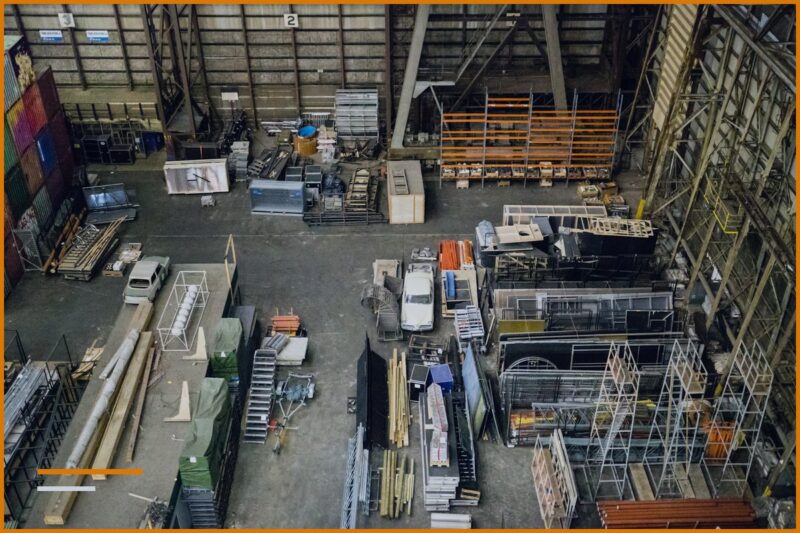
- Small-scale production, agro-processing, and contract manufacturing measure themselves by profit, while the law measures them by turnover. That's why a contract manufacturer with a 12 percent margin crosses the thresholds much sooner than the owner expects.
- The VAT threshold is reduced to 5,000,000 lek from January 1, 2027, by Government Decree No. 822, dated October 28, 2026. This provision has been published and does not await parliamentary approval.
- At the garment factory, the client's raw material is not your inventory and does not go into your turnover. Only the processing fee does. Confusing the two artificially inflates the threshold.
- Industrial property was completely rewritten within three months. Law No. 96/2026 “On Designs,” plus Laws No. 104/2026 on trademarks and No. 105/2026 on patents. The shape of your product now has its own law.
- Depreciation rates are set out in Article 51 of Law No. 29/2023: machinery and equipment at 20 percent; buildings over 15 years at 5 percent, using the straight-line method.
The threshold for mandatory VAT registration is being lowered from 10,000,000 to 5,000,000 lek in annual turnover, effective January 1, 2027. The decision is Governmental Decree No. 822, dated October 28, 2026, published in the Official Gazette No. 233 of October 29, 2026. For a garment factory, a small dairy, or a farm that processes its own production, this figure is more important than any tax rate, because it determines whether you enter a full regime or not.
From our daily work we see the same mistake in this sector, and it's not a matter of knowledge. The owner measures the business by profit, because that's the figure that ends up in his pocket. The law measures it by turnover, that is, by the amount invoiced. A garment factory with a 12 percent margin and a studio with a 60 percent margin cross the same break-even point at the same revenue, yet the former earns eight times less than the latter. Therefore, in this sector, break-even points always come sooner than the owner expects.
This guide covers small-scale production, agro-processing, and contract manufacturing, from legal form to deadlines, inspections, and fines. Every figure provided is taken directly from the act itself, with the article number, because many rules in this sector are changing specifically this year.
Legal form and registration
The choice between a sole proprietor and a limited liability company in this sector is not a tax choice; it is a risk choice. Production involves machinery, raw materials, employees, and often supplier debt. The sole proprietor is liable with his or her personal assets for the business's obligations. The company is liable with its capital.
The tax burden falls on the individual, but only up to a certain limit. The zero rate on profit tax applies to annual gross income up to 1,400,000 lek and is in effect until December 31, 2029. Above that threshold, and for any trading company, profit tax applies. This threshold, again, is measured by turnover.
The business activity object in the QKB must truly cover what you do. In contract manufacturing this is the most common registration mistake. Many businesses register with an objective of “manufacturing” or “clothing trade,” whereas the actual activity is the custom processing of the client's raw materials, i.e., a service. The distinction isn't formal. It affects what invoices you issue, what goes into your turnover, and how your inventory is recorded in the audit.
Read also: Should I register as an individual or as a company?
Licenses, registrations, and product form
Industrial property was completely rewritten within three months.
This is the change that has gone unnoticed by the sector, and it directly affects what gives form. Within three months, three new laws on industrial property have been approved.
| Act | Objective | Where was it published? |
|---|---|---|
| Law No. 96/2026, dated September 18, 2026 | Designs, that is, the visual form of the product. | Official Gazette No. 220, pages 21511 to 21535 |
| Law No. 104/2026, dated October 9, 2026 | Trademarks, amendments to Law No. 52/2025 | Official Gazette No. 231 |
| Law No. 105/2026, dated October 9, 2026 | Patents and utility models, amendments to Law No. 53/2025 | Official Gazette No. 231 |
Law No. 96/2026 “On Designs” has been read by us in full, its 72 articles in six parts. It separates designs from Law No. 9947/2008 “On Industrial Property” into a standalone law, repeals the provisions on designs in that law, transposes the European Union Directive 2024/2823, and is administered by the General Directorate of Industrial Property. It enters into force nine months after publication, i.e., around July 19, 2027.
Why it matters for a small producer. Design is the shape, drawing, model, or appearance of a product. A garment manufacturer that develops its own patterns, a furniture workshop, a packaging producer, or a dairy with its own shape and label produce exactly what this law protects. Until now, most small businesses have never registered the shape of their product, and when a competitor copies it, they file a complaint without any registered rights in hand.
The licensing of food activities is in motion.
For agribusiness, dairy, and any establishment that produces or processes food, the authority is the National Food Authority. But the licensing framework changed this year, and you need to know that before relying on any list circulating.
Law No. 61/2026 “On Official Controls,” published in the Official Gazette No. 177, repealed a number of articles of Law No. 9863/2008 “On Food,” including Article 19, which specifically regulated the licensing and registration of food establishments. This means that the license lists still circulating today, including those on old websites, refer to an article that no longer exists. Before opening or renewing a facility, the required form is verified with the AKU, not from an inherited list.
Environmental financial guarantees for hazardous activities
Two Council of Ministers' decisions affect operators engaged in activities classified as hazardous to the environment. Decision No. 666, published in the Official Gazette No. 194, approves the list of those activities. Decision No. 766, published in the Official Gazette No. 218, establishes the calculation methods and the form of the guarantee.
According to reports on these two decisions, existing operators must submit the risk assessment and the prevention plan to the National Environmental Agency within six months, and within twelve months they must have the accepted guarantee in the form of an irrevocable bank guarantee, an insurance contract, or both. If your activity involves waste processing, chemicals, or discharges, the first step is to verify whether it appears on the list in Government Decree No. 666, because everything else depends on that.
Taxation, invoicing, and the most frequently confused deadline
Small-scale production has a problem that commerce doesn't. The workshop is often located far from the office, the internet goes down, and the cash register stops working on the very day a large order is due to be delivered. The law provides for this, and it does so in three different articles that require three different things.
| Situation | What are you doing? | Deadline |
|---|---|---|
| Electronic link is broken. Article 29 | Issue an invoice without VAT and print it on paper. | 48 hours from the moment of interruption to reestablish the connection and submit the invoices. |
| Fiscal device malfunctions. Article 30 | Invoice from a special pad with two copies | 5 days from the day after the repair stop, plus another 5 days for system entry. |
| No internet connection zone. Article 31 | Monthly taxation: inability is verified through AKEP. | Submission by the 10th of the following month. |
The provisions are those of Law No. 87/2019 “On the Invoice and the System for Monitoring Turnover.” The AKEP certificate for unconnected areas is valid for one year.
And here is the detail that costs. The 48-hour period is not one period, it is two periods with different starting points. Article 29 of the law counts from the moment the connection is interrupted. Instruction No. 16, dated April 3, 2020, Article 32, Annex 4, counts from the moment the invoice is issued without VAT registration. If the connection is lost in the morning and the invoice is issued in the evening, the two counts yield two dates. Count from whichever expires first.
A second clarification that is often asked about. Businesses below the VAT threshold are not exempt from fiscalization. Article 110 of Law No. 92/2014 only exempts them from VAT reporting, not from issuing invoices or from the turnover monitoring system.
VAT and business taxes
The threshold is set at 5,000,000 lek, and this amount is fixed.
The threshold for mandatory VAT registration will be set at an annual turnover of 5,000,000 lekë as of January 1, 2027, by Government Decree No. 822, dated 28.10.2026, published in the Official Gazette No. 233 of October 29, 2026, page 24117.
This provision does not await a vote in the Assembly, and that distinguishes it from the rest of the 2027 fiscal package. The reason is simple. Article 117, paragraph 2, of Law No. 92/2014 states that the minimum registration threshold is determined by a decision of the Council of Ministers, and the law itself does not specify any figure. The rates, the profit tax, the dividend tax, and the wage brackets—those do require a change in the law and await Parliament's approval.
Three practical points for this sector. First, the measurement is based on the calendar year, and the first year measured at 5,000,000 lek is 2027. The turnover for 2026 is still compared to 10,000,000 lek. Second, the registration application must be submitted within 15 days of exceeding the threshold. Third, when the threshold is exceeded during the year, VAT is calculated only on the amount by which it is exceeded, not on all turnover to date.
For a seasonal producer, this has a consequence that often goes unnoticed. If you make most of your sales within three or four months, you may cross the threshold in August rather than in December. The deadline starts on that day, not at the end of the year.
What is being proposed and has not yet been decided.
The VAT bill, part of the 2027 fiscal package, proposes a standard rate of 21 percent instead of 20 percent, and a new 6 percent rate for a list of fourteen basic food categories: bread and flour, milk and plain yogurt, eggs, rice, pasta, cooking oil, chicken, beef or pork, basic fish, fresh fruit, fresh vegetables, legumes, sugar, and basic baby food.
For a dairy, a bakery, or a fruit and vegetable processor, this is the most important element of the entire package, because it affects both the final price and the margin at the same time. But it remains a draft law. Today the standard rate is 20 percent. The final list of customs codes will be approved by a separate decision of the Council of Ministers, so the number of categories is not final either.
How much does it really cost to register for VAT for a manufacturer?
The widespread misconception is that VAT takes 20 percent of turnover. That's not the case. The VAT on purchases is deducted from the VAT on sales, according to Article 76 of Law No. 92/2014, so you pay VAT only on the value you add. And this is precisely where small-scale production comes out ahead of trade, because it buys a lot of raw materials, machinery, and energy with invoices.
Calculated example, with rounded figures. A workshop with annual sales of 7,000,000 lek without VAT and invoice purchases of 5,200,000 lek, selling to a trading company registered for VAT.
| Voice | Today, under the threshold | From 2027, inclusive of VAT |
|---|---|---|
| Total sales | 7,000,000 lek | 7,000,000 lek |
| VAT calculated on the sale | There is none. | 1,400,000 lekë, invoiced to the buyer |
| Total purchase, including VAT | 5,200,000 lek | 5,200,000 lek |
| Deductible VAT on the purchase | Non-negotiable | 866,667 lek |
| The actual cost of the purchase | 5,200,000 lek | 4,333,333 lek |
| The margin that remains for you | 1,800,000 lek | 2,666,667 lek |
When your buyer is VAT-registered themselves, they deduct the VAT you invoice them, so the cost to them doesn't change. Meanwhile, you deduct the VAT on your purchases and your margin increases by 866,667 lekë per year. This is why a garment contractor working for a large company often benefits from being VAT-registered, while a manufacturer who sells directly to the end consumer loses out.
Therefore, the first question before January isn't how much you sell. It's who you sell to.
Accounting and the specifics of the sector
The client's raw material is not your inventory.
This is the difference that makes garment manufacturing a completely different business from manufacturing, and it is constantly misunderstood.
At the garment factory, the client sends the raw materials, you process them, and return the finished product. Ownership of that material never passes to you. It remains in storage and is not your asset, so it neither counts toward your inventory nor your turnover. Only the processing fee—that is, the value of the service you provide—is included in your turnover.
The consequence is significant and works in your favor. A garment factory that processes goods worth 60,000,000 lek and invoices 7,000,000 lek in processing fees has a turnover of 7,000,000 lek, not 67,000,000. It calculates the VAT threshold and the zero-rate threshold on 7,000,000, not on the value of the goods that pass through its hands.
But this requires strict documentation. Goods taken into storage must have an incoming document with quantity and value, must be physically separated from your own goods and recorded separately, and the outgoing must be closed with a document. Without this separation, an inspection will record all the goods in the warehouse as yours, and then we're talking about a tenfold turnover instead of the actual one.
What does this treatment rest on? It rests on two things, and both are in your hands. The first is the nature of the contract. If the contract is a custom processing agreement and ownership of the material does not pass to you, then what you supply is the service, and the value of the service is what you invoice. Second, documentation of custody, without which the distinction cannot be proven at an audit. Therefore, your standard contract is read once with the economist before you build your planning on it. If it is drafted as a sale of raw materials rather than as processing, the entire above reasoning falls apart.
Machinery depreciation under Section 51 rates
Production assets are kept active, and assets are depreciated. The rates are set out in Article 51 of Law No. 29/2023 “On Income Tax” and are applied on a straight-line basis.
| Type of activity | Annual rate |
|---|---|
| Buildings, structures, and machinery over 15 years old. | Five percent |
| Unencumbered assets | fifteen percent |
| Computers, information devices, and software | Twenty-five percent |
| All other assets, including machinery and production equipment. | Twenty percent |
Two practical rules that save work. Purchases under 10,000 lek are fully recognized as expense in the year of purchase and are not depreciated. Petty inventory, under Article 52, paragraph 3, is recognized half in the year of placing into use and half in the following year. For a workshop with many hand tools, this rule applies more than it seems.
Defects, Scraps, and Damaged Goods
Every product incurs losses. Leather is cut and becomes scrap, milk spoils, fruit falls below standard. These are recognized as expenses only within the norms of Government Decree No. 434/2015. The portion above the norms is not recognized and remains your burden.
Therefore, the minutes are a working document, not a formality. They are recorded on the day the loss is discovered, including the date, quantity, value, and cause. Minutes taken in December for a March loss do not serve their purpose.
Inventory in storage is measured at cost, using weighted average or the FIFO method, and is tested for impairment at year-end in accordance with National Accounting Standard No. 4. For seasonal sectors, this test is not theoretical.
Read also: Store and Retail Accounting
Labor Code, Wages, and Seasonal Work
Agricultural processing and contract manufacturing share the same characteristic: work comes in waves. The harvest, the order season, the month of delivering a major contract. And it is precisely there that the sector's most common risk arises: an undeclared worker for two weeks.
The rule has no seasonal exception. The employee must be declared before work begins, not afterward, and a fixed-term employment contract is a perfectly legal means of seasonal work. The cost of declaration is known and calculable. The cost of non-declaration is a fine for each person found, plus retroactive obligations.
A clarification that is often confused in this sector. The legally mandated minimum wage and the minimum contribution base are set by different regulations and are not necessarily the same figure. An employer who reports contributions below the minimum base owes the difference plus late-payment interest, even if the wage agreed with the employee is entirely legal.
Read also: How much does an employee really cost a business?
Deadlines for this activity
| Deadline | What is being delivered? |
|---|---|
| The 10th of the following month | Monthly taxation for areas without internet connection, Article 31 |
| The 11th of the following month | Book of Sales and Purchases for VAT-registered entities |
| The 14th of the following month | VAT declaration and payment |
| The 20th of the following month | Payroll, payroll tax, and contributions |
| July 31 | Financial statements and the assembly's decision at the QKB |
| January 1, 2027 | The new VAT threshold of 5,000,000 lekë takes effect. |
| Around July 19, 2027 | Law No. 96/2026 “On Designs” comes into force.” |
| December 31, 2029, | The zero-percent tax rate on profit for gross income up to 14,000,000 lek expires. |
A note on the deadline for the reports. The draft law for Law No. 9723/2007, adopted by the Council of Ministers on October 21, 2026 and still pending approval by the Assembly, sets the filing deadline with the QKB at April 30 for natural persons and June 30 for legal entities. Today the deadline is July 31. Don't rebuild the calendar around a deadline that hasn't been voted on.
Inspection and fines
The Tax Administration has publicly declared invoicing in the agricultural gathering and processing chain to be an area under enhanced monitoring. For a business that buys produce from farmers, this means one practical thing: the purchase document is no longer a routine matter; it's the first point at which a verification will stop.
Why this particular chain matters. Purchasing from an individual farmer is the point where the document is most often missing, because the seller is often not a trading entity. A purchase without documentation is not just a formal violation. It simultaneously forfeits the deductible VAT and the recognition of the expense, so its real cost is much higher than the value of the missing invoice.
The documentation for this link is governed by Law No. 65/2026 of July 15, 2026, on commercial invoices for agricultural products. If you regularly purchase from individual farmers, the proper invoice form and the method of storage are the first things that must be established before the season.
For food activities, Chapter XVI of Law No. 9863/2008 “On Food” provides monetary penalties: hygiene under Article 23, from 300,000 to 500,000 lek; self-control under the HACCP system, Article 26, from 100,000 to 200,000 lek; traceability, Article 25, from 100,000 to 200,000 lek; operator responsibilities, Article 24, from 100,000 to 200,000 lek. The fine is the primary penalty and license revocation is the secondary penalty.
An important clarification regarding these figures. Law No. 61/2026 repealed several articles of Law No. 9863/2008, including Article 19 and paragraph 3 of Article 26. Thus, Chapter XVI on fines has changed during this year. The above figures are those of Title XVI and serve to understand the severity of each violation. In a specific proceeding, they are always checked against the consolidated text in force on that day.
Checklist and the three steps for today
- The cumulative turnover since January 1 is kept in a single column and compared to the threshold for the respective year.
- At the garment factory, the client's goods have incoming and outgoing documentation and are physically separated from the entity's own goods.
- The activity at the QKB corresponds to what is actually done: custom processing or self-production.
- Every purchase of raw materials has documentation, including purchases from the farmer.
- Losses and shortages are recorded in an inventory with the date, quantity, value, and cause, drawn up on the day they are discovered.
- The asset register records the date of first use and the depreciation rate for each asset.
- Seasonal employees report before the first day of work.
- Contributions are calculated on the minimum basis, not just on the agreed salary.
Three steps for today. First, open the sales list and check the total invoiced since January 1. If it's between 5,000,000 and 10,000,000 lek, January 2027 applies to you and you have two months to prepare your prices. Second, if you develop your own models or forms, open a folder with their drawings and dates, because the new design law takes effect in July 2027 and rights are protected only when registered. Third, if you process a client's goods, check today whether those goods are separated from your own at the register, not just in the warehouse.
Every time there is a tax or financial change that affects your business, we notify you directly by email with a practical explanation.
Send me free notificationsFrequently asked questions
I'm a manufacturer. Does the value of the goods I process count toward my turnover?
No. If the raw material belongs to the client and you only perform the processing, your turnover includes only the processing fee. But that applies only if the client's goods are documented as received in storage and are separated from your own goods in the inventory. Without that separation, the auditor can't tell them apart.
Does the reduction of the VAT threshold affect me if my turnover is 6,000,000 lekë?
Yes, starting in 2027. Today you're below the 10,000,000 lek threshold, whereas the new 5,000,000 lek threshold brings you in. The first year measured under the new figure is the 2027 calendar year, so this year's turnover is still compared to the old threshold.
Do I need to register the shape of my product?
It's not an obligation, it's protection. Law No. 96/2026 “On Designs” regulates the registration and protection of a product's appearance and is administered by the General Directorate of Industrial Property. It will enter into force around July 19, 2027. Without registration, if a competitor copies the model, you'll be starting with no registered rights in hand.
The cash register broke down in the middle of a delivery. How much time do I have?
Issue an invoice from a separate two-copy block. You have five days from the day after the seizure to send it for repair, plus another five days to enter the invoices into the system. This is Article 30 of Law No. 87/2019 and should not be confused with the 48-hour deadline, which applies when the electronic link is down and not when the device is broken.
I bought raw materials from a farmer who doesn't have an NIPT. How do I document it?
This link is regulated by Law No. 65/2026 “On Commercial Invoices for Agricultural Products.” The practical rule that applies in every case is that a purchase without any documentation costs you twice, because you simultaneously lose the deductible VAT and the recognition of the expense. Determine the exact form of the invoice before the season, not during it.
Do seasonal employees have a simpler reporting regime?
No. The declaration must be made before the first day of work, regardless of the duration of the engagement. The lawful way to conduct seasonal work is through a fixed-term contract, not by failing to declare it.
Each section takes an activity or a situation and follows it from registration through deadlines, monitoring, and fines.
- Part 1. Restaurant and bar
- Part 2. Dental and medical clinic
- Part 3. The ranch and its accommodation facilities
- Part 4. IT business and service exports
- Part 5. Construction work and technical trades
- Part 6. Store and retail trade
- Part 7. Foreign-Owned Company, the Italian Case
- Part 8. Small-scale production, agriculture, and contract manufacturing. You are here.
The series continues with cases that follow the situation rather than the activity.
Legal basis
- Law No. 92/2014 “On Value Added Tax in the Republic of Albania,” as amended. Articles 76, 110, 117, 119, 120 and 122.
- Council of Ministers Decision No. 822, dated October 28, 2026, published in the Official Gazette No. 233 of October 29, 2026, page 24117. Registration threshold: 5,000,000 lek, effective January 1, 2027.
- Decision of the Council of Ministers No. 953, dated December 29, 2014, Article 11, as amended by Council of Ministers' Decision No. 822.
- Law No. 29/2023 “On Income Tax,” as amended. Articles 51 and 52, paragraph 3, on depreciation and petty cash.
- Law No. 87/2019 “On the Invoice and the Monitoring System of Turnover,” as amended. Articles 29, 30, and 31.
- Instruction No. 16, dated April 3, 2020, Article 32 and Annex 4.
- Law No. 96/2026, dated September 18, 2026, “On Designs.” Decree No. 519, dated October 7, 2026. Official Gazette No. 220, dated October 19, 2026, pages 21511 to 21535.
- Law No. 104/2026 of October 9, 2026, amendments to Law No. 52/2025 “On Trademarks.” Official Gazette No. 231.
- Law No. 105/2026 of October 9, 2026, amendments to Law No. 53/2025 “On Patents, Utility Models and Supplementary Protection Certificates.” Official Gazette No. 231.
- Law No. 9863/2008 “On Food,” Chapter XVI, Articles 23, 24, 25, and 26.
- Law No. 61/2026 “On Official Controls,” Official Gazette No. 177, which repealed a series of articles of Law No. 9863/2008.
- Law No. 65/2026, dated July 15, 2026, on commercial certificates for agricultural products. Unread text.
- Council of Ministers Decision No. 434/2015 on the standards for waste.
- National Accounting Standard No. 4, for inventories.
- Law No. 25/2018 “On Accounting and Financial Statements,” as amended by Law No. 87/2026.
The January deadline doesn't wait, and in this sector it doesn't just affect a declaration; it affects the price, the margin, and the contract with the buyer. We track turnover throughout the year, prepare the registration before the deadline begins, and review invoicing ahead of the VAT due date as part of the monthly subscription.
