


- The clinic's accounting begins before the doors open, because private healthcare operations are licensed, and the licensing authority requires documents that take months to prepare.
- Licensing and VAT exemption are two separate tests. An aesthetic center is licensed as a health service and yet may not be VAT-exempt.
- The exception to Article 51 of Law No. 92/2014 requires two conditions together: a health purpose and a licensed provider.
- When a clinic simultaneously has exempt and taxable supplies, the VAT on purchases is deducted on a pro rata basis, not in full.
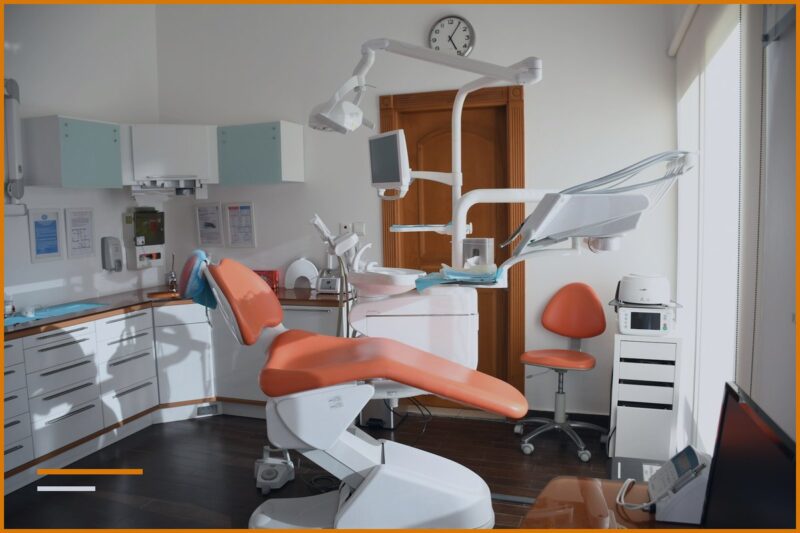
- For the dental clinic, Order No. 640, dated November 14, 2008, requires a waiting room of no less than 6 m², a work area of no less than 12 m², and a room height of no less than 2.8 m.
The accounting for a dental or medical clinic has a feature that no other activity we've handled has. Here, the tax rule depends on a document issued by another ministry. If the license isn't in order, the VAT exemption is lost, and with it the entire year's accounting falls apart.
Çfarë mbulon ky udhëzues
This guide follows a private clinic, a medical practice, or a dental office from the day before NIPT is in place through year-end. It covers the legal form, licenses, fiscalization, VAT, equipment accounting, the relationship with the external physician, deadlines, and controls.
The mistake we encounter most often is confusing the two tests. The owner thinks that because the activity is licensed as healthcare, every service they provide is exempt from VAT. That's not the case, and the difference hits centers that offer both treatment and aesthetics at the same time particularly hard.
Read also: Restaurant and bar accounting
Natural person or LLC, and the code declared to the QKB
A doctor who works alone, without staff and without a large facility, is usually registered as Sole Proprietor. Registration is completed within one day and free of charge, but liability extends to personal assets.
A clinic with multiple doctors, expensive equipment, or partners requires Limited Liability Company. The reason here is not only tax-related. In healthcare, the risk of professional liability is real, and separating business assets from personal ones is the first line of defense.
The code of activity is declared to the QKB and must match what is actually done. According to NVE nomenclature, section Q, Class 86.21 covers the activities of general practitioners, class 86.22 those of specialist physicians, class 86.23 the activities of dentists, and class 86.90 other health activities, which also include paramedical services.
The code has a practical consequence that only becomes apparent later. It follows the subject through risk analysis and inspection, and a center that provides aesthetic treatments under a code registered as a dental practice is presented as an activity other than what it actually is.
License, documents, and environmental conditions
Private healthcare activities are not opened by registration with the QKB. They are licensed. Licenses are listed in Council of Ministers“ Decision No. 538 of May 26, 2009, as amended, under Category II.6 ”Primary medical, hospital or dental services.".
Subcategory II.6.A covers primary medical and dental services, namely specialist practices, clinics and dental offices, multi-specialty medical centers and other health services. Subcategory II.6.B covers hospital services. Pharmacies and pharmaceutical agencies are not included here; they are licensed under subcategory II.7.A.1.
Which documents are required before opening?
The self-declaration forms and accompanying documents were approved by Order No. 640, dated November 14, 2008, of the Ministry of Health. The list varies depending on the type of activity, but the core remains the same.
- Professional authorization from the Medical Order, and for nurses, certification by the relevant nursing board.
- Diploma and certificate of specialization, recognized in Albania when obtained abroad.
- Employment contracts for every person working in the facility, not just for the doctors.
- Hygienic-sanitary permit for the environment.
- The plan and floor plan of the space.
- License for ionizing radiation when there is imaging equipment.
- The solution for processing hospital waste, in accordance with the relevant regulations.
- The 5,000-lek payment mandate accompanying the self-declaration.
For the dental practice, verification by the dental inspectorate is also required. Renewal must be completed 30 days before the license expires; it is not acceptable to wait until the last day.
Minimum environmental conditions
These are figures that are set before the lease agreement is signed, because a space that doesn't meet them won't be licensed and the rent keeps running in the meantime.
| Request for the dental cabinet | Minimum |
|---|---|
| Patient waiting area | 6 m² |
| Work environment | 12 m² |
| Room height | 2.8 m |
| Imaging environment | Mandatory when providing radiation service. |
For the clinic and diagnostic center, a reception area and service-specific rooms are required, with clinical analyses needing 30 m² and microbiological analyses 15 m². The medical office requires a waiting area, an examination room, and an imaging room when available.
VAT: the boundary between health care and aesthetic services
The exemption is regulated by Article 51 of Law No. 92/2014 “On Value Added Tax,” as amended. Four letters are of direct interest to us.
Letter c excludes the provision of health services intended to protect health, including prevention, diagnosis, treatment, cure, and rehabilitation, by public or private health institutions recognized by the competent health authority. Letter c excludes services provided for health care purposes in the course of practicing a licensed medical or paramedical profession. Letter dh explicitly covers dental records, dentists, and dental laboratory technicians. Letter b excludes the supply of medicinal products and implantable medical devices.
Thus, the exclusion does not depend on the name of the activity. It requires two conditions that are met together.
| Condition | What does it mean in practice? |
|---|---|
| Purpose | The service aims to prevent, diagnose, treat, cure, or rehabilitate. The text says it twice, in letter c and in letter ç. |
| Provider | A health care institution recognized by the competent authority, or a medical or paramedical professional licensed under the licensing legislation. |
The law does not include a list of aesthetic services and does not use the word "aesthetic" in Article 51. Therefore, it does not state that aesthetics are always subject to VAT. It states something more accurate and useful: a service not intended for prevention, diagnosis, treatment, cure, or rehabilitation does not meet the first condition.
When the clinic has both types of supplies.
This is the most common case at centers that provide both treatment and aesthetics simultaneously. In that scenario, the clinic has exempt supplies and taxable supplies within the same NIPT, and the VAT on purchases is not fully deductible. It is deducted on a pro rata basis, as explained on our website. exemptions from VAT.
The practical consequence is that revenue must be allocated by service type on the invoice itself, not at year-end. If the invoicing system doesn't separate them, the pro rata report has to be reconstructed by hand—and that's exactly the work that costs when an audit comes.
Registration threshold and income tax
Registration for VAT becomes mandatory when annual turnover exceeds 10,000,000 lekë, with an application submitted within 15 days of exceeding the threshold, in accordance with Article 117 of Law No. 92/2014 and Government Decree No. 953/2014. Details are on the page of registration and deregistration.
For income tax, until December 31, 2029, annual gross income up to 14,000,000 lekë is taxed at 0%, pursuant to Article 69 of Law No. 29/2023. The full terms are available on the website. zero regime. Above this threshold, the 15% rate applies, and for a natural person trader the 23% rate applies only to the excess over 14,000,000 lek in taxable profit.
Billing, the cash register, and patient payments
Every service is accompanied by an invoice, even when the patient is an individual and doesn't request one. This is where small clinics most often get stuck, because payment is taken in hand and the invoice is issued later, or not at all. The rules and steps are on the page of taxification and invoicing.
The VAT-exempt invoice is still issued; it simply doesn't include VAT and bears the reason for the exemption. The absence of an invoice is not a cost saving; it is a separate violation from the tax one.
The POS terminal becomes mandatory for all remaining entities until December 31, 2026, pursuant to Article 59(3) of Law No. 9920/2008, as added by Law No. 79/2025. The deadline and exemptions are on our blog. Mandatory POS. For a clinic where the majority of payments come from individuals, this deadline cannot be extended by agreement.
Clinic accounting for equipment and materials
The clinic is an activity that requires a heavy initial investment and ongoing consumption thereafter. Both are treated differently.
The medical device, the dental unit, the imaging apparatus, and the room furnishings are long-term assets. They are not recognized as an expense in the year they are acquired; they are depreciated over their useful lives according to the rules set forth on the website. deductible expenses. This is the first-year mistake, when the owner expects to write off the entire value of the equipment and ends up with a much higher profit than expected.
The rates set by Article 51 of Law No. 29/2023 are 20% per year, using the straight-line method, for medical equipment, dental units, and furniture, and 25% for computers and patient management software. If you have built or renovated the premises yourself, that portion is depreciated at 51%. Assets with a depreciable base under 10,000 lek are fully expensed in the year of purchase, so a small instrument does not require an amortization schedule.
When the equipment is acquired on installment or through a finance lease, the accounting treatment differs from that of a simple lease, and the change affects both the balance sheet and the recognized expense. The contract is read before it is recorded, not after it has been issued as a regular invoice.
Consumable materials, anesthetics, gloves, filling materials, and single-use items are inventory. They are recorded as purchases and expended as consumption, and the difference between purchases and consumption is the inventory level. A clinic that regularly purchases supplies without maintaining inventory will report higher-than-actual costs in one year and lower-than-actual costs in the next.
External physician: service contract or employment
This is the most common question for a growing clinic. The specialist comes two days a week and is paid on a percentage basis, and the question is whether he is an employee or a service provider.
The distinction is not determined by the name of the contract. It is determined by the way the work is performed, namely by the dependency, the schedule, the tools, and the instructions. The criteria are on the page of service contract.
There is also a second risk that falls on the doctor himself. When a self-employed individual derives over 80% of their income from a single client, or over 90% from fewer than three clients, they are reclassified as employees, pursuant to Article 12 of Law No. 29/2023 and Instruction No. 26/2023. For a specialist who works with only one clinic, this is not hypothetical. The full rule is on the page of reclassification of the self-employed.
For hired personnel—nurses, assistants, and receptionists—the declaration must be submitted before the first day of work, and the contract must be signed prior to commencement. The steps are outlined in our First Employment Guide.
Read also: Indicative salaries for the medical and aesthetic sector
Indicative salaries are the starting point the tax administration uses when comparing reported wages with the sector average. They are not the profession's mandatory minimum wage, but if a salary is reported significantly below them, that's the first question asked during an audit.
Annual deadlines for a clinic
| Deadline | Obligation |
|---|---|
| The 11th of the following month | Sales and purchase books when you are VAT-registered. |
| The 14th of the following month | VAT declaration and payment. |
| The 20th of the following month | List of payments and contributions. Individuals make them quarterly. |
| March 31 | Annual income tax return, mandatory even with zero tax. |
| July 31 | Financial statements in the QKB and the decision on the allocation of profit. |
| December 31, 2026 | Equipment with a POS terminal. |
| 30 days before maturity | Renewal of the health activity license. |
Every time there is a tax or financial change that affects your business, we notify you directly by email with a practical explanation.
Send me free notificationsInspection and fines at a clinic
The clinic is overseen by three authorities. The tax administration handles invoices, declarations, and payroll. The health inspection oversees the license, premises, and hygienic-sanitary conditions. The labor inspectorate supervises the employment relationship.
Notice of a full tax audit is given 30 days in advance, and notice of a fiscal visit is given 10 days in advance, in accordance with Article 81 of Law No. 9920/2008. On-site verifications are carried out without prior notice, in accordance with Article 81(1). When corrections are made within 30 days of the inspection notice, a fine of 50% is applied, pursuant to Article 81.
The table lists the sanctions affecting the daily operations of a clinic. The only source of the fine figures for our entire site is the page of fines and late fees.
| Violation | Sanction and article |
|---|---|
| Undeclared employee | 200,000 lekë for VAT and corporate income tax payers, 50,000 lekë for others. Article 119. |
| Declared wage lower than actual wage | 200% of obligation for the first, 100% for the others. Article 119. |
| Failure to file on time | 10,000 lekë for VAT and corporate income tax payers, 5,000 lekë for others. Article 113. |
| Inaccurate statement | 20% of the difference. Article 115. |
| Late payment | 0.061 TP3T charge for each day of delay, up to a maximum of 365 days. Article 114. |
| Failure to file financial statements on time | 60,000 lekë. Law No. 9723/2007, as amended by Law No. 7/2022. |
Late fees are calculated on these at 7.81 TP3T per annum from April 11, 2026. Penalties for a single obligation do not exceed 1001 TP3T of the obligation, pursuant to Article 111, paragraph 5, while late fees are calculated separately.
We do not provide figures for health inspection sanctions. We do not have them verified by article, and without the relevant article no amount can be included in this text.
Read also: Is your business ready for a tax audit?
Clinic Accounting in Practice: Three Steps for Today
Three steps worth doing today, each within an hour.
- Open the list of services you bill and divide it into two columns: those with a health purpose and those without. If the second column isn't empty, you have taxable supplies and you need a pro rata report.
- Check the license expiration date and mark it on your calendar 30 days in advance. The renewal deadline is 30 days before expiration, and the review time is not up to you.
- Review the contracts of the external physicians. If any of them receive more than 80% of their income from your clinic, their file must be reviewed before the administration sees it.
Read also: How to hire your first employee, from contract to payroll
Frequently asked questions
Is every service provided by a licensed clinic exempt from VAT?
No. The exception in Article 51 of Law No. 92/2014 requires both conditions simultaneously: a health purpose and a licensed provider. The license fulfills the second condition, not the first.
How is a center that offers treatments and aesthetics together treated?
It has exempt and taxable supplies within the same NIPT. VAT on purchases is deducted on a pro rata basis, and the allocation is made on the invoice.
What is the minimum area for a dental office?
According to Order No. 640, dated November 14, 2008, the waiting area shall be no less than 6 m², the work area no less than 12 m², and the room height no less than 2.8 m.
Can I deduct the entire cost of the dental unit in the year of purchase?
No. It is a long-term asset and is depreciated over its useful life at a rate of 20% per year using the straight-line method under Article 51 of Law No. 29/2023. Claiming full deduction in the first year is the most common first-year mistake for a clinic.
Should the doctor who comes two days a week be hired?
It depends on how the work is performed, not on the contract's name. If he receives over 801 TP3T of income from a single client, he is reclassified as an employee under Article 12 of Law No. 29/2023.
Is the pharmacy licensed together with the clinic?
No. The pharmacy and pharmaceutical agency are licensed under subcategory II.7.A.1, while the clinic and office are under II.6.A. They are two separate licenses, even when located in the same premises.
When should I register for VAT as a clinic?
When annual turnover exceeds 10,000,000 lek, registration must be requested within 15 days of crossing the threshold. If all your supplies are exempt, registration does not entitle you to a deduction.
Each section covers an activity from registration through year-end closing, including licenses, taxes, accounting, employees, and controls.
- Part 1. Restaurant and bar
- Part 2. Dental and medical clinic. You are here.
- Part 3. Guesthouses and small accommodation structures
- Part 4. IT business and service exports
- Part 5. Construction and technical trades
In preparation, the store and retail trade. Then nonprofit organizations.
Legal basis
- Law No. 92/2014 “On Value Added Tax,” as amended, Article 51(b, c, ç, and dh) on exemptions, and Article 117 on the registration threshold.
- Law No. 29/2023 “On Income Tax,” Article 12 on reclassification, Article 24 on rates, Article 69 on the zero regime until December 31, 2029.
- Law No. 9920/2008 “On Tax Procedures,” Article 59(3) on POS, Article 81 on notification and reduction of the penalty, Articles 113 through 119 on sanctions.
- Law No. 9723/2007 “On Business Registration,” as amended by Law No. 7/2022, provides for a 60,000 lek fine in case of failure to file the reports.
- Government Decree No. 538, dated May 26, 2009, category II.6 for medical and dental services, category II.7 for pharmacies.
- Order No. 640, dated November 14, 2008, of the Ministry of Health, self-declaration forms, for the documents, environmental conditions, and a 5,000 lek mandate.
Note on the scope of this text. The consolidated text of Article 51 that we have read incorporates changes up to 2017, and no subsequent amendment was found. The authority that issues the final decision on the license is not named here as the sole one, because the application goes through the QKB while the forms are approved by the responsible ministry. Sanctions for health inspections are not specified in monetary terms, because we have not verified them by article.
