



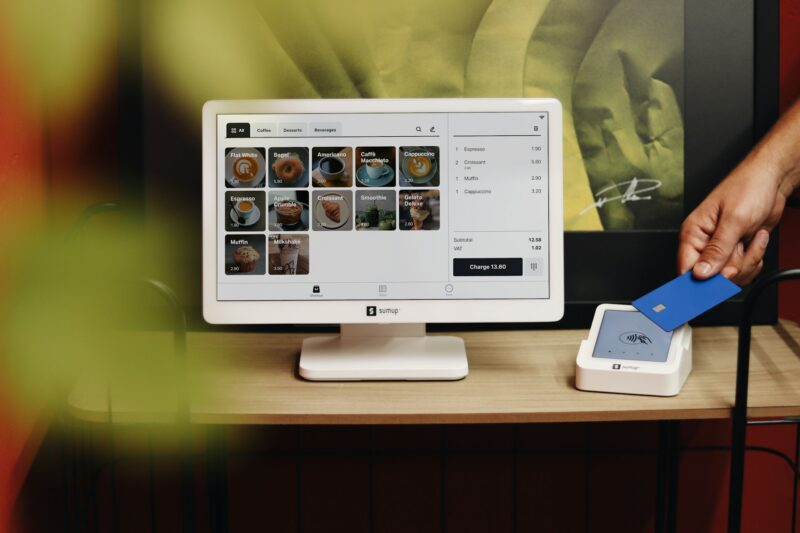
- Mandatory POS becomes the rule for all taxpayers who sell for cash, with a final deadline of December 31, 2026.
- Accommodation facilities, transportation services, and public institutions are required to comply as of May 30, 2026.
- The obligation was introduced by Law No. 79/2025, which added Article 59(3) to the Tax Procedure Law, and applies to every point of sale.
- Excluded are areas without internet coverage, entities not required to issue invoices, and the self-employed person working alone, without VAT and with a single location.
- As of mid-2026, businesses had 38,662 active terminals, 38% more than a year earlier.
Mandatory POS is the regulation affecting the majority of Albanian businesses until December 31, 2026. In this article, you will learn everything you need to know about the mandatory POS. For those who want to understand more about the mandatory POS, this article provides a clear overview. Until the end of 2025, acquiring a POS terminal was a free commercial choice. From January 1, 2026, it becomes a legal requirement with a set timetable.
Baza ligjore e detyrimit për POS
The obligation was established by law. No. 79/2025, dated December 11, 2025, which added Article 59/3 to the law No. 9920/2008 for tax procedures. The POS/POI terminal is the device that enables payment by bank card or other electronic instruments at the point of sale. The new regulation requires every taxpayer who makes cash sales to have this device at every point of sale.
The first deadline has already passed, and the second deadline is approaching. This article tells you which group you belong to, what the exceptions are, and what you need to do before the end of the year.
Read also: Limits on cash payments, mandatory POS terminals, and new rules for online businesses
Who is required to obtain a POS terminal and by when?
Article 59(3) divides the obligation into two groups with two deadlines. The first group's obligation is already in effect; the second group has another four months.
| Business category | Device term | The situation today |
|---|---|---|
| Accommodation facilities, transportation services, public institutions, and state-owned companies. | May 30, 2026 | The obligation is in effect. |
| All other taxpayers who make cash sales | December 31, 2026 | They have until the end of the year. |
Note two details that are often misread. First, the requirement applies to cash sales, not to the size of the business. Even a small business with a cash register falls into the second group.
Secondly, a terminal is required at every point of sale. A business with a store in Tirana and a sales outlet in Durrës needs two terminals, not one.
Who is exempt from the POS obligation?
The law recognizes three exceptions, each with its own conditions. The exception must be read carefully, because it covers fewer cases than it appears to at first glance.
Activity in an area without internet coverage
Taxpayers operating in areas without internet coverage are not required to maintain a terminal. The exemption applies only as long as coverage is unavailable.
If the area is covered, the obligation returns. This is the same condition also recognized for fiscalization procedures in rural areas.
Entities not required to issue invoices
Whoever is exempt from the obligation to issue an invoice is also exempt from the POS terminal. These are limited categories defined by the invoice and fiscalization legislation.
Before relying on this exception, verify your specific status. Most registered businesses have an invoicing obligation and, along with it, a new obligation.
The self-employed person who works alone
The self-employed person who simultaneously meets three conditions is excluded. They work alone without any other employees, are not subject to VAT, and carry out their activity at a single location. The conditions for self-employed status We have explained them separately.
It is enough for one condition to be met for the exception to be lost. Whoever crosses the registration threshold in VAT With an annual turnover of 10,000,000 lekë, or upon hiring the first employee, you enter the general obligation.
How to prepare for POS equipment before the end of the year?
Four months may seem like a long time, but the process involves several steps that take time. The bank application, document verification, and installation together take several weeks, and December is a busy month for banks.
The first step is to open a business bank account, because the terminal connects to it. The second step is to apply to a bank or to a licensed payment service provider. Compare the transaction fee, the monthly fee, and the contract terms before you sign.
The third step is internal organization. The invoice continues to be issued the same way through fiscalization, It only changes the payment method recorded on it. The cash register staff must know this before the first day of using the terminal.
In the bar and restaurant, this setup also has its own subtlety. The bill is issued at the time of sale, not accumulated at the end of the shift, so the cash register and the terminal must show the same order of transactions. How the cash register in a venue is maintained day to day, you can find at Restaurant and bar accounting.
Read also: Bank accounts and payments: what the bank requires from the business
Self-test: Does the POS obligation apply to you? Six questions.
- Do you accept cash payments from clients? If so, the obligation applies to you.
- Do you operate in accommodation, transportation, or as a state-owned enterprise? Your deadline was May 30, 2026.
- Are you operating in an area without internet coverage? You're excluded for as long as coverage is unavailable.
- Are you exempt from the obligation to issue an invoice? Then you are also exempt from the terminal.
- Are you a self-employed individual working alone, without VAT and with a single location? You're exempt until one of those conditions changes.
- Do you have more than one point of sale? Each point needs its own terminal.
What do you risk if you don't comply by the deadline?
The law has not, until now, provided for a specific fine for not having a terminal. That does not mean the obligation is left unchecked. The tax administration can see from the fiscalization data how each invoice is paid and can easily identify businesses that accept only cash.
The neighboring regulations have clear fines. Cash payments exceeding the permitted limits—100,000 lek between businesses and 500,000 lek with individuals—are punishable by Fine of 101 TP3T of the transaction value. For sales to individuals exceeding 500,000 lek, the bank is the only channel, so a terminal or bank account becomes necessary in practice.
Experience with other fiscal obligations shows that sanctions are supplemented by subsequent acts. Anyone who complies within the deadline doesn't need to follow this development with concern.
Why are electronic payments becoming more widespread?
The figures for the first half of 2026 show the direction. According to data published by Monitor magazine in August 2026, Active terminals reached 38,662, an increase of 381 TP3T over one year. Card payments in the six-month period amounted to 58.3 billion lek, 211 TP3T more than a year earlier.
The terminal requirement, the new cash payment limits, and fiscalization are part of the same objective. The more transactions that move through electronic channels, the more complete the revenue reporting becomes. For a business that operates regularly, this is more opportunity than burden, because customers themselves are requesting card payments.
Read also: Online Sales Under Tax Authority Control: How to Get in Compliance
Every time there is a tax or financial change that affects your business, we notify you directly by email with a practical explanation.
Send me free notificationsFrequently asked questions
Is POS mandatory even for small businesses?
Yes, if the business makes cash sales. The law does not distinguish based on size or turnover, but on the method of payment. A small business is exempt only when it falls under one of the three exceptions in Article 59/3.
Do I need a terminal at every point of sale?
Yes. Article 59(3) requires a terminal at each point of sale, not one terminal for the entire business. Two stores require two terminals.
Customers only pay me by bank transfer. Do I need a POS?
The obligation applies to taxpayers who make cash sales. If all your receipts actually pass through your bank, your case should be verified with the tax administration, because the enforcement procedure has not yet been clarified by a separate directive. Keep proof of your bank deposits for any eventuality.
How much does the POS device cost?
The cost varies by bank or provider and typically consists of a transaction fee and a monthly fee. Request quotes from several banks and also ask about hardware-free solutions. We do not recommend any specific provider and do not receive payment from any of them.
Is there a fine if I don't comply by December 31, 2026?
As of the date of this writing, the law does not include a specific fine for failing to have a terminal. Sanctions may be supplemented by amendments or subsequent acts, so non-compliance is not a safe option. The obligation exists regardless of the absence of a dedicated fine.
Does the taxation change when the customer pays by card?
No. The invoice is issued the same way through the fiscalization system; only the payment method noted on the invoice changes. The terminal does not replace any existing invoicing obligation.
The four months until December 31, 2026 are enough for a stress-free device, but not if the process is left until December. We always keep the deadlines, exemptions, and cash payment limits up to date at Our cash and POS payments page, the reference point that changes along with the law.
